

This post may contain affiliate links, meaning we might make a small commission off any purchases at no additional cost to you.
 5
 0
Table of Contents
- Introduction
- Portugal Overview
- Lisbon
- Cascais
- Sintra
- Madeira
- Porto
- Douro Valley & Alentejo Region
- Trancoso, Belmonte, Aveiro, Coimbra, Tomar, Castelo de Vide, Marvao, Elvas
- Algarve
- Carvoeiro, Albufeira, Faro, Loule, Seven Hanging Valleys Trail, Benagil, Sagres, Trail of Headlands, Lagoa, Silves, Lagos
- Evora
- Cascais, Estoril, & Sintra Coast
- Quick stats about this trip:
- ✈️: 4,815 miles
- 🚘: 1,600 miles
- 🚶🏻♀️: 105 miles
- 💰: $156 per person per day (double occupancy) estimated
Introduction
Some background on how this trip came to be: I was looking for a country in Western Europe that I could thoroughly explore in 5 weeks without having to drive half my waking hours (that eliminated all larger countries), that isn’t too hot in June, and that’s not too expensive either. Sounds like a unicorn, right? Until I came across Portugal- the perfect destination for my criteria. Portugal is cheaper than most Western European destinations, and I started structuring my itinerary with the goal of spending 2 weeks on the mainland, a week in Madeira, and 2 weeks exploring the Azores. For some reason I forgot to check my calendar in detail, and just before booking my tickets, when I’d already figured out all the details, I realized that I had a close family wedding at what would have been the three-week mark of my trip. In an effort to salvage at least some of the planning that I had done, I cut out the Azores and shortened my trip to three weeks. My research whetted my appetite to visit the Azores so hopefully it won’t be long before I get to explore these gems, situated less than 5 hours from NY! (Official flying time from EWR to PDL- the international airport in the Azores capital- is 5 hours and 1 minute, but pilots routinely fly this route in 4.5 hours).
If you’re planning a trip to Portugal, feel free to reach out with questions, because there’s a good chance I missed some details, and a direct question might jog my memory.
As is usual with my trips I did not check any baggage- I traveled with just a backpack (carry-on) and a small cooler bag (personal item) where I stored some CY cheese and a small hotplate/griddle.
I love anything history related, so this trip was especially fascinating to me as I got a chance to explore many of the cities and towns that were teeming with Jews prior to the inquisition. Kosher food was a struggle, and it was sobering to realize that 600 years ago I would have been able to find kosher food easily in the big cities such as Lisbon and Porto, as well as in nearly every town in the Alentejo region.
There were plenty of times during my trip, especially when visiting art museums or palaces, that I found myself unable to “fargin” the Portuguese the beauty of their national riches because of their bloody history. It’s incredibly sad to drive through town after town, hearing and seeing how many Jews lived there before the inquisition, how their communities were thriving, only to be faced with the Jewish desert it is today. In this microcosm it feels like the inquisition won- they managed to desolate Portugal of its Jews. I haven’t yet done an Eastern European heritage trip, but I’m assuming it’ll be 10X this hard as it’s both closer in time and closer to home for me.
Portugal Overview
If you’re not planning a trip, feel free to skip this section and continue on to my adventures!
Navigation: I used Google Maps to navigate in Portugal, and while I had no issues with it when it came to driving navigations, I had issues with public transport and walking navigation in both Lisbon and Porto. While google maps has the public transport timetables programmed, it’s not in real time. This isn’t an issue on the metro as they are very punctual, but the busses are less so. I tried a few other apps but none of them had real time tracking for the buses and trams- the main issue with this is that once the scheduled time for the bus has passed, the option disappears from the list, and if you continue waiting for the bus and didn’t screenshot the route in advance, you won’t know at which stop to disembark. The walking navigation instructions are an issue because google maps doesn’t take terrain into account. When I originally mapped my walking routes, I set it up based on distance, but in reality, if you’re checking out some spots atop the hill and some in the lower parts of town, it makes sense to do all the uppers and all the lowers grouped together- it might look longer on the map, but you won’t need to climb those hills up and down ten times.
Tours: You’ll notice that I didn’t join any organized city tours during this trip. While I generally do like joining professional walking tours and hearing the local legends, I had a hard time finding competent guides on this trip since I wasn’t looking for multi-day excursions (which is how a lot of the Jewish tours of the Alentejo, the predominantly Jewish pre-inquisition region, are set up). The only city where I was able to find a reliable Jewish tour guide that does short (2-3 hour) tours was in Lisbon (via Lisbon Explorer), and they were booked solid for the full 3 weeks of my stay. I’m glad that I didn’t join any second-rate Jewish tours after I overheard a few ignorant comments when passing tour groups in Porto and Belmonte.
Kosher: There are very few kosher establishments in Portugal. I’ll list all the options I came across in my research (I don’t have hechsher information)- you’ll find more details on the ones I utilized in my TR.
- General:
- Portugal Kosher Food list (scroll down to the bottom of the page)
- The app “Is it Kosher” also came in handy for items imported from Spain and other European countries.
- Delivery services available in Portugal (advance order required):
- Fast Kosher Portugal
- Kosher4U Delivery Service (available in most of Europe)
- Lisbon:
- 3/12/2024 Update: Genesis Lisboa Restaurant on Campo Pequeno 41. WhatsApp is +351 961 491 327, [email protected]. This restaurant might be closed during low seasons, so I suggest reaching out via Whatsapp or email in advance to confirm their opening dates/hours.
- Liberty Supermarket on Largo de São Sebastião da Pedreira Loja 9D carries American products so items could be OU certified
- El Corte Ingles on Avenidas António Augusto de Aguiar 31 has kosher section (more on this in my TR).
- Portuel Kosher
- Kosher in Lisbon
- Chabad- €40 delivery fee to Lisbon (see more information under Cascais section)
- Cascais:
- Chabad- for €25 you get a baguette, main dish, two side dishes, and dessert. A bottle of wine is €10. Delivery within Cascais is €10. 24-hour advance notice is required. Chabad also hosts Friday night meals on the first and third Friday of each month. The first Friday is a small buffet dinner, and the third Friday is a sit-down dinner. You need to register by Monday to participate. There email is [email protected] (more on this in my TR).
- Porto:
- Ibéria by Sababa Kosher Restaurant on Rua do Campo Alegre 676. Reservations are recommended. Takeout Shabbos meals available. WhatsApp is +351 910 079 657, [email protected] (more on this in my TR). This restaurant might be closed during low seasons, so I suggest reaching out via Whatsapp or email in advance to confirm their opening dates/hours.
- 9/24/2024 Update: Le J salads and sandwiches (fleishig) on R. de Vale Formoso 314. WhatsApp is +33 7 60 97 99 41, email is [email protected]. This restaurant might be closed during low seasons, so I suggest reaching out via Whatsapp or email in advance to confirm their opening dates/hours.
- 10/28/2024 Update: O’KAFFÉ salads, sandwiches, pizza, and pasta (chalavi) on R. Prof. Joaquim Bastos 9. WhatsApp is +33 6 73 18 34 93. This restaurant might be closed during low seasons, so I suggest reaching out via Whatsapp or email in advance to confirm their opening dates/hours.
- Hotel da Música, [email protected], reservations required 24 hours in advance, has Shabbos meals available as well
- There is a small kosher shop located at Mercado do Bom Sucesso, Largo Ferreira Lapa, 21 a 183 (in the Hotel da Musica building). WhatsApp is +351 22 607 6000.
- Algarve Region:
- April 2024 Update: Ezra’s Kosher Kitchen restaurant located in the Ezra & Sasoon Synagogue, Rua do Movimento das Forças Armadas 72, in Albufeira. WhatsApp is +351 960 066 585. Shabbos meals and takeout available as well. This restaurant might be closed during low seasons, so I suggest reaching out via Whatsapp or email in advance to confirm their opening dates/hours.
- Ezra’s Kosher Market, Albufeira, WhatsApp is +351 960 066 585
- January 2025 Update: Chabad of South Portugal established a location in the town of Vilamoura.
Car rentals/driving: If you’re only planning on visiting the city centers of Lisbon or Porto, don’t get a car. Public transportation is great, and parking is a nightmare. There are also congestion fees and environmental fees in some areas.
Tolls: If you plan to drive on toll roads, be sure to get a toll tag with your car rental. Many highways in Portugal are cashless, and the only way to pay for the toll without a toll tag is at a post office, where it takes 7 days for the tolls to post to your license plate. There are no toll roads on Madeira.
Gasoline: Be sure to inquire as to which gas your car needs if you don’t see a label on the tank. Some cars take diesel only.
CDW Insurance: it’s illegal for car rental companies to bill you for damages in excess of the maximum deposit (€1,000 for basic cars, €1,600 for nicer cars) if you have no collision coverage/insurance, even if you total the car. You can of course purchase a CDW policy at the car rental counter as usual, or use a credit card that includes collision coverage.
Transmission: If you don’t drive manual but have the time and ability to teach yourself, you’ll save 50%+ on car rentals. Automatics are very expensive compared to manual car rentals in Portugal.
Highway driving:
- In most areas you need to keep your headlights on, even during the day
- On the mainland, most bigger highways have speed limits of 100 kph and toll roads have speed limits of 120 kph. Once you’re away from the cities (Lisbon and Porto) you’ll see cars going 200+ kph, with the “regular guys” doing 150 kph.
- Except for around the cities, the left lane is sacred in Portugal- there’s none of that tri-state nonsense where cars sit in the left lane because they’re eventually going to pass a car. You pass and then you immediately get back into the right lane, just short of cutting off the car behind you.
SIM Card: I use the Google Fi Flexible plan for international travel (sign up via my link to receive a $20 Fi Credit). My phone supports eSims so I don’t have to worry about inserting a SIM each time I travel – it’s automatically on my phone (although Google Fi does offer the option to mail you a physical SIM). I resume service before I head to the airport (it must be activated while still in the US), and then deactivate service once I’m back home. This allows me to have fast and reliable connectivity abroad as soon as I land, with unlimited calls and texts, without paying for usage when it’s not needed. There are no fees to keep the plan active while deactivated.
Now let the fun start…
Lisbon
United started flying to the Azores in mid-May, and intro fares were in the $500 range. Once the Azores portion of my itinerary fell apart, it wasn’t necessary for me to fly through PDL, but I scored a great multicity fare via Azores Getaways EWR-PDL for the outbound, and LIS-EWR for the return for a total of $628. My card was charged by United directly, so my United card perks kicked in- this was especially important as the flight was advertised as a Basic Economy ticket and I needed to ensure that I could bring my carry-on on board with no additional fees. As it turns out my ticket was not issued as Basic Economy, so it wouldn’t have mattered much even if I wasn’t billed by United directly.
The United EWR to PDL flight departs at 10:55PM, at which point the Precheck lane in Terminal C is closed. Thankfully the regular line wasn’t very long, and I had time to head to United’s Club C124. I requested kosher food, and the manager apologized profusely that they didn’t have any. He offered to get me some of the packages of the food they have on display so that I could check if anything is kosher, but I wasn’t in the mood to check labels. I think it would be beneficial if more people asked for kosher food- there were approximately 10 heimish looking people in the lounge when I was there. If 10 kosher consumers ask for a kosher meal every 2 hours I’m sure they’d make more of an effort to provide…
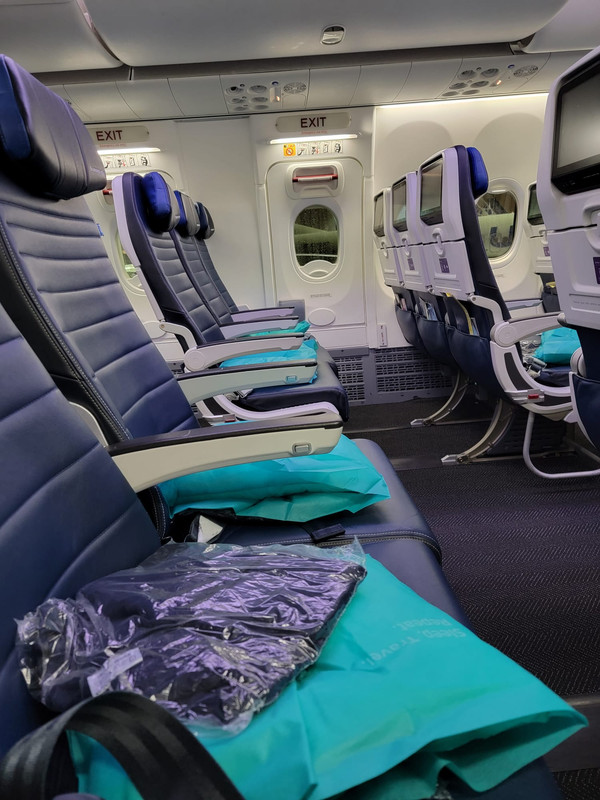
United flies the 737 Max 8 for this route, so there’s no Business or First. The best cabin available is Premium Plus. Prior to boarding I requested a window seat from the gate agent (I did not pay for seat selection) and was promptly reassigned to a window seat with more legroom, and I was the only passenger in my row. This flexibility to reassign was probably due to the flight being less than half full.
A major perk of landing at PDL airport, even though I did not plan on spending any time in the Azores on this trip, was the quick lines at passport control. The airport is small (a total of 9 gates) and there’s only one international (non- schengen) flight per day. PDL staffs all booths for the time that the international flight is expected to land, so the maximum wait time here is 10 minutes. This is a big deal after the horror stories of passengers waiting 6+ hours to clear immigration in Europe and other places. Unfortunately, the only Priority Pass lounge in PDL airport was closed, but the airport has a free lounge located right after security, on the mezzanine level. After a 2 hr stopover I continued onto Lisbon via TAP Air.
I had pre-purchased a Lisboa Card online with pickup at the airport kiosk. Depending on which attractions you plan on visiting and your mode of transportation (a car rental is not worth it in the city), this could save you a few dollars. The card includes public transportation via all methods (metro, buses, trams, and elevadores), so by picking it up in the airport I was able to utilize it right away and take the metro directly to the city center from the airport. The metro stations are new, clean, and easy to navigate. There are Bolt and Lime scooters available on most street corners in Lisbon, but I’m not sure how well it works, if at all, on those steep hills.
Although it was in the high 80s every day in Lisbon during my trip, after 7PM the city got cool and breezy, and temps dropped to the low 60s.
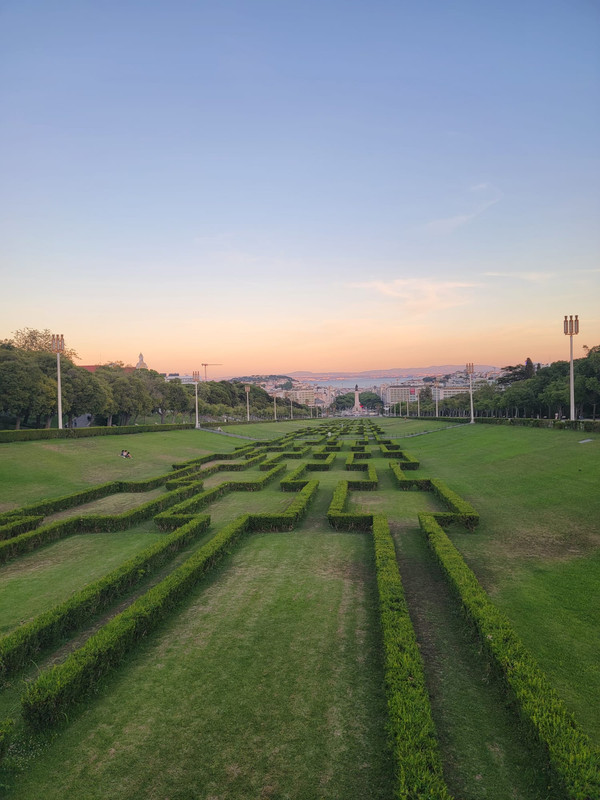
After checking into my Airbnb, a small but clean and pleasant place, and going for a quick nap, I headed out to stock up on food. On my way I passed through Parque Eduardo VII, a large and well-maintained park.
I then headed to El Corte Inglés, a large mall that has a supermarket with a kosher aisle. The supermarket is located on one floor below floor 0 (0 in Portugal is what we American’s refer to as the first floor). The kosher food is located in aisle 10, the selection is very limited and random, and from what I understand varies greatly from month to month. When I was there, they had wine, Cholov Yisrael cheese and milk, chicken, and some shelf stable products. Most of the items were imported from France.
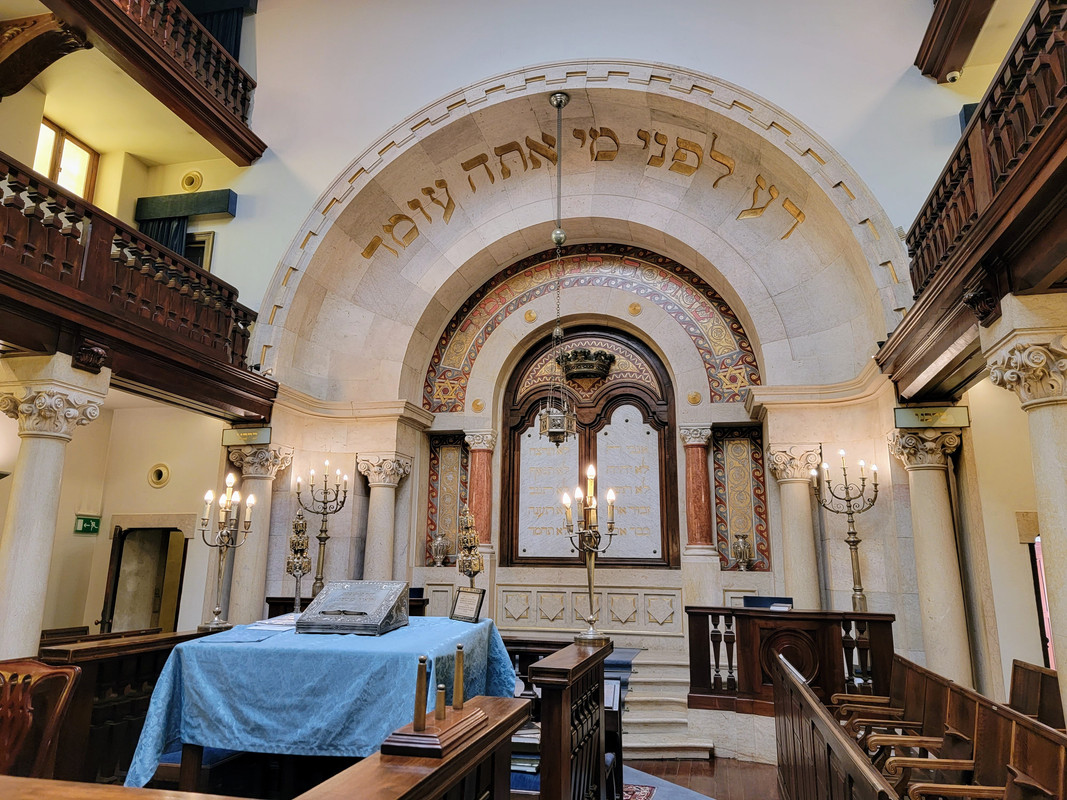
The next morning, I strolled Av. da Liberdade, a tree lined boulevard with expensive shops (think Champs Elysees in Paris or Orchard Street in Singapore) before heading to the Shaare Tikvah Synagogue for a tour. This tour must be arranged in advance (email [email protected]) and a small donation is expected. The tour was incredible, and Sandra, our tour guide, was highly knowledgeable and was able to answer all my questions. At the time it was built, in 1904, they were only permitted to have a side entrance since being openly Jewish was not yet legal in Portugal. The community is made up of 50% Sefardi (mostly Moroccan Jews) who settled here in the 1820s, and 50% Ashekaniz Jews, many who escaped from Poland to Portugal via France during WW2. The reason why so many Polish Jews fled to Portugal is because Portugal’s ambassador to France, Sousa Mendes, wrote visas for 30,000 Polish “tourists” from 1938 to 1940. The Portuguese government fired Mendes in 1940 for this “disgrace” and he was supported by the Jewish community until his death. (For more on this remarkable story see my tour of the Porto Synagogue). The Lubavitcher Rebbe, Rabbi Menachem Mendel Schneerson, and his wife transited through Lisbon in 1941.
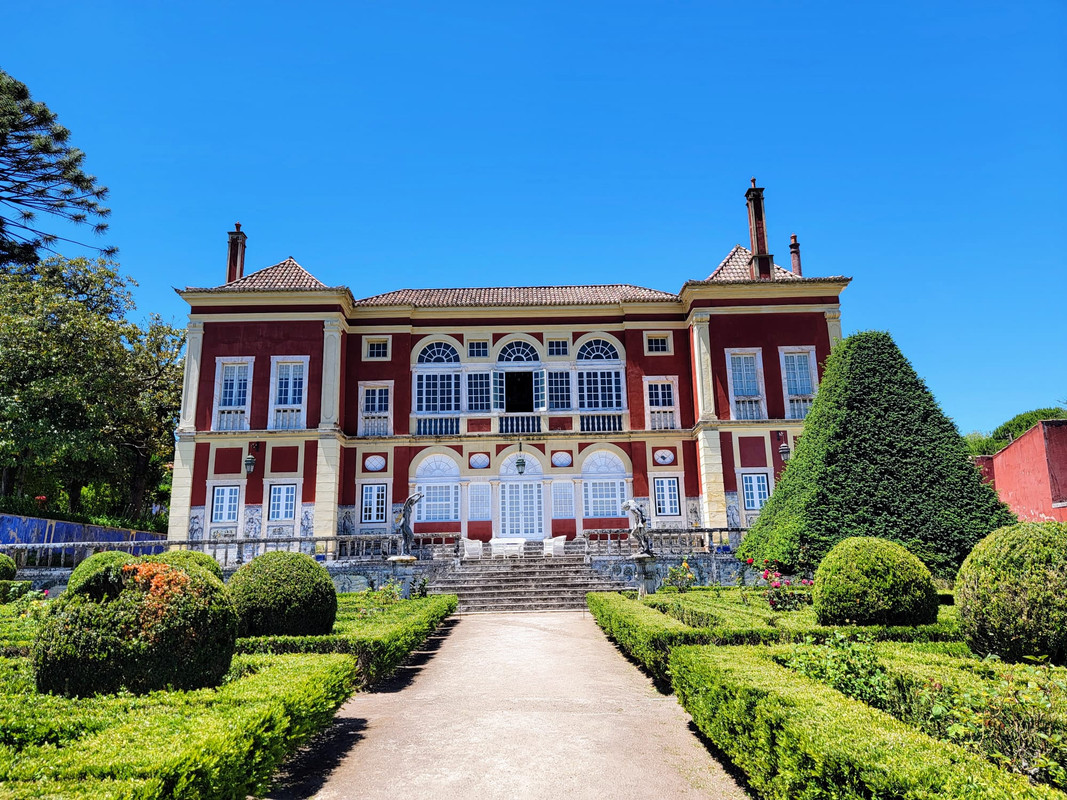
I then headed to the Palace Fronteira, a private residence that is open for tours. There’s one English guided tour here daily so check the schedule in advance.
Next, I headed back to Lisbon’s city center to explore the local tourist traps including the Bairro Alto and Alfama neighborhoods. I used Rick Steves audio tour here and sprinkled in some stops that he doesn’t mention but I knew I wanted to cover.
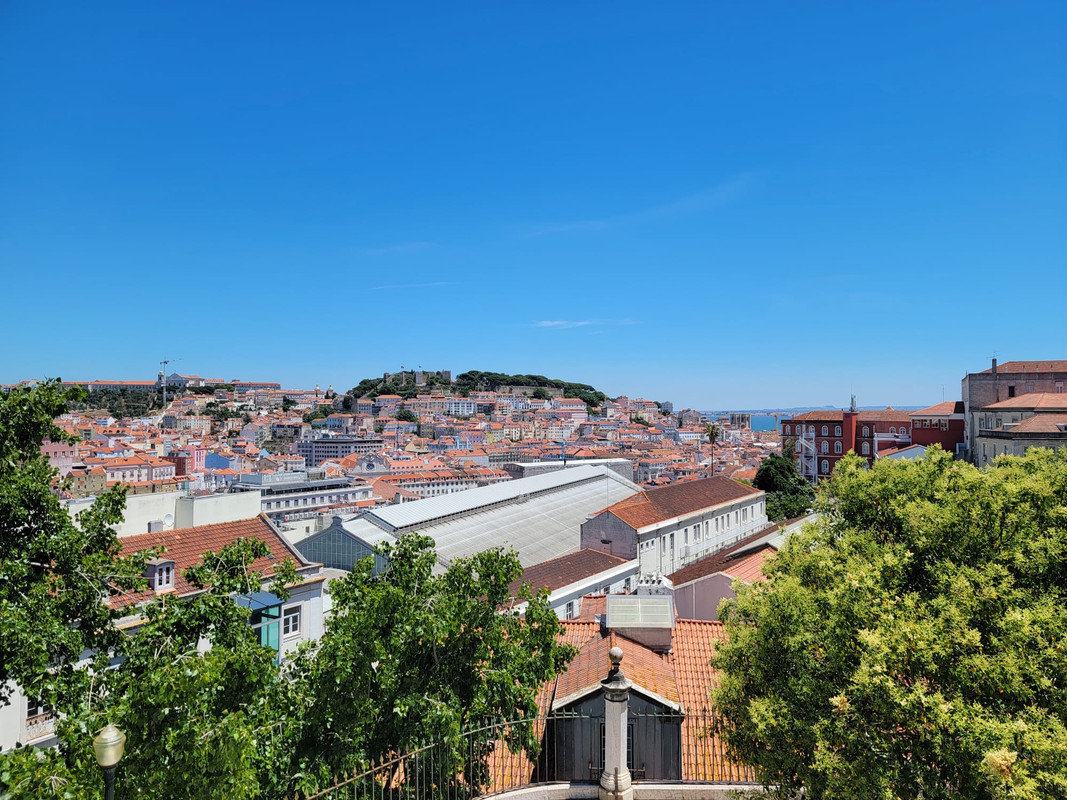
Miradouro de São Pedro de Alcântara- this overlook is less crowded than most other overlooks in Lisbon
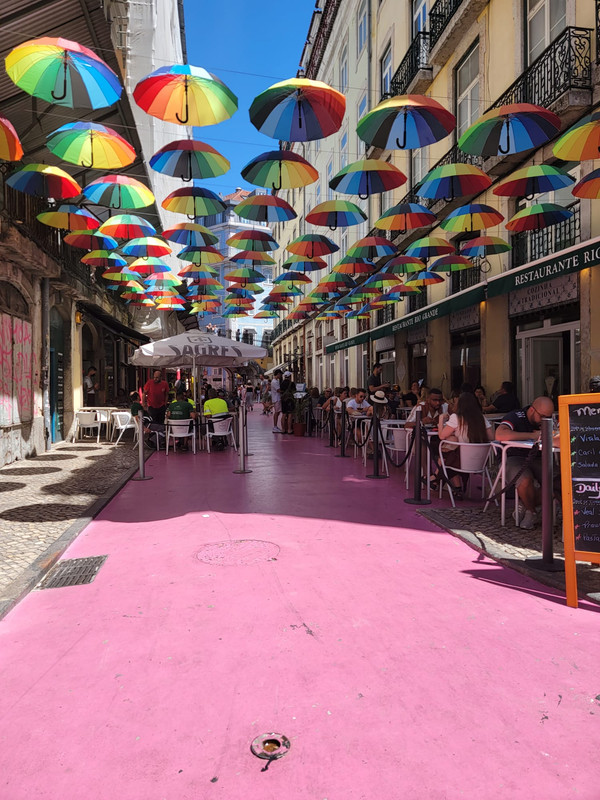
Pink Street
Arco da Rua Augusta- I highly recommend going to the top of the arch- great views! (free with Lisboa card)
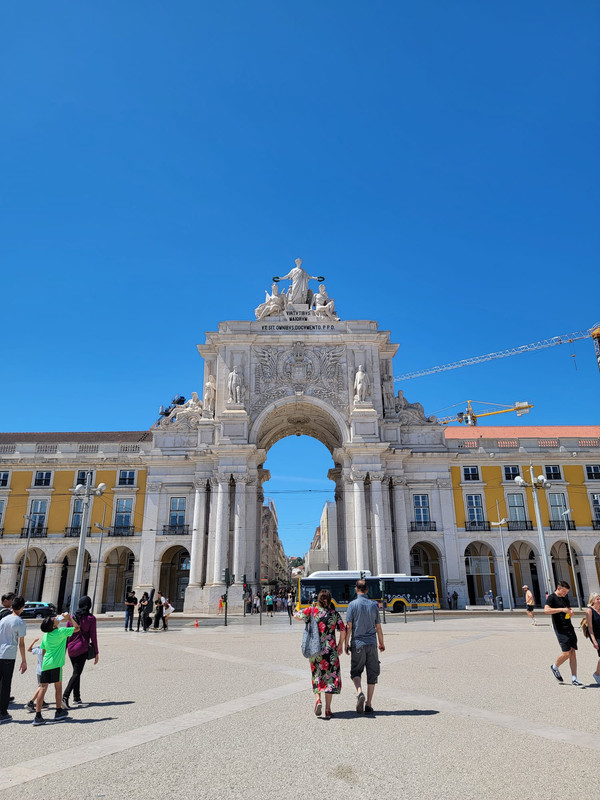
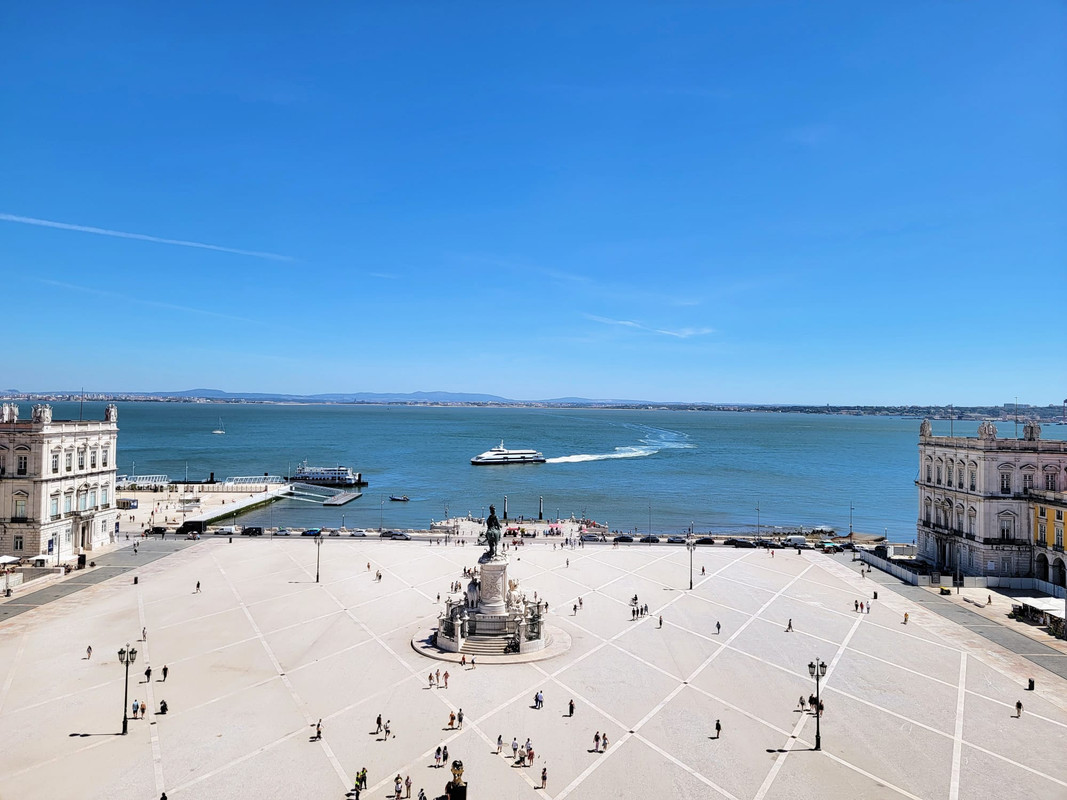
Praça do Comércio- large square (view is from atop Arco da Rua Augusta)
Lisboa Story Centre- this is a history museum of Lisbon. It gave me a good understanding of how the city developed and became what it is today. They have English audio headsets availble.
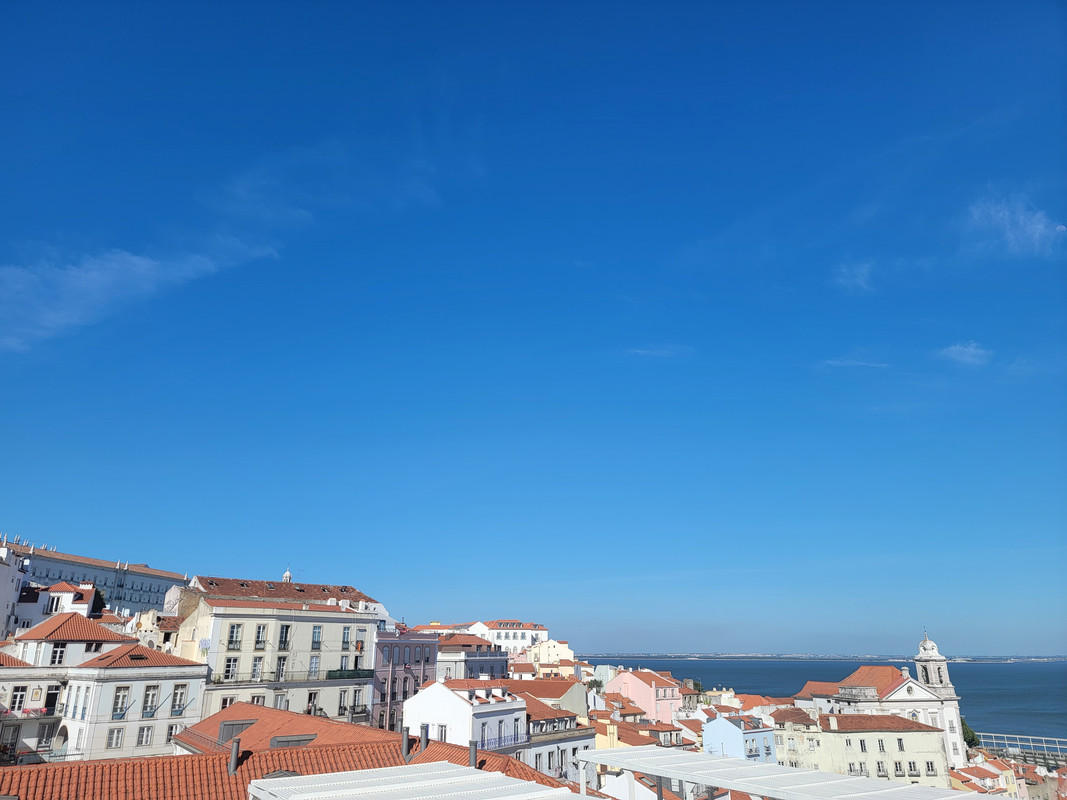
Miradouro de Santa Luzia- this lookout was extremely overcrowded

Miradouro das Portas do Sol- this overlook has great views, but the walk up here is steep

Miradouro da Graça- another overlook…
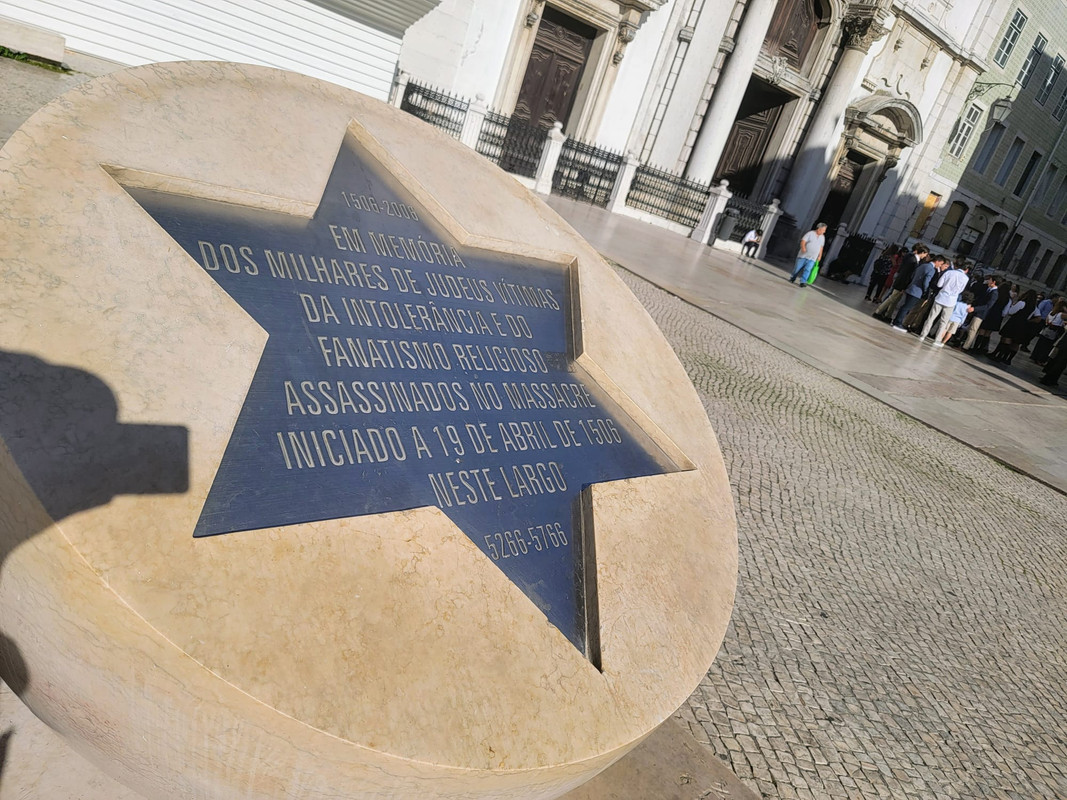
The 1506 Jewish Massacre Memorial- thirty years before the establishment of the Portuguese Inquisition 500 Jews were killed in Lisbon by an angry mob.
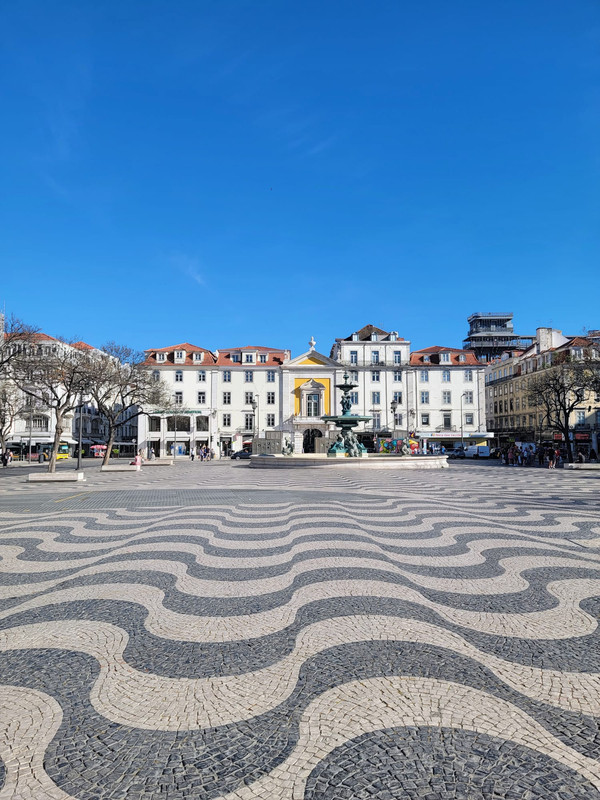
Praça do Rossio- large square
Castelo de S. Jorge- I booked tickets here in advance as they’re known to sell out. It would have been nice to have a tour or audio guide here because the historical significance was lost on me.
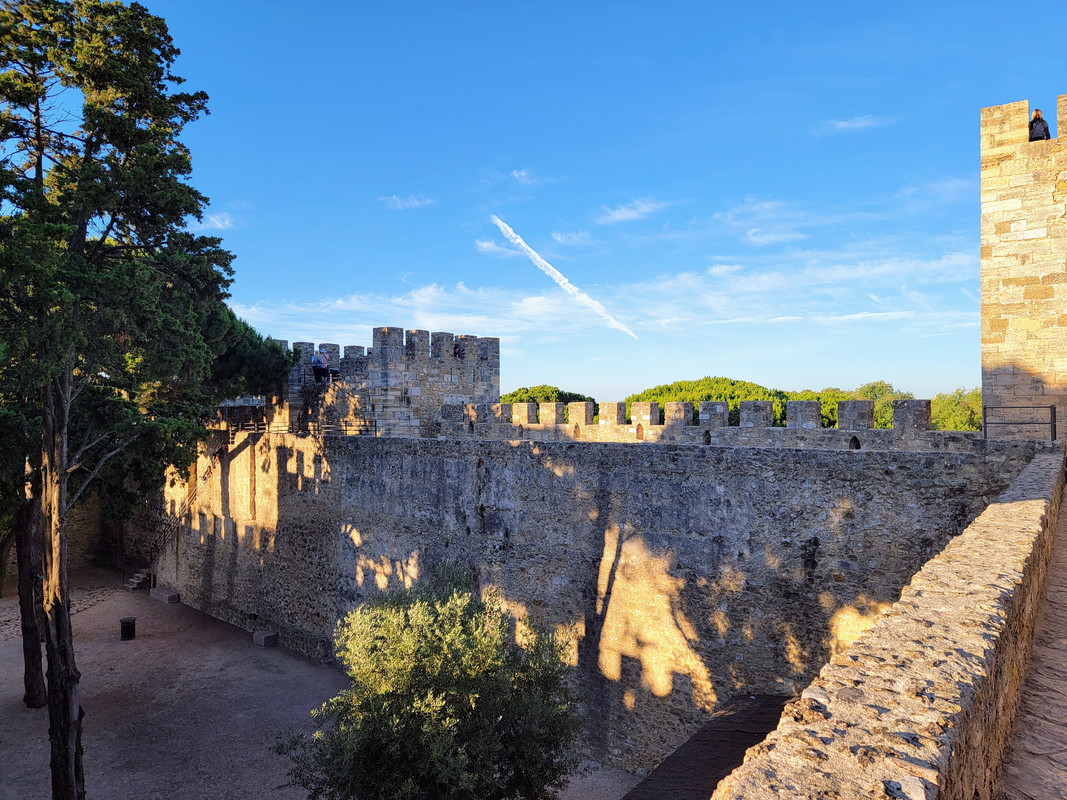
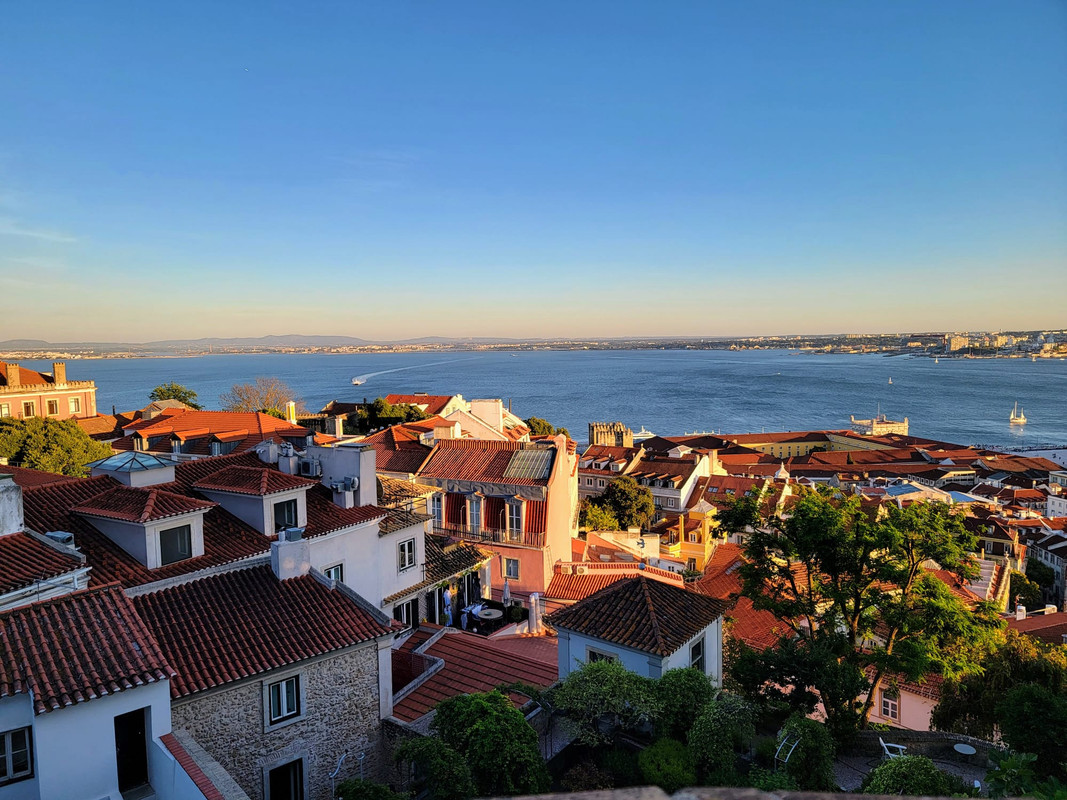
There are also great views of Lisbon from Castelo de S. Jorge.
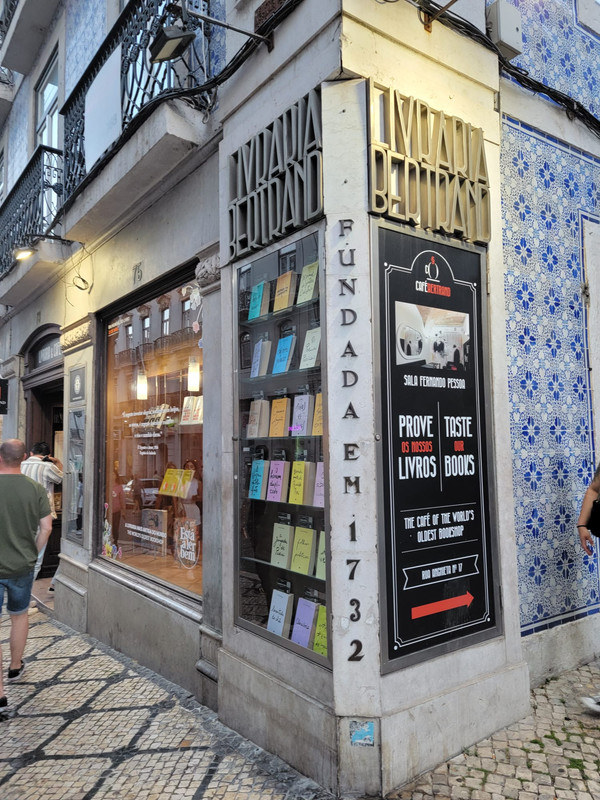
Livraria Bertrand Chiado- this is the oldest bookshop in the world and has been continuously in operation since 1732.
Friday morning, I checked out of my Airbnb and dropped my luggage at a UseBounce facility for the day. I then headed to the Museu Nacional de Arte Antiga. The 3rd floor is mostly religious art, and the 2nd floor is ceramics, furniture, as well as silver and gold artifacts and jewelry. A lot of the artifacts here were collected by the Church in the late 15th and early 16th century when monks received the riches of anyone persecuted for being Jewish. On the first floor they have a magnificent Hieronymus Bosch painting (for me all the heartache of floors 2 and 3 were worth it for this).
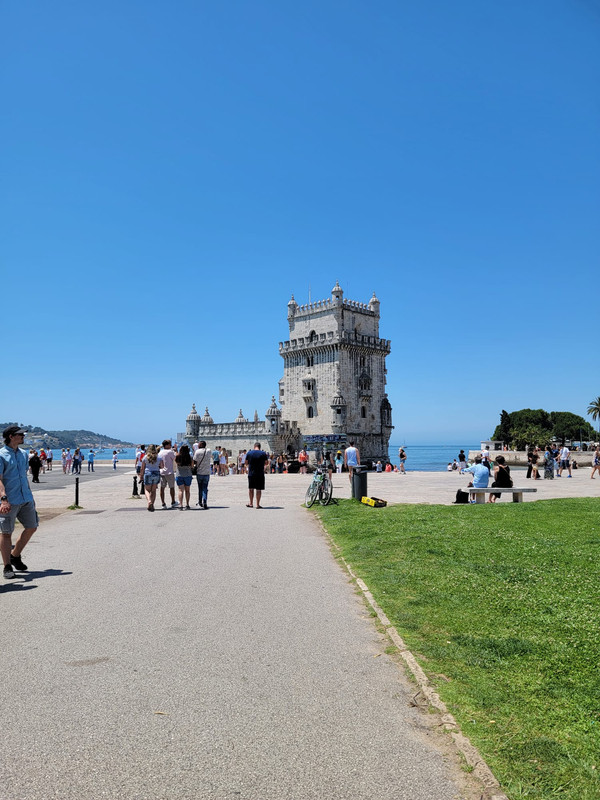
I then headed to Belém Tower, but there was a “technical issue” with the elevator system, so they closed it to visitors for the rest of the day (I later learnt that in Portugal “technical issue” is code for “understaffed”, especially on holidays when many employees call in sick).
My next stop was to the Museu de Marinha, a museum of Portugal’s maritime history and conquests (of which there were many). There’s a separate hall here where restored royal barges are on display, which I found fascinating.

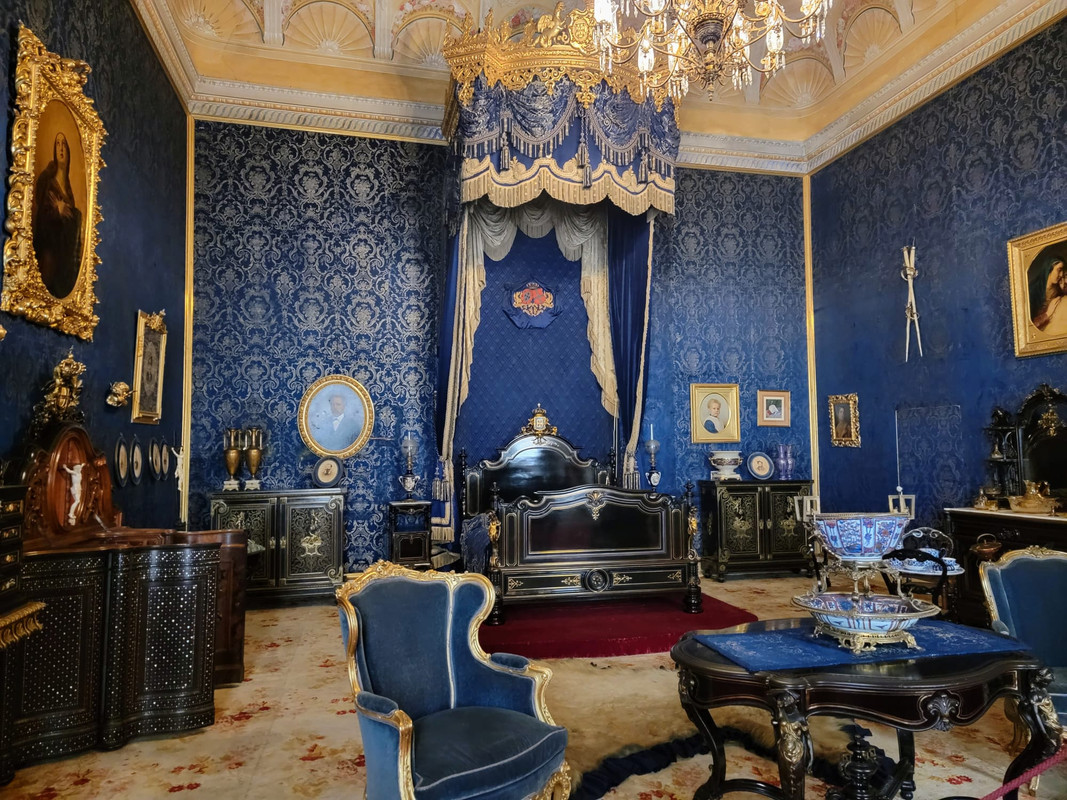
My last tour stop of the day was to the Palácio Nacional da Ajuda, which was one of the official royal residences. It’s small and generally overlooked by tourists, but the interior is richly decorated and beautiful.
I then headed to the airport area to pick up my car rental for the weekend. The best rate I found for an Automatic was with Visacar Lisboa via AzoresGetaways for ~$60/day.
Notes:
-During my research I came across the Sharei Tikva Museum which promises to be a magnificent museum detailing the history of Portuguese Jews, and is expected to open sometime in 2024.
-I skipped two museums which are considered must-dos in Lisbon: The Tiles Museum and the Carriage Museum.
Cascais
Cascais is a beach town located about 45 minutes from Lisbon, and the only Chabad center in Portugal is located here. Traffic is usually bad heading out of the city, but it was a holiday weekend, so the roads were empty. I stopped by the Shaliach’s house to pick up delicious pre-ordered homemade Shabbos food- the Rebbetzin was kind enough to invite me to their Friday night family meal, but I didn’t want to walk 30 minutes from the Sheraton Cascais Resort, where I was staying, to their house at night, so I declined. I did plan on going by Shabbos day, but jetlag got the better of me… The Sheraton Cascais Resort has nice grounds, and the rooms are modern, but the hot water in the shower kept fading in and out, and water pressure was non-existent, which for me put a damper on things… If you head to Cascais for Shabbos you’ll probably be better off staying at a hotel closer to the beach since that’s near Chabad, and Cascais is one of those cute beach towns that are great for walking around to just absorb the atmosphere. (Below: grounds at Sheraton Cascais)

I did not get a chance to visit the Avner Cohen Casa Chabad Library but from what I’ve read they have an amazing collection of books printed from 1487 to 1497 in Portugal.
I spent some more time in Cascais towards the end of my trip, so continue reading if you’d like to hear more😊
Sintra
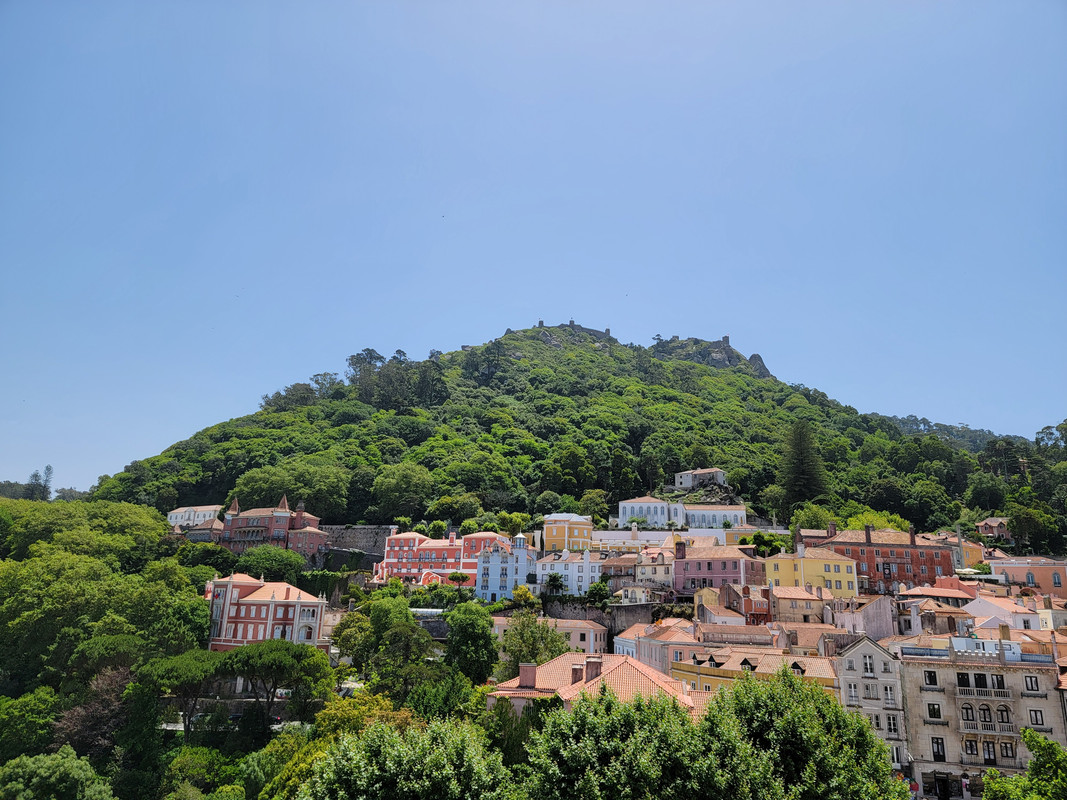
Sunday morning, I checked out of the resort and headed out bright and early to Sintra, a mountainous region with royal palaces and castles. The roads here are narrower and twistier than the West Maui Highway, and even walking is complicated here. Google maps will send you up and down a hill on the main street, rather than a flat walk on a side street. I attempted to map a route myself to avoid this, but I found out the hard way that it’s not really possible to tell if two streets that seemingly connect are on the same level/hill, or if they’re several stories apart.
I purchased tickets and access to the audio guide app in advance for the attractions that are under the Sintra Parks management, even though Pena Palace is the only one that regularly sells out in advance, and the only one with ridiculous crowds. The upside to purchasing tickets in advance for the other sites was that I didn’t need to wait in line at all- I was able to walk right in.
Most of the attraction tickets have a warning that parking is not available on site, so I reached out in advance to the Tivoli Sintra Hotel, now rebranded as the NH Sintra Centro Hotel, where I was to be staying that night to see if I could drop off my car at the hotel early in the morning, even though check-in wasn’t til later in the day. They were very accommodating, and when I stopped by the front desk to let them know that my car was in the garage (it took 2 guys to help me navigate into the tiniest garage spot) they informed me that my room was ready for check-in. The hotel then arranged a cab for me to Pena Palace, my first stop of the day. Entry tickets to Pena Palace are timed, and I reserved the first available slot at 9:30AM, which got me entry when the gates opened at 9AM, to beat the crowds. By 9AM the ticket line for last minute reservations was snaking across the parking lot, and I was sure that beating the crowds by arriving early must be a myth. At 11AM, when I finished my tour and headed out, I had to push through crowds and even the advance ticketholder lane, which was empty when I arrived, had a long snaking line, so yes, it does get worse and worse throughout the day. This was the only Sintra site that was packed.
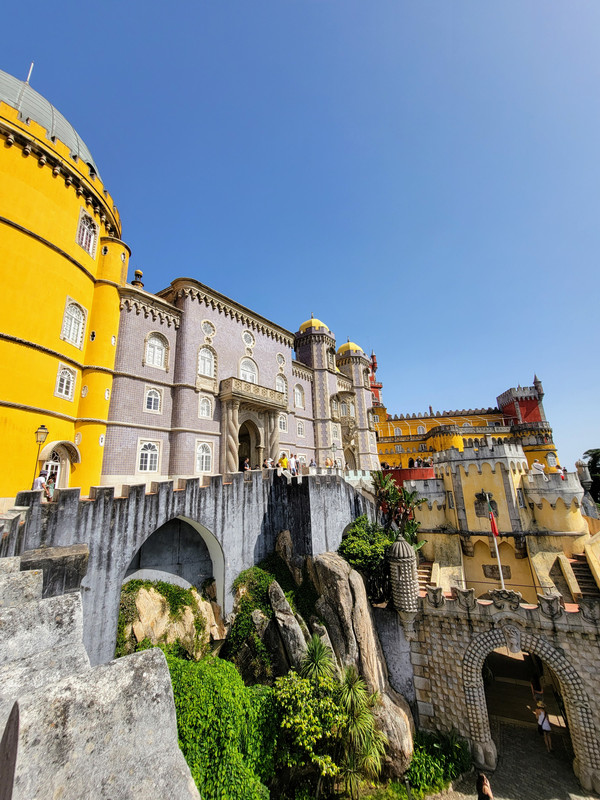
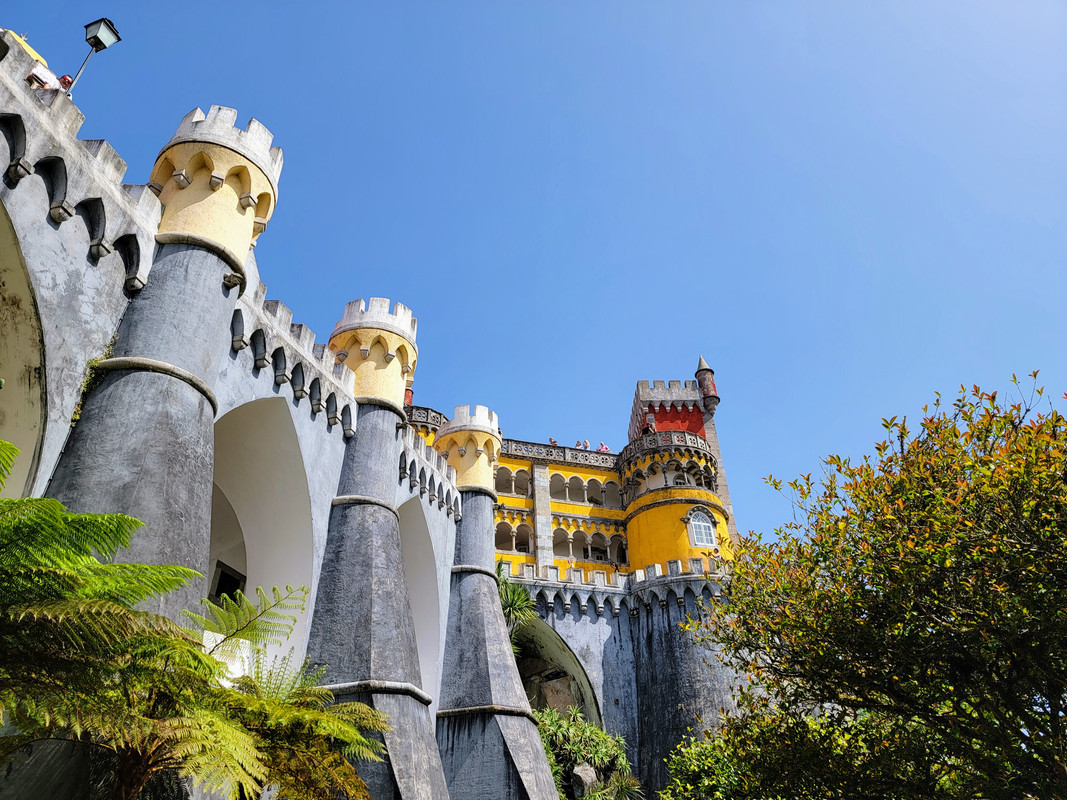
The hike up from the gate to the palace is steep, but it took me less than 10 minutes. There’s also a shuttle up the hill. The inside of Pena Palace is not as luxurious as the other Portuguese Royal palaces I visited, but the architecture and facade is amazing. It feels like a Walt Disney inspiration and not a royal palace. The grounds here are beautiful and extensive, with gardens and lakes. If I could wish the crowds away, Pena Palace would be on my top ten list of attractions worldwide.
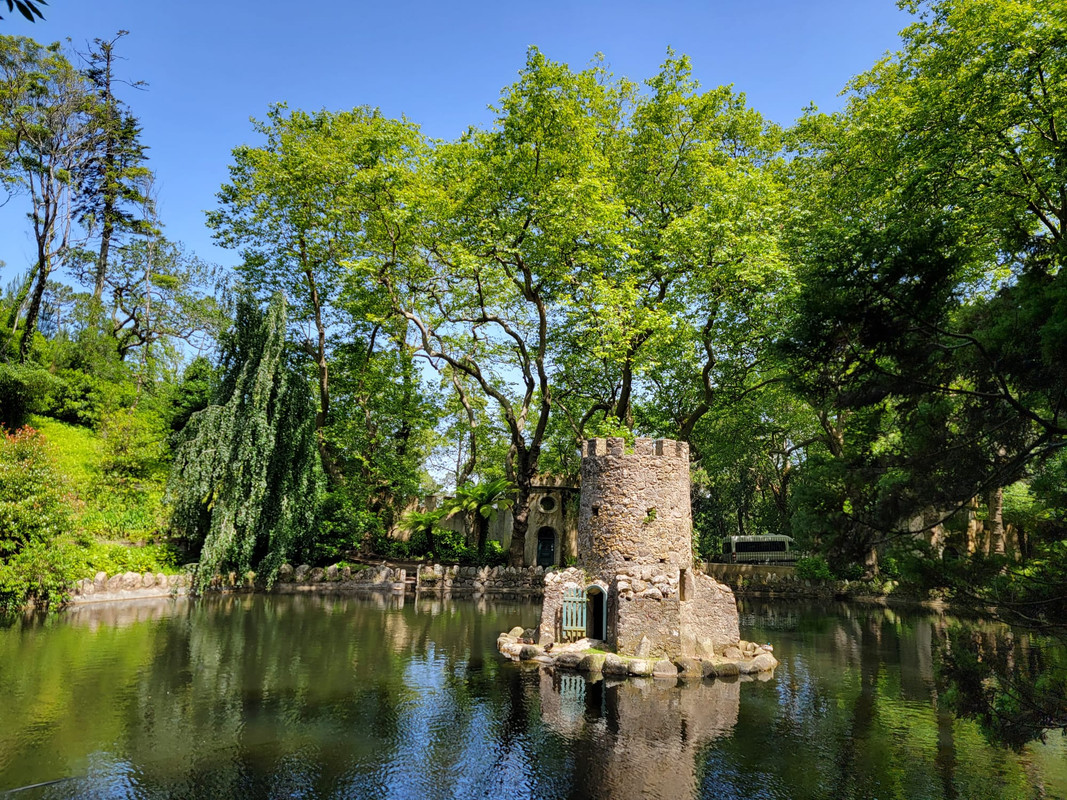
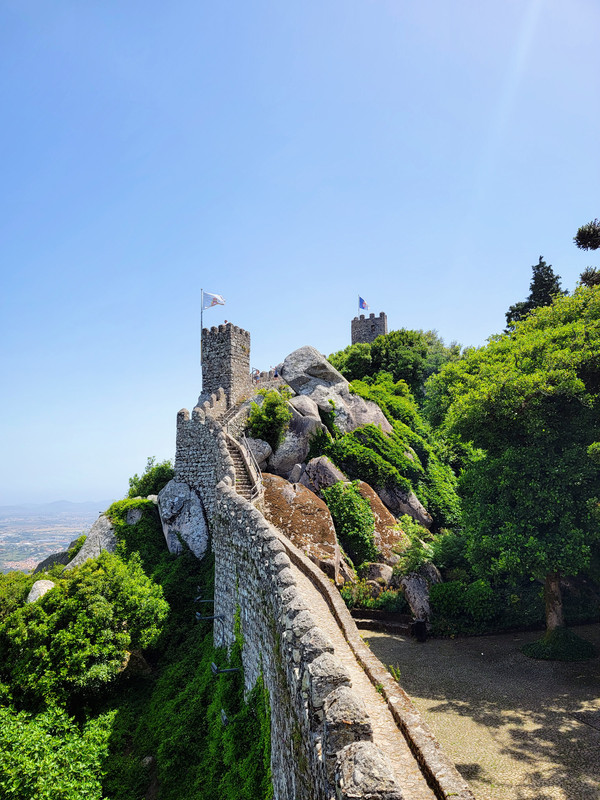
From Pena Palace I hiked to Castelo dos Mouros, a once-fortified castle which is now mostly ruins, that was built in the 8th and 9th century by the Moors. There’s no audio app for the Moorish Castle, but I did learn that by the 15th century Jewish settlers were the only inhabitants of Castelo dos Mouros, and when the Jews were expelled from Portugal in 1497, the castle was completely abandoned. There are great views of Sintra town and Pena Palace from up here.

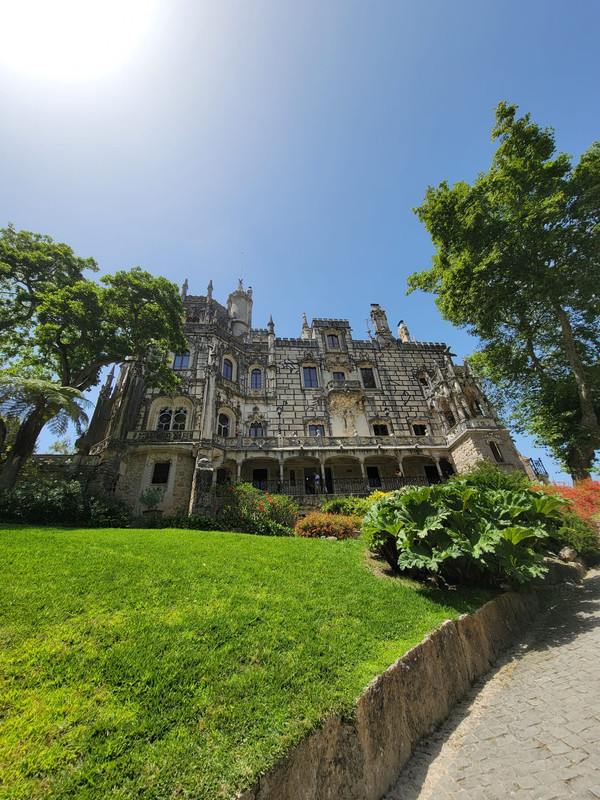
Next, I hiked down the mountain to the town of Sintra and the Sintra National Palace. I then walked to Quinta da Regaleira, a well preserved and enormous estate.
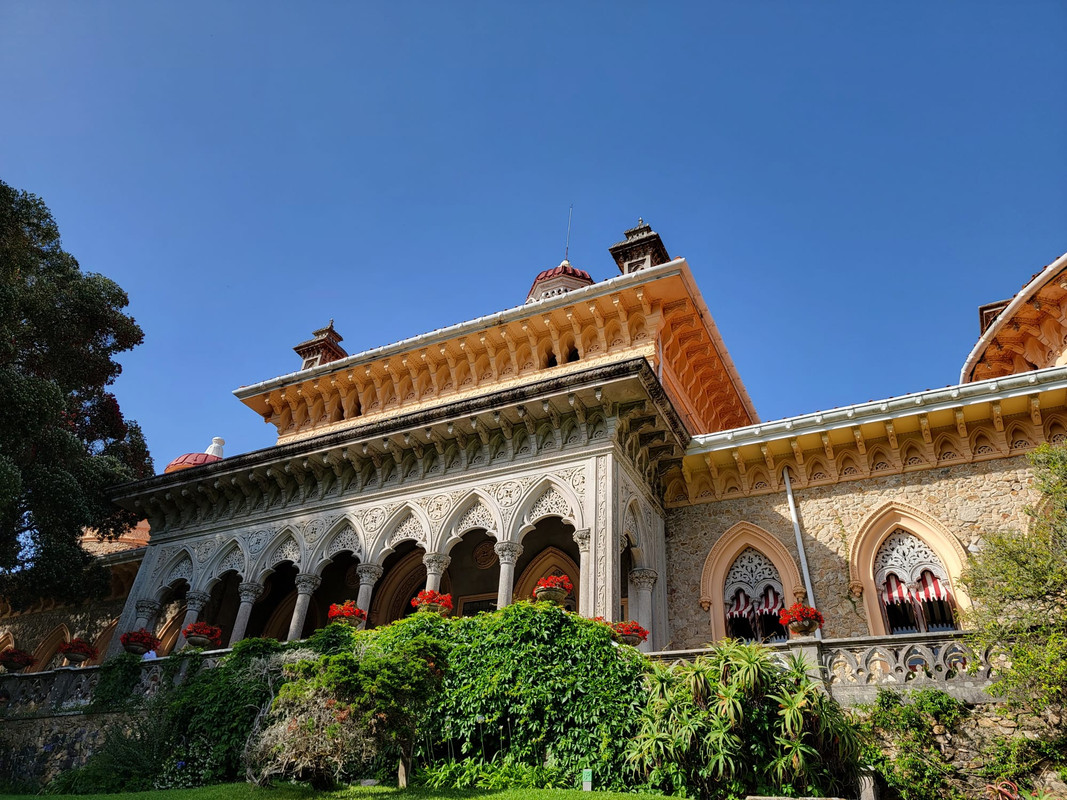
My last stop for the day was the Park and Palace of Monserrate. Since this is not located close to Sintra town I headed back to the hotel, maneuvered my car out of that garage (I again needed help from two people to make it out) and headed to Monserrate palace where parking is plentiful. This is by far the most underrated Sintra attraction. The beautiful palace with picture perfect grounds is a feast for the eyes.

The next morning I headed out for my first real hike on this trip, the 10.8 km Cabo da Roca to Azenhas do Mar Coastal trail. I parked my car at Azenhas do Mar, where parking is plentiful early morning, and then took an Uber to Cabo da Roca to start the hike. I figured it would be easier to hike towards my car, rather than parking at the starting point and then having to Uber back. While the weather was perfectly clear inland, the coast was shrouded in heavy clouds and fog. The upside of this was that I was pleasantly cool throughout, the downside was that I couldn’t see more than 5 feet in front of me, and I definitely couldn’t see the beautiful beaches that are inaccessible to anyone but hikers tackling this trail, or the stunning rock formations on Praia da Ursa and Praia da Adraga.
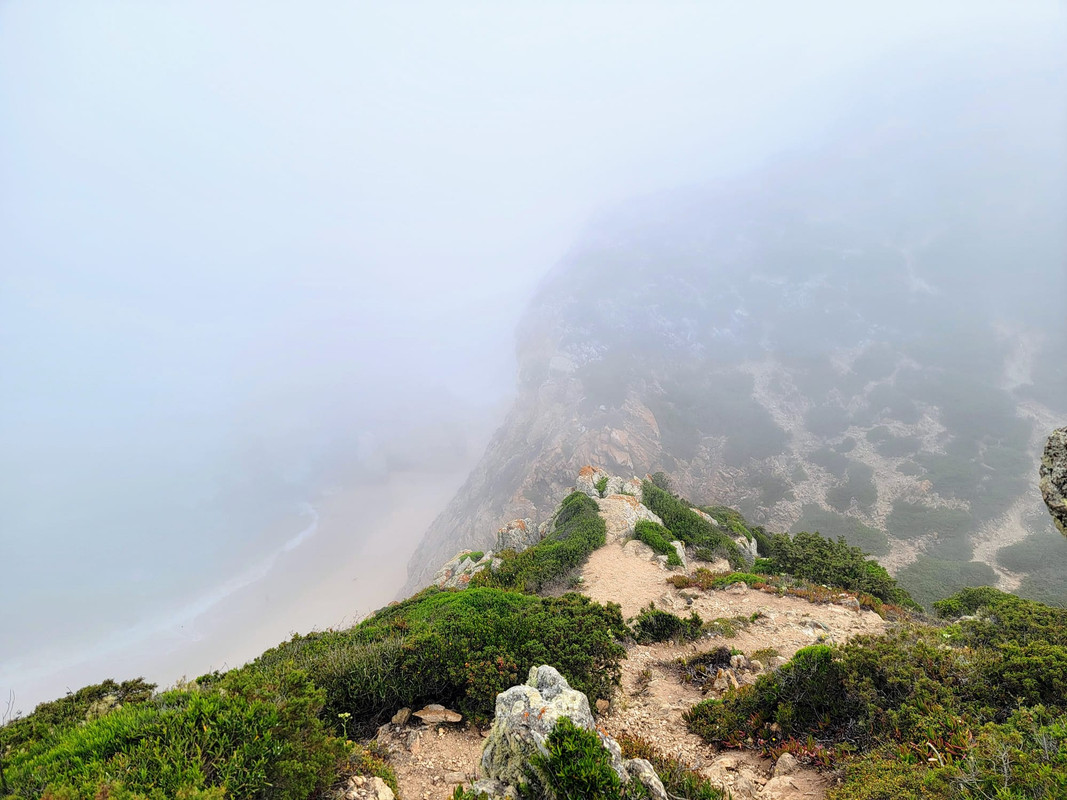
The first half of the trail is steep, a hands and knees operation, but after that it becomes more bearable.
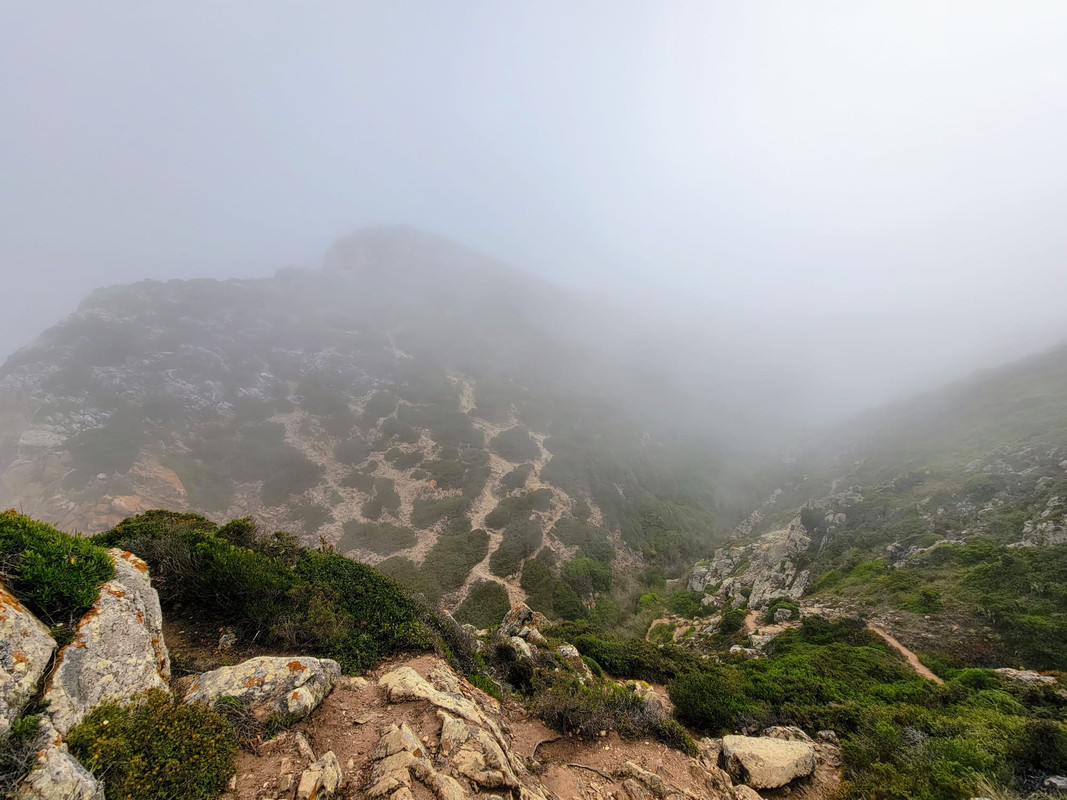
I made two mistakes on the trail which cost me about an hour- at one point I climbed the wrong hill, so I had to slide back down and climb the opposing hill. I also lost the trail marker at some point and ended up walking too far inland, which on top of adding distance, was also under the burning sun. The hike ended up taking me four hours, so all things considered I made good time. I visited the trail again on a sunny day towards the end of my trip, so continue reading if you’d like to hear more😊
My next stop was to Queluz National Palace, another underrated gem. I pretty much had the place to myself.
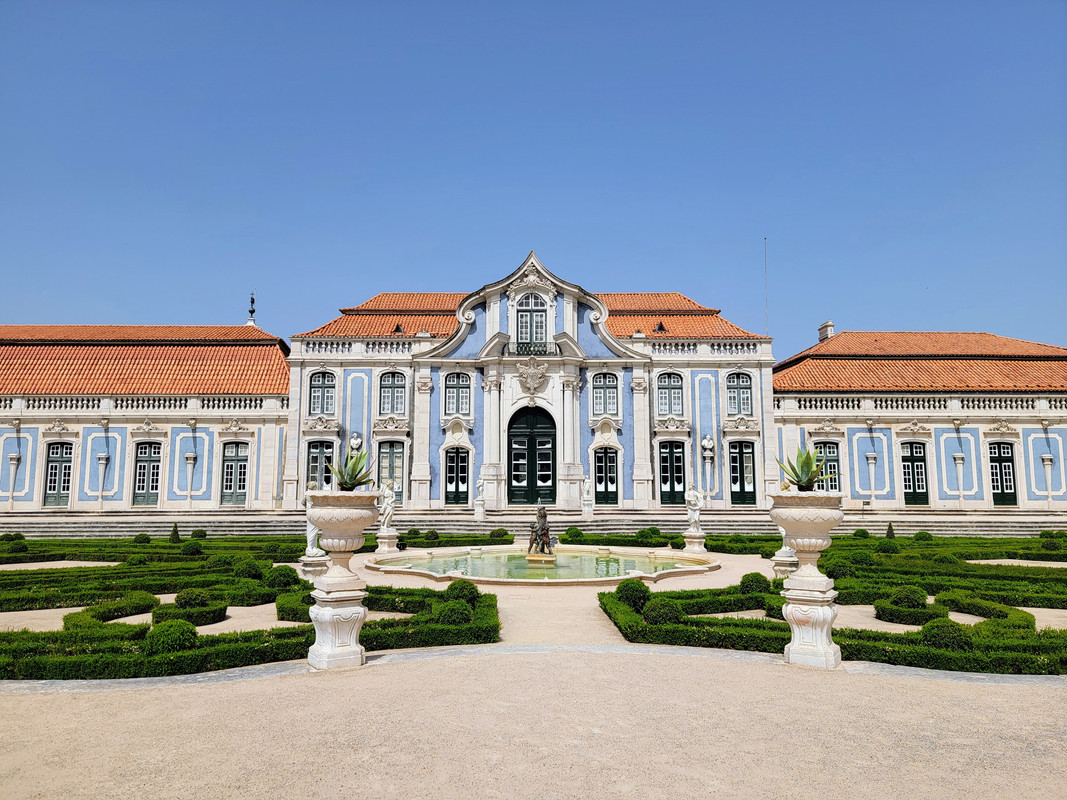
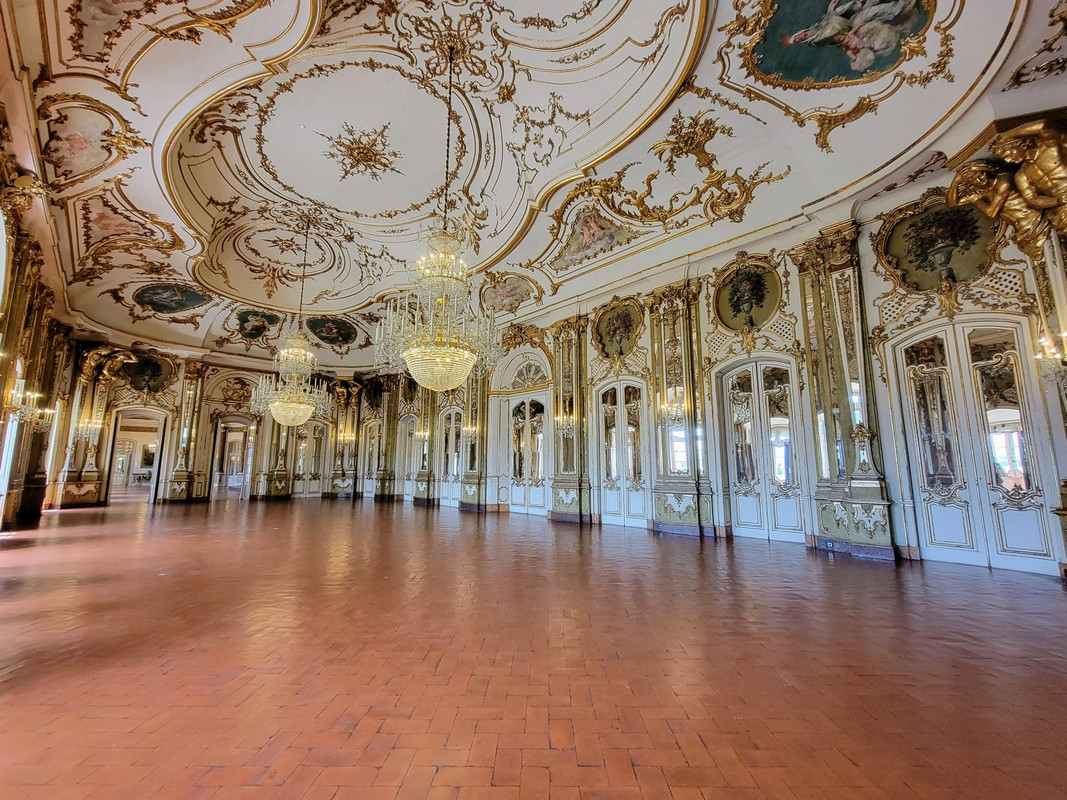
I then headed back to Lisbon to return my car rental before my flight to Madeira.
Madeira
For those of you that are not familiar, Madeira is a Portuguese island off the coast of Africa, in a region known as Macaronesia. In some ways it is similar to Hawaii, as it is volcanic, green yet rugged, with high cliffs. Most of the beaches are pebbly though, and there are very few sand beaches. The capital of Madeira, and the only city on the island, is Funchal, which is full of botanical gardens and parks. Funchal (and all of Madeira) is very hilly, and along the coast most of the highways are tunnels. It’s a popular cruise ship port and based on my research it gets very crowded when there are ships in the harbor, so but I planned my trip on days when there were no cruise ships scheduled to dock.
The speed limit on the island varies based on the current weather conditions.

I had purchased a cheap EasyJet ticket with no luggage, but luckily no one said a word about my 2 carry-ons, and I wasn’t charged. Upon landing I purchased a round-trip Aerobus ticket for $8 to transfer from the airport to Funchal and back, and then proceeded to wait 30 minutes on the bus until the driver was sufficiently happy with his passenger-packing skills. Thankfully I boarded early so I at least had a seat.
I was generally pleased with my apartment rental in Funchal, the only downside being that it had no A/C (most apartments in Funchal don’t have A/C, as it cools down considerably at night). The apartment did have a reserved parking spot in the underground garage (with a parking spot narrower than the one in Sintra), which was a lifesaver, as parking is nearly impossible in the city. The host was also ok with me keeping my bags here til late in the afternoon on my checkout day, another plus.
Tuesday morning my first stop was to pick up my rental car. I found it cheaper to rent a car in the city than at the airport, and the local companies were much cheaper than the large chains. I reserved a “standard” (by Portuguese standards) car at Rent-a-Car Madeira, where I paid ~$95/day for a tiny automatic sedan. You can get a mini for a bit cheaper, but I didn’t want to risk not having enough torque to pull up those steep hills, so I didn’t go for the smallest car (don’t go for something too big either- you’ll have hard time navigating the sharp turns and small towns where the roads are often no wider than your car)- good thing too. By the time I returned the car it was moaning and groaning. (Below: my driving route for the day).
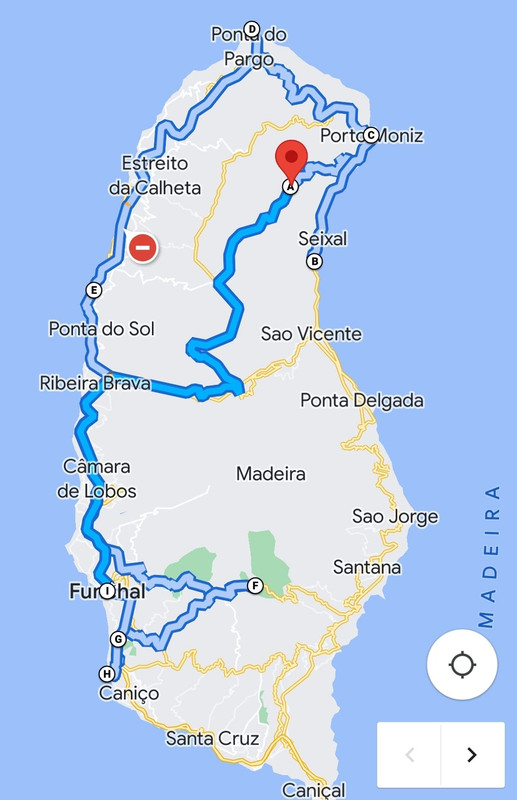
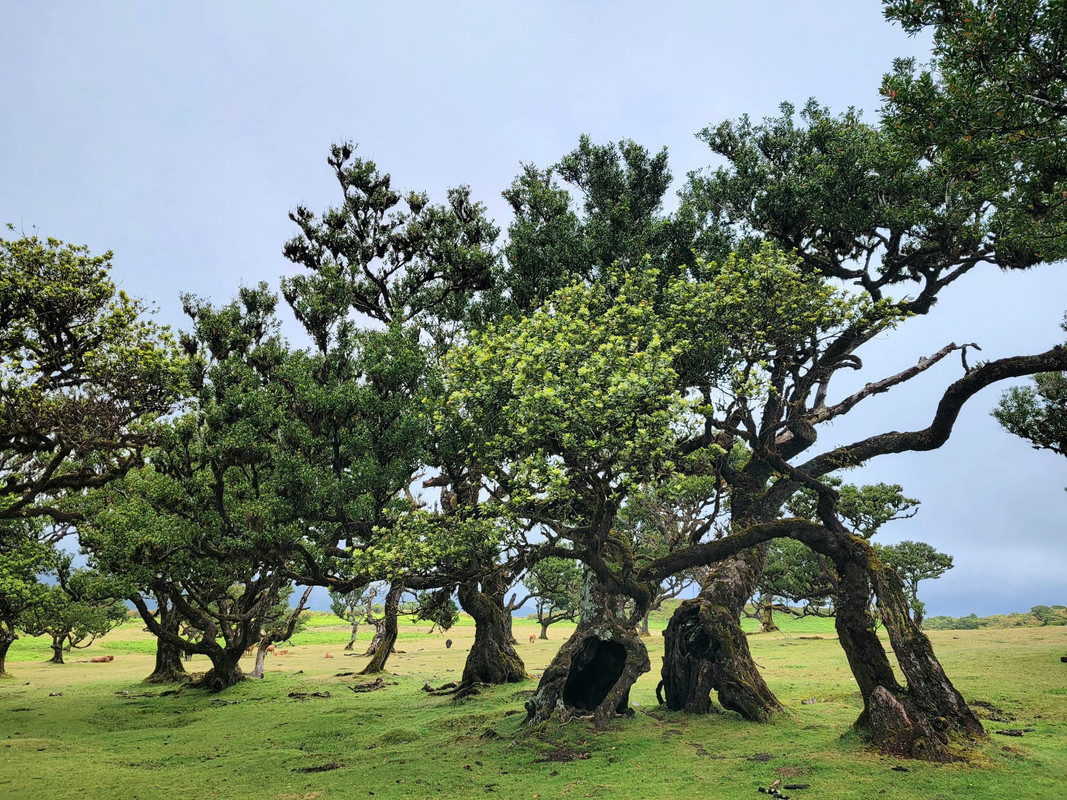
My first stop was to Fanal Pond. It’s generally recommended to visit this spot early in the morning when the fog is still hanging over the mountain. While my drive to Fanal was through pounding rain, which then turned to fog, unfortunately by the time I made it the fog had lifted, but it was still beautifully idyllic.
Next, I headed to the Miradouro do Véu da Noiva lookout- parking is supposed to be a nightmare, but I found a spot easily.
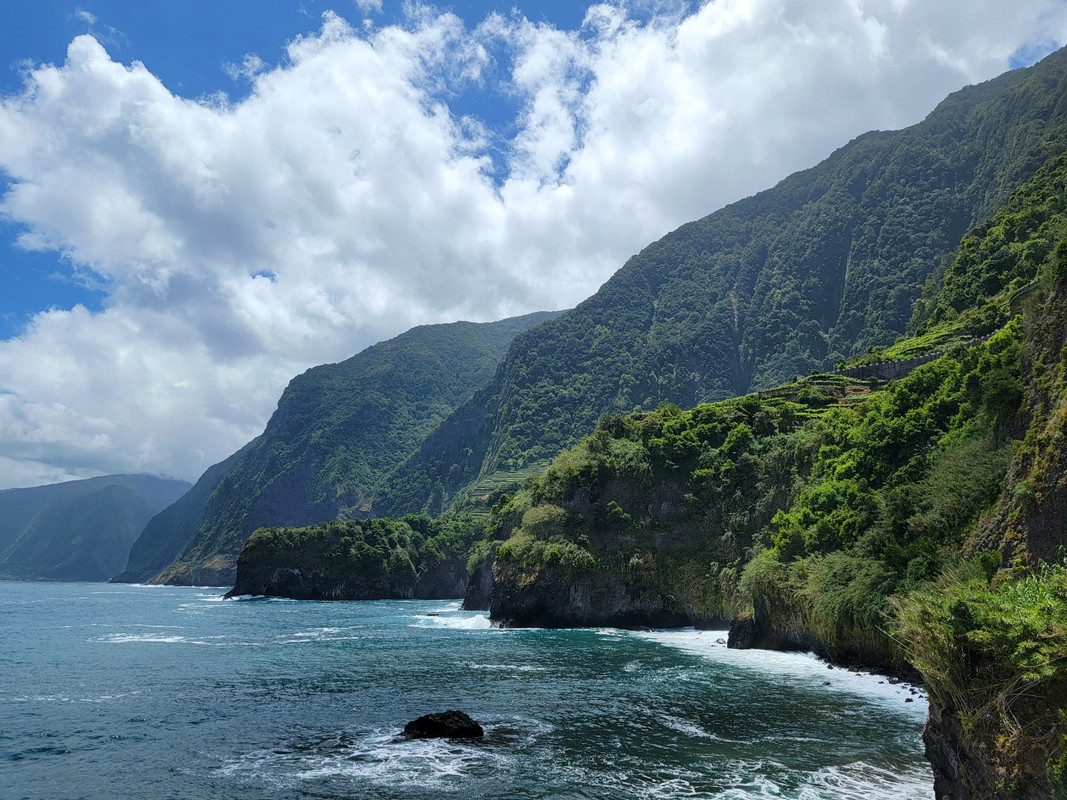
Praia do Porto do Seixal- a tiny black sand beach

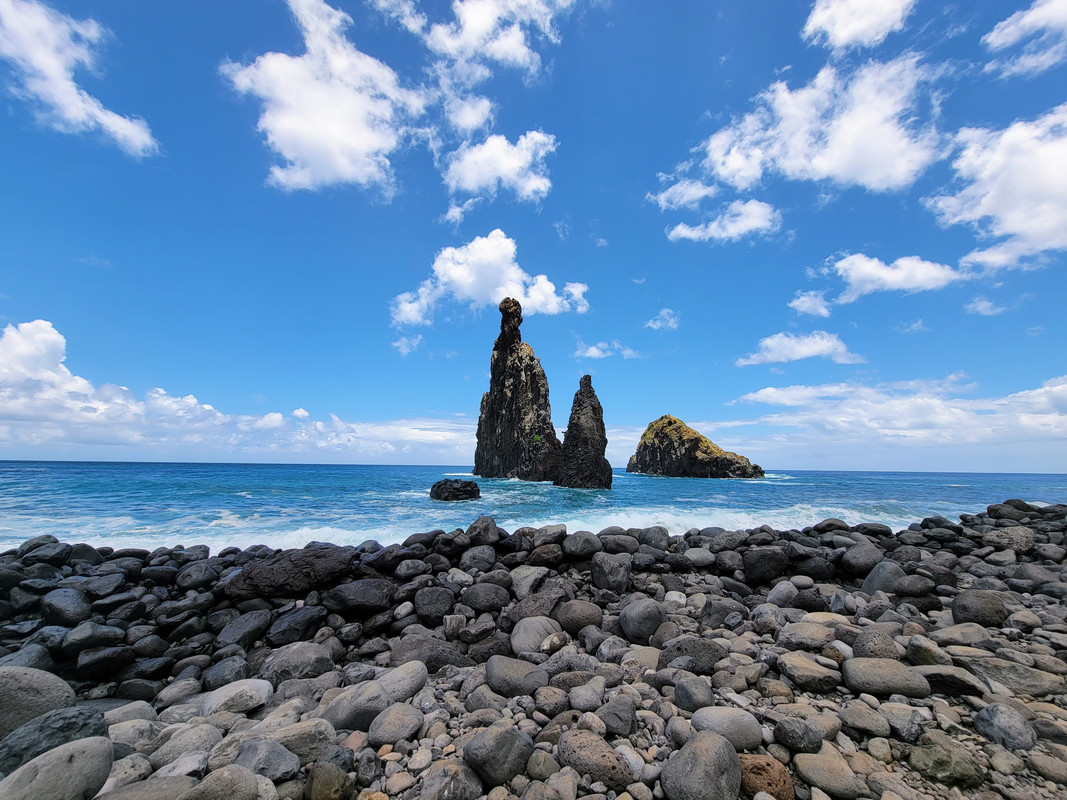
Miradouro Ilheus da Ribeira da Janela- some of the best views on Madeira, and parking was easy

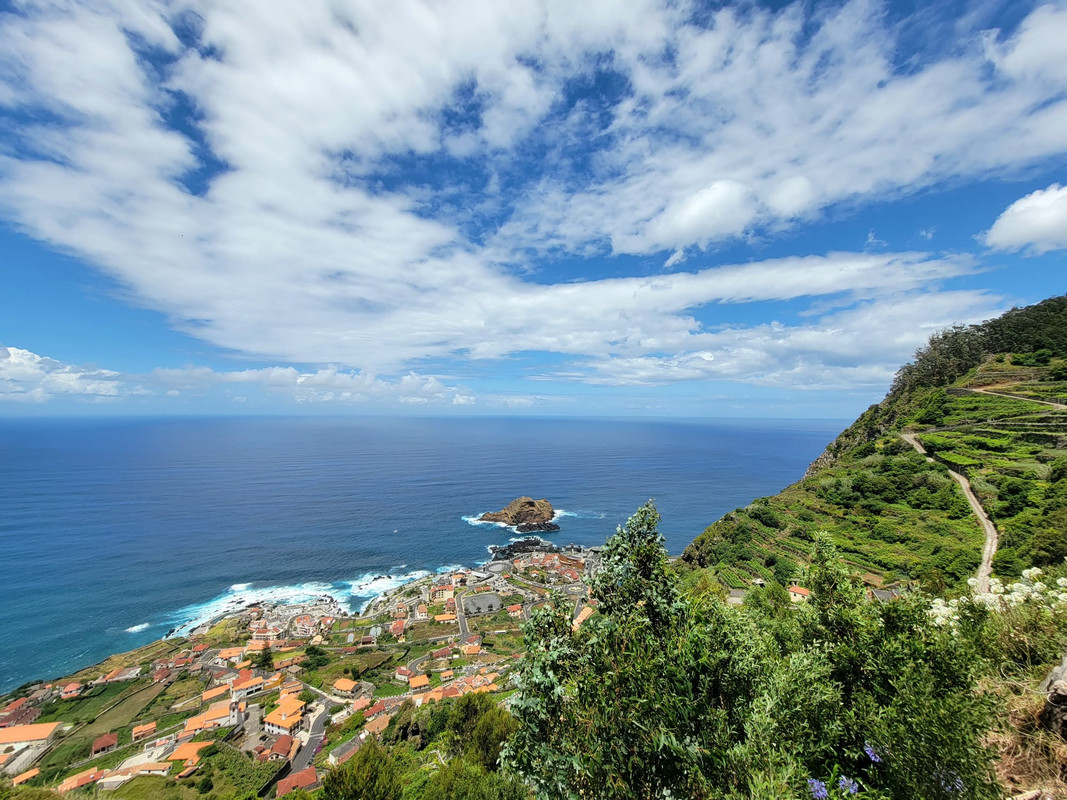
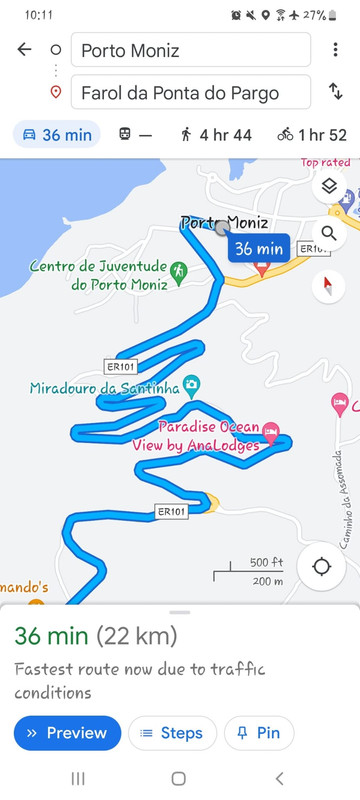
Next, I headed to Farol da Ponta do Pargo. The drive to here from Porto Moniz started on the coast and then meandered through rain forests with hairpin turns up the slopes. I had debated skipping this since it added quite a bit to my drive, but I’m glad I went. Not so much for the lighthouse views but because the mountain drive through the rainforest drive was magnificent and fun! (Some might call it nauseating and terrifying).
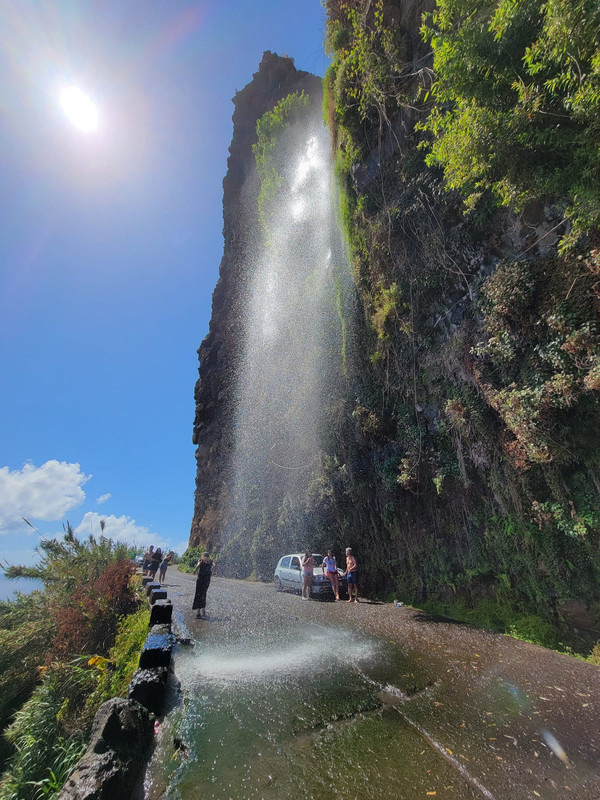
Anjos Waterfall is a waterfall that cascades over the road. Parking here is difficult so don’t be shy- just drive right through the falls for the best experience.
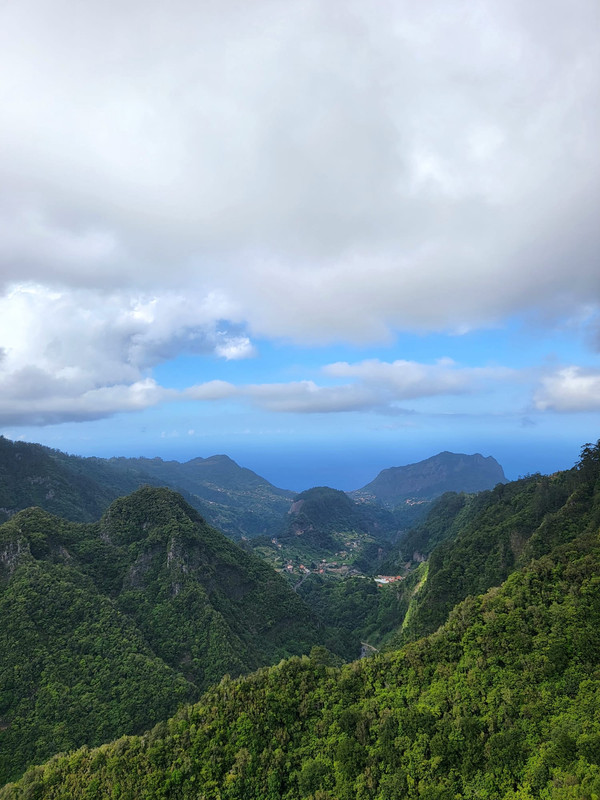
Madeira is full of “Levadas”, a mountains irrigation system used to funnel water from the rainy mountaintops to the drier coast. Most levadas are no longer in use, and the tourism bureau has converted them to official hiking trails, which is why the island has a lot of very easy to follow trails. My first trail on Madeira was the PR11 Levada dos Balcões. It’s a short, flat, 3km (out and back) trail which can be done with young kids. It took me approximately 35 minutes round trip. The hike takes you to a Balcões (balcony) and the views are magnificent.
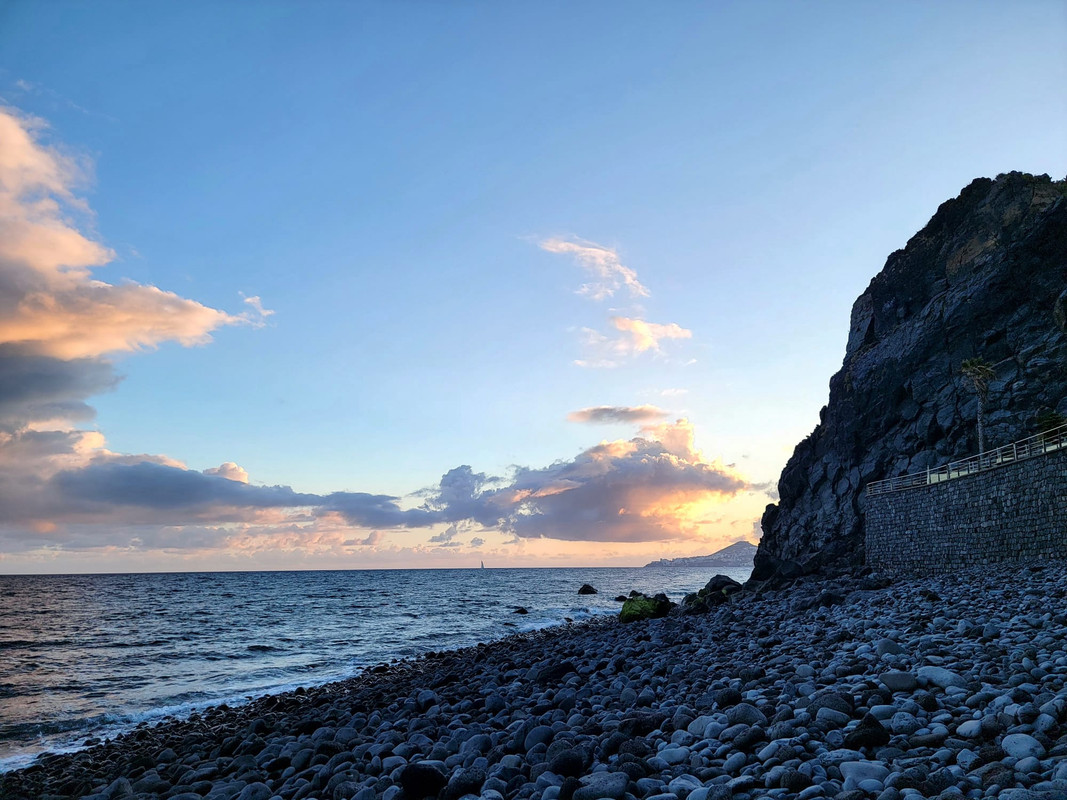
Garajau Beach- the beach was deserted at sunset.
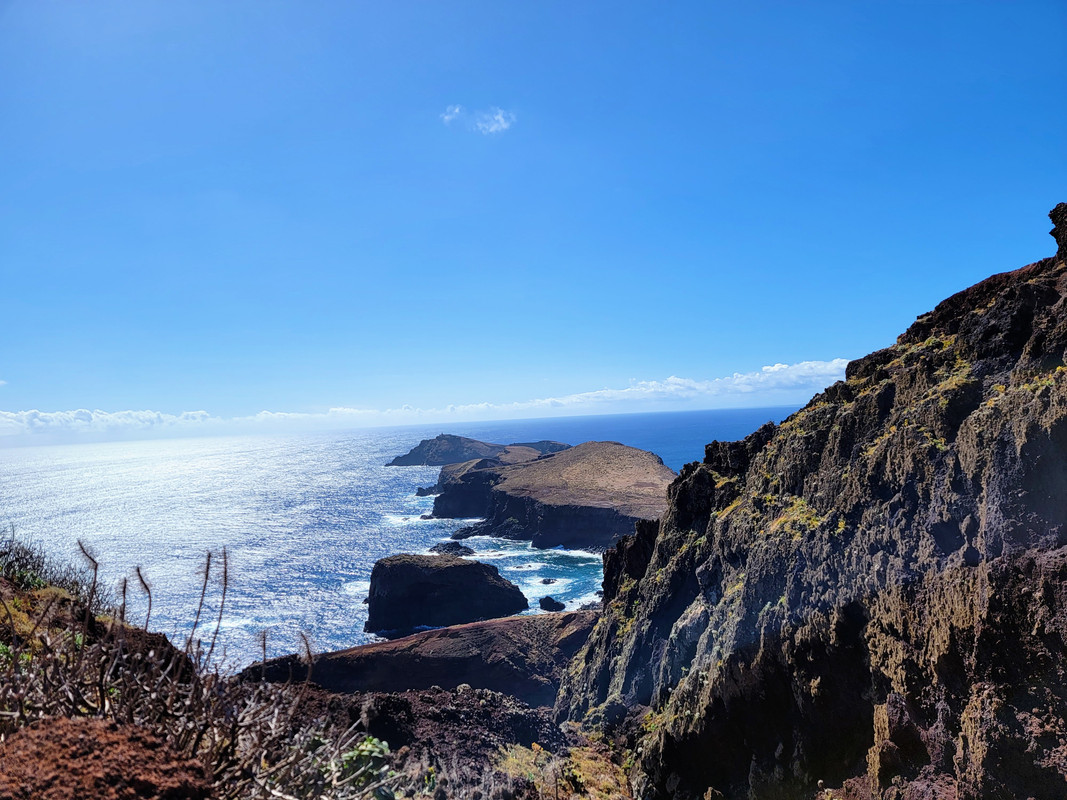
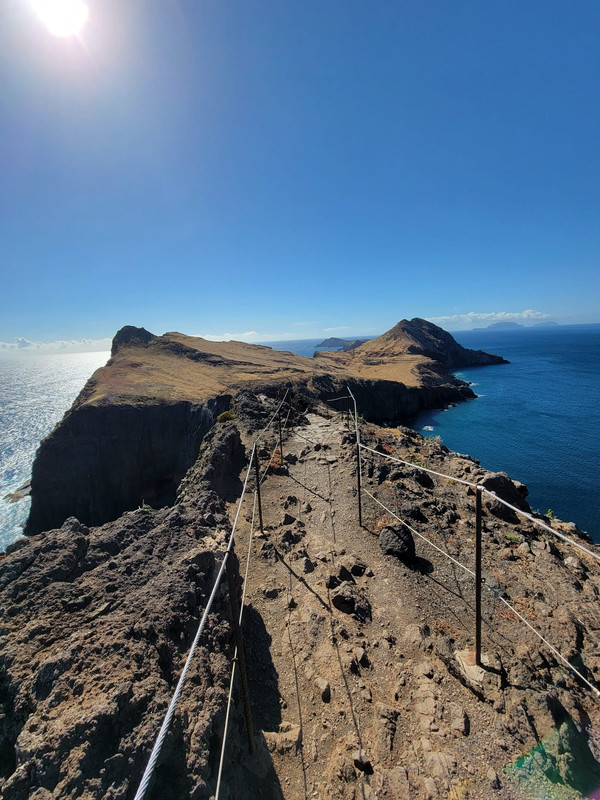
The next morning, I headed to Ponta de São Lourenço for the 6km PR8 Vereda da Ponta de São Lourenço hike. It’s best to do this early AM as the trail gets very crowded later in the day. The wind is intense here, and for a change was a real help as the sun was beating down mercilessly throughout. I lost my cap (and nearly lost myself) a few times due to the wind. If you’re not of big stature be prepared to have to hold on for dear life. At the end of the hike, right before the most difficult part- the climb to the “dragon’s tail”- there are some water activities such as canoeing. There’s also a small café here. The hike ended up taking me just under 3 hours. On the way back, at around 11AM, the trail was quite full, and many hikers had to step off the trail to let others pass.
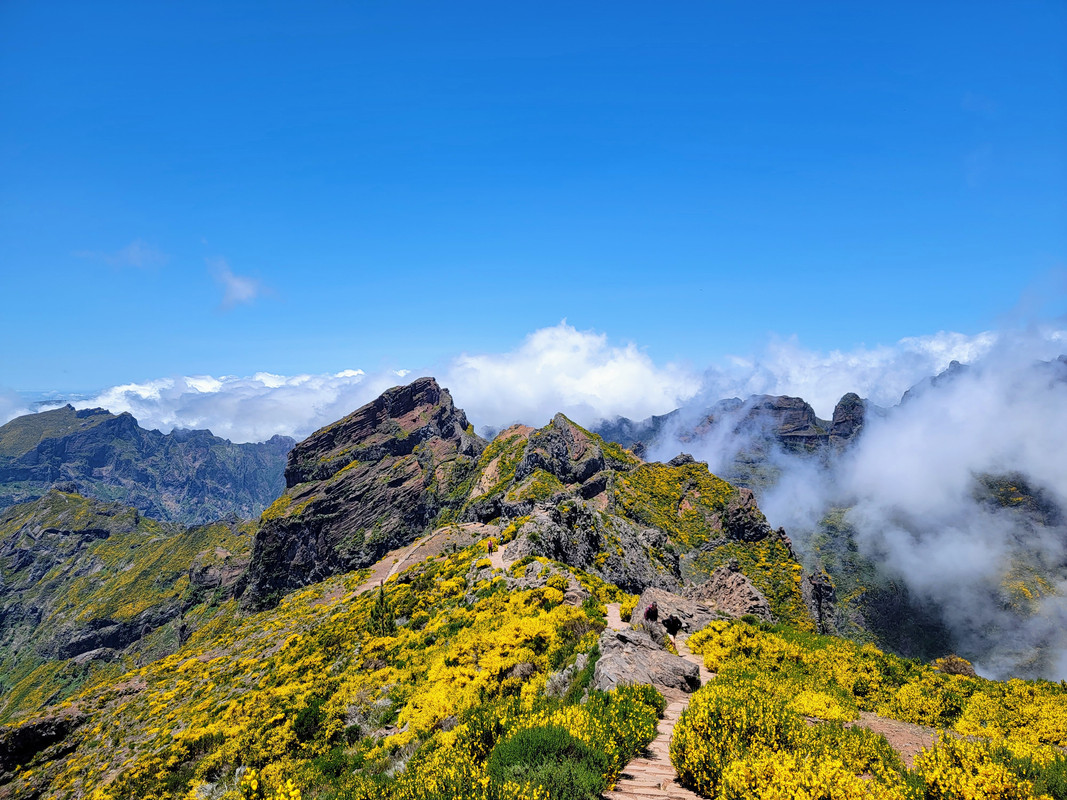
Next, I headed to Pico do Arieiro, the third highest peak on Madeira. I was originally scheduled to hike the 11km PR1 from Pico do Ariero to Pico do Ruivo (the highest peak on Madeira) to Texeira with Pico Transfers on my last day in Madeira, but I received a call from them that the trail was washed out due to heavy rains and no hiking was permitted. The trail did end up reopening the night before the scheduled hike, but at that point the group fell apart and they decided to refund everyone instead. I never do hikes with organized groups, and I guess now I know why… (I made an exception in this case since I didn’t want to hike this out-and-back, and it’s close to impossible to get a taxi from Texeira back to the starting point). After having read so much about the beauty of Pico do Arieiro I had to check it out, even just for a glimpse, and it did not disappoint. The drive was through the pouring rain with zero visibility, but as soon as I cleared the tree line the rain stopped, and the sun came out.

I was compelled to pull over every few minutes at the side of the road to admire the view.
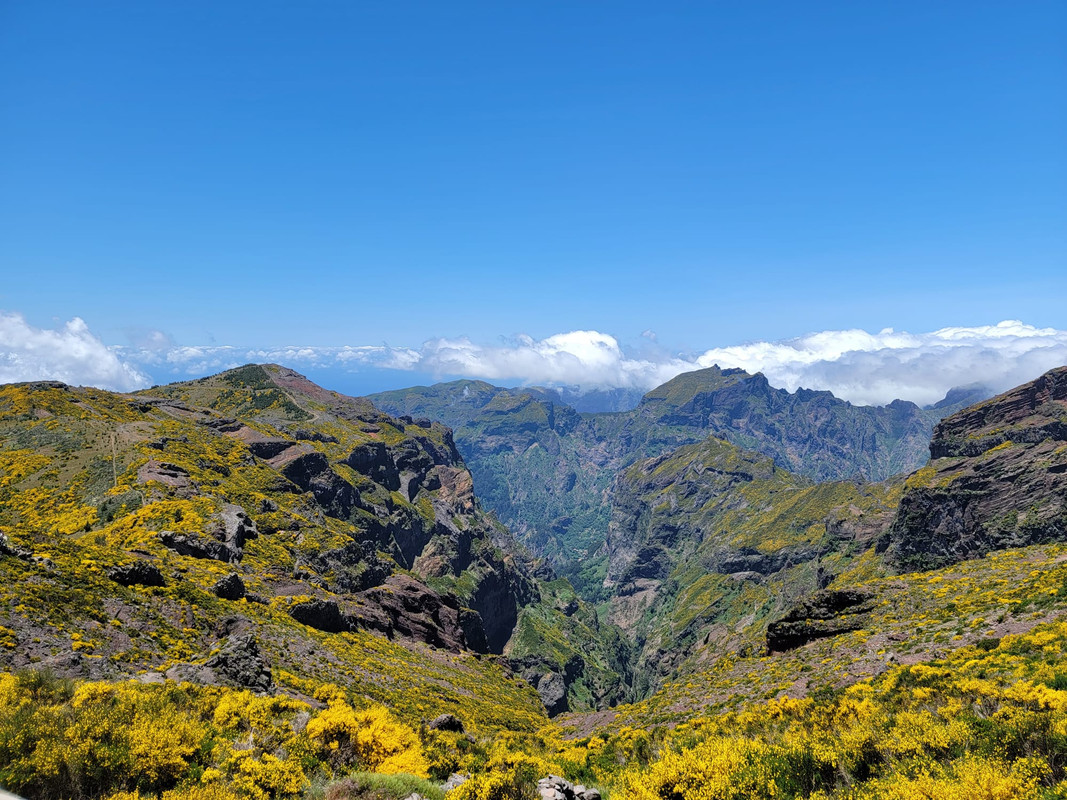
These yellow and purple flowers have an incredible smell which adds to the ambience. No picture can do it justice.
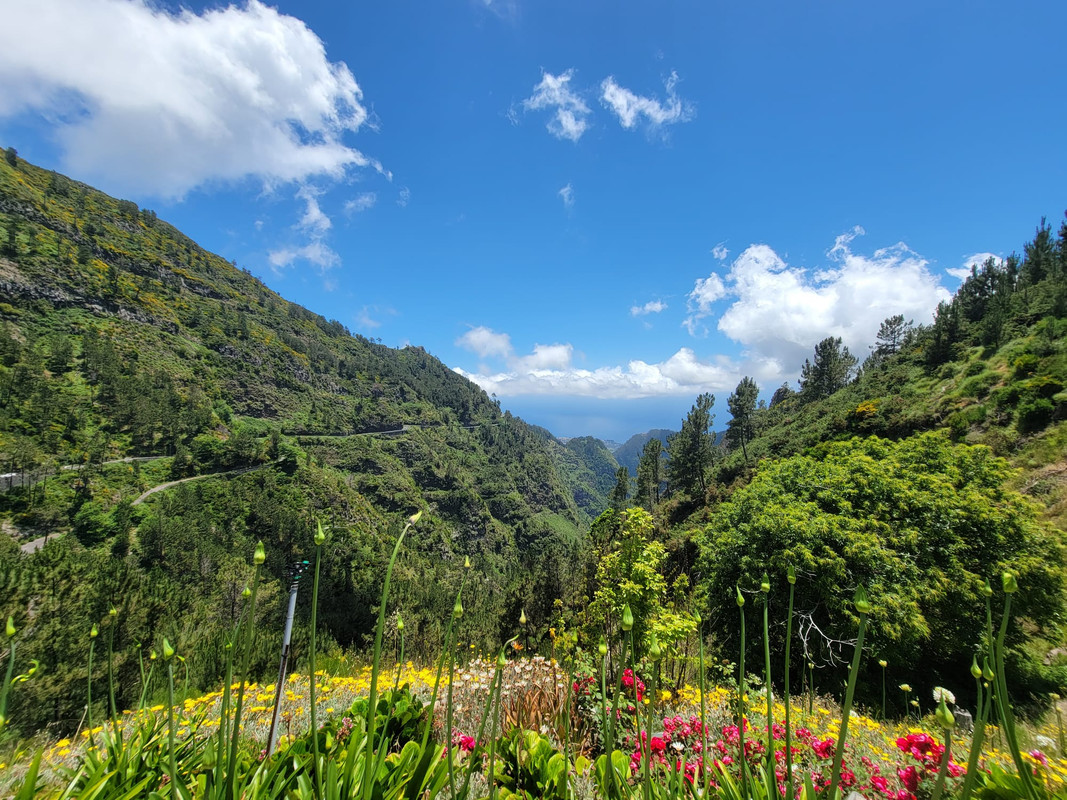
Pico do Arieiro
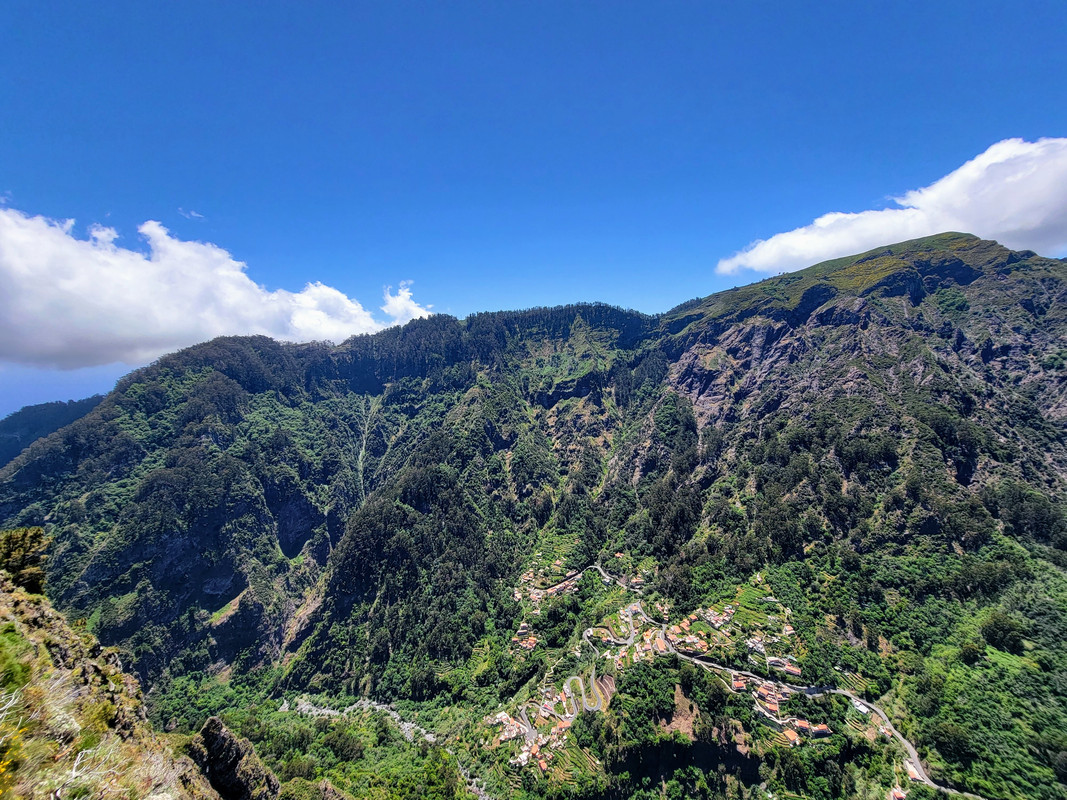
Miradouro Eira do Serrado- lookout over Nuns Valley
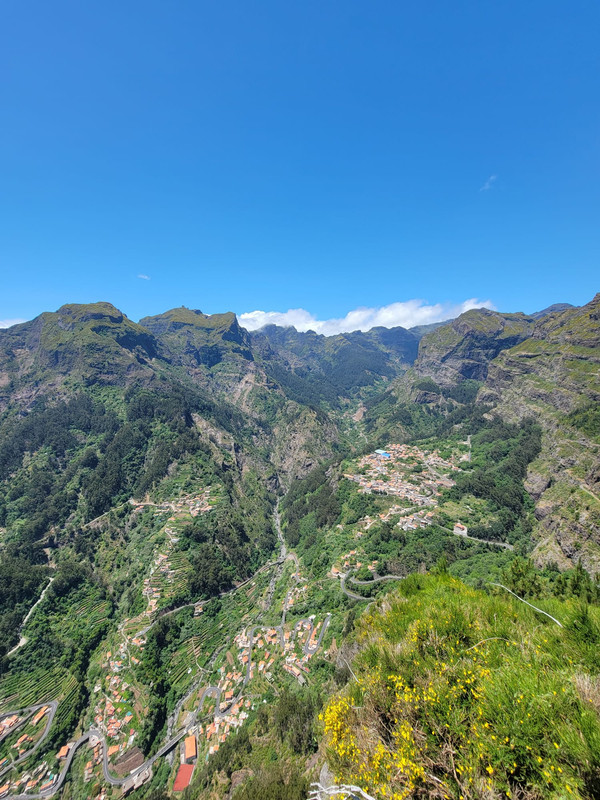
Miradouro Pico dos Barcelos- Funchal overlook
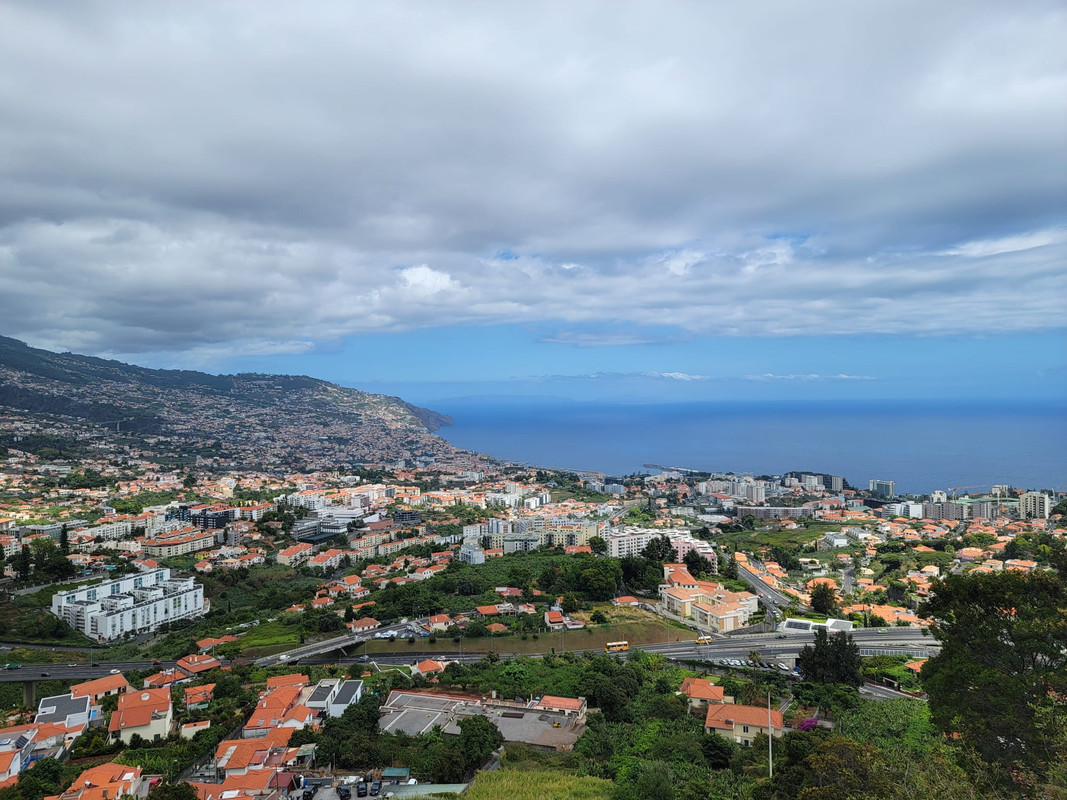
Praia Formosa
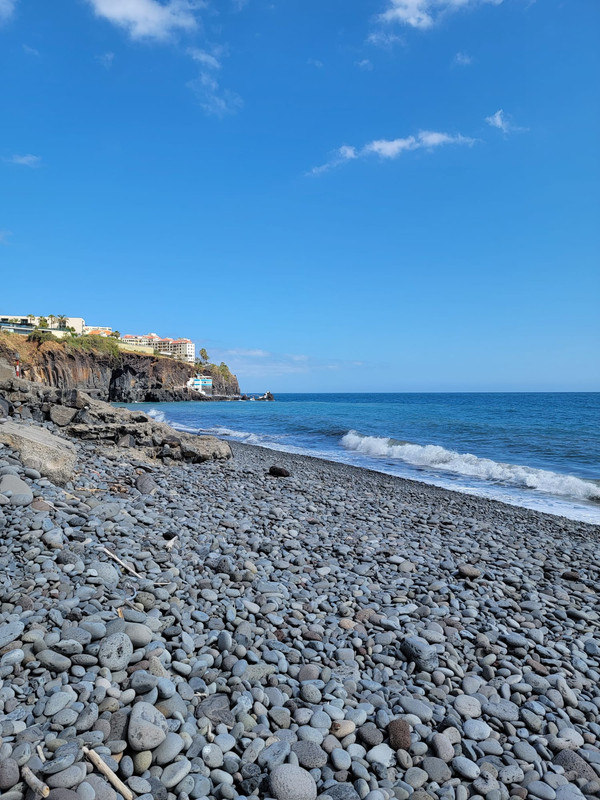
Miradouro do Cabo Girão- nice overlook with glass balcony
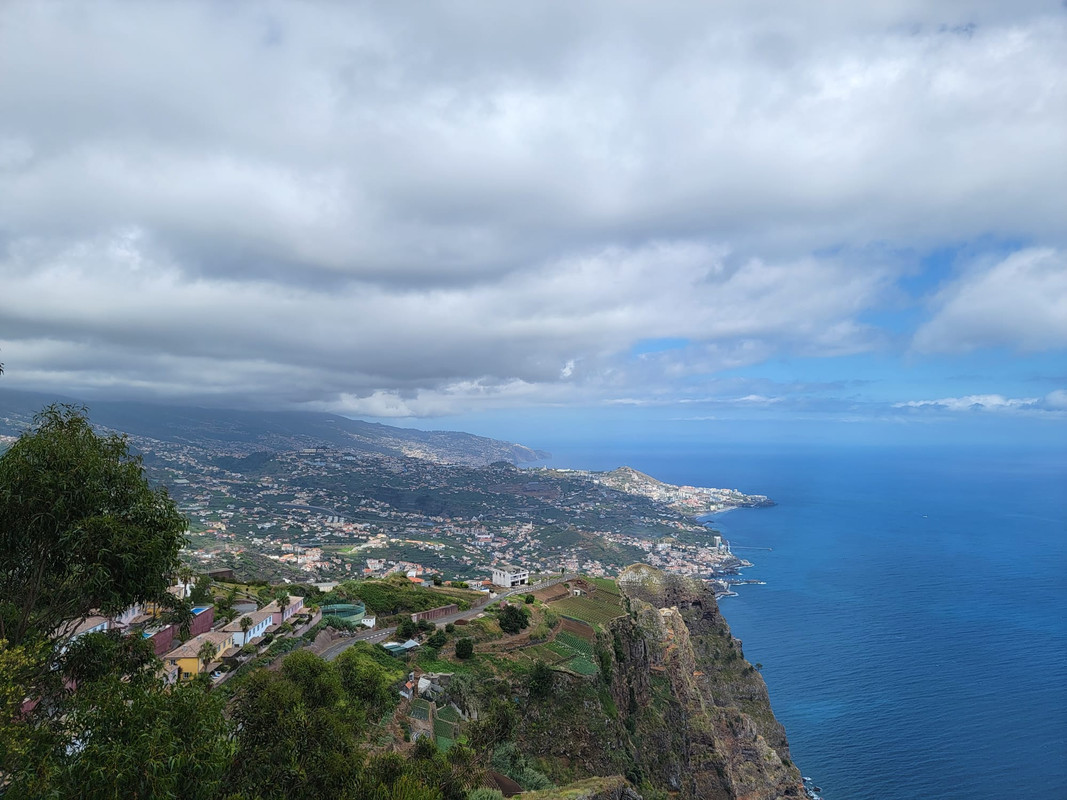
After returning my car rental to the agency in the evening, I walked around some of Funchal’s parks.
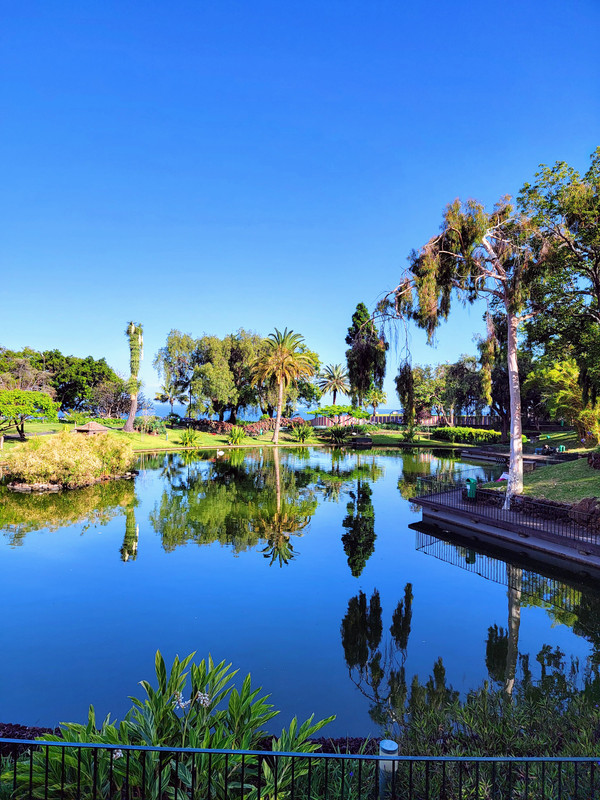
Santa Catarina Park
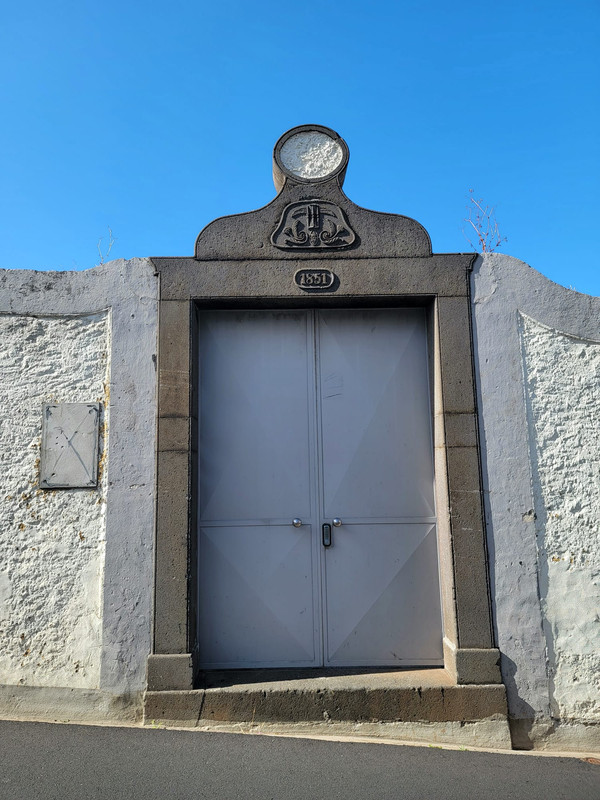
The next morning, my last in Madeira, was a leisure day since my Pico do Ariero/ Pico do Ruivo hike had been cancelled. I checked out the Cemitério Judaico/ Jewish Cemetery of Funchal. Unfortunately, I wasn’t able to see anything other than the gate. The cemetery is on a bluff overlooking the ocean, and as the bedrock crumbles into the ocean below, graves have been disappearing as well.
I then visited the Madeira Story Center, a great museum that explains the history of the island of Madeira. I then took the iconic cable car to the gardens overlooking Funchal.
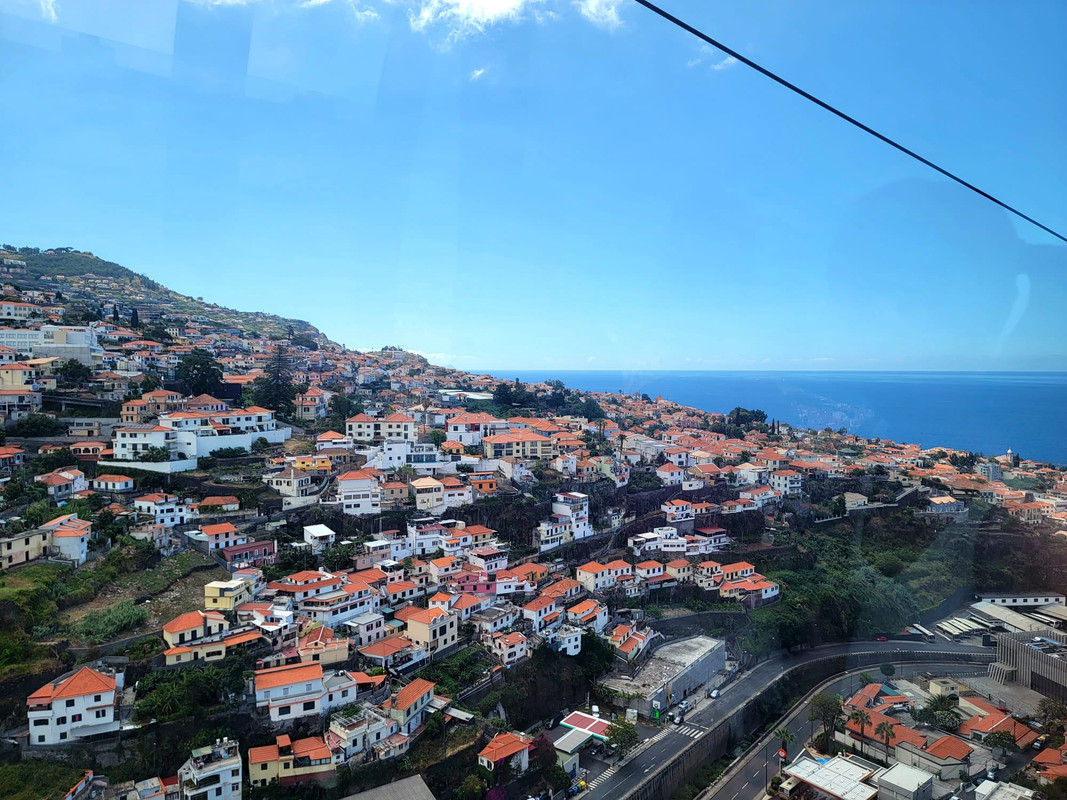
Madeira Botanical Garden

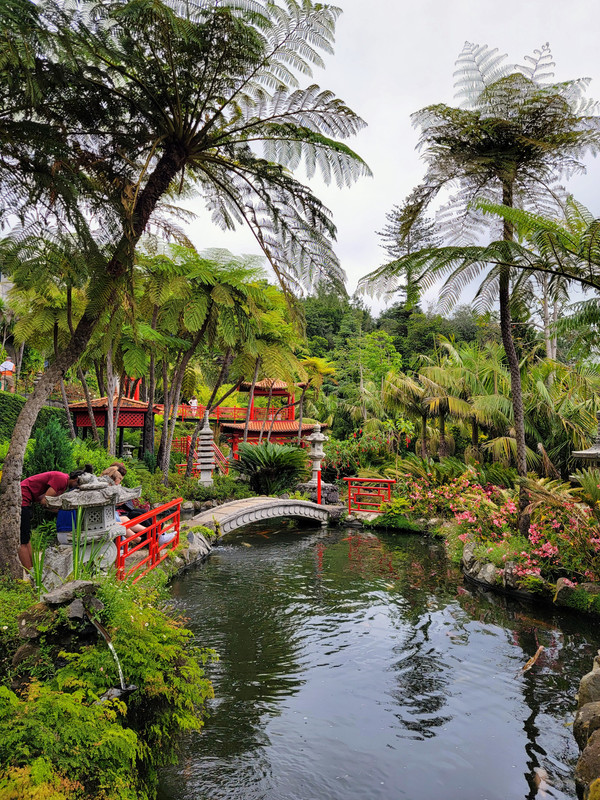
Monte Palace Tropical Garden- this is one of the top 13 botanical in the world
After picking up my bags from my Airbnb, waiting 30 minutes for the always-delayed Aerobus, I made it to the airport for my flight to Porto with time to spare. The Priority Pass lounges were closed here, but the airport has an outdoor terrace which helped alleviate my ‘airport claustrophobia’ a bit. This time I wasn’t so lucky with my carry-on bags, and I was charged €29.
Porto
Upon landing in Porto, I headed to the airport subway station and purchased 2 “Z4 Adante 24” cards. Z4 is the airport zone, so if you’re transiting to and from the airport you’ll need this zone, and “Adante 24” cards are valid for 24 hours on the metro, busses, and some urban trains. The machine issued a single card which worried me as I needed the card for Friday and Sunday, and I was worried that 2X 24 might translate to 48 hours, which would mean that I’d waste 24 hours on Shabbos and have to buy a new card on Sunday. On Sunday morning when I validated my card on the metro it worked, so turns out that the cards work for 24 hours after the first validation, and then it doesn’t cut into the next 24 hours until you validate it again. The subway from the airport goes straight to the city center, so it’s a convenient ride. The metro stations are new, clean, and easy to navigate. There is a city pass for Porto attractions that includes public transport but based on my itinerary it wasn’t worth it for me. Porto is a lot less hilly than Lisbon and Funchal, but it’s not flat either. The weather here was beautiful- in the 60s every day and cooler at night.
I booked an apartment through GuestReady and while they generally have good reviews, I was disappointed. My issue was with their service, as the place was exactly as described. A) I had to pick up the keys from a bar which was a 10-minute walk from the apartment. I was notified of this in advance and given the option to have someone wait for me at the apartment for a fee, but this option is only available til 9PM, and I didn’t check in til closer to 11PM. I don’t hold this against them. B) there were no instructions with the keys as to which apartment in the building I was supposed to check into. The welcome email did not include this either. I spent 30 minutes in a dark hallway trying to reach someone at their office. Eventually someone from India called me and explained where the apartment was. I complained to GuestReady about it, and they responded that they had sent me the info- when I showed them all the email correspondence we had and that clearly none of those included the information, they told me it must have been a technical glitch and therefore it was not their fault- they did not bother apologizing. C) On Shabbos afternoon someone with a key walked into the apartment – turns out it was the cleaning help who had been misinformed about the scheduled booking. I was livid. Again, they didn’t bother apologizing, they just responded that things like this happen. They refused compensation for B & C, but Chase issued a $50 courtesy refund on their behalf.
Friday morning, I started my day at Livraria Lello, a beautiful bookshop that is said to be the inspiration for JK Rowling’s Harry Potter series. The place has that Flourish and Blotts feel, but it’s a massive tourist trap. I bought advance tickets online which made all the difference as the lines were snaking around the block. I did not get the Fastrack ticket, yet was able to enter right away without waiting. The value of the ticket can be used as a credit against a store purchase.

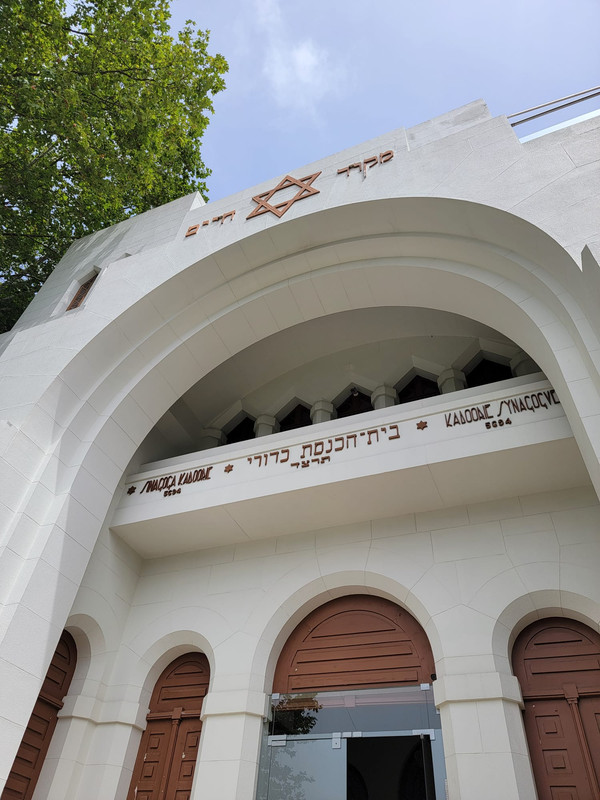
Next, I headed to the Jewish Museum of Porto which is located across the street from the Synagogue Kadoorie Mekor Haim. The museum is small yet beautifully done and illustrates the Jewry lost by the Inquisition, as well as the subsequent attempt at rebuilding the Porto community. Reservations are required ([email protected]).
I preordered food for Shabbos from Ibéria by Sababa Kosher Restaurant, and pickup was at the Synagogue Kadoorie Mekor Haim. The food has that homemade touch and is heavenly. The shul was officially closed to weekday tours due to covid, but since I was there to pick up my food, they let me into the main sanctuary for a quick tour. During WW2 the Porto community, which numbered about 200 at the time, opened their arms to thousands of Polish refugees overnight. They clothed and fed 10,000 Jewish refugees, and the shul was set up as a refugee center (for the beginnings of this remarkable story see my tour of the Lisbon Synagogue). The shul here is the largest one in the Iberian Peninsula, and one of the largest in Europe.
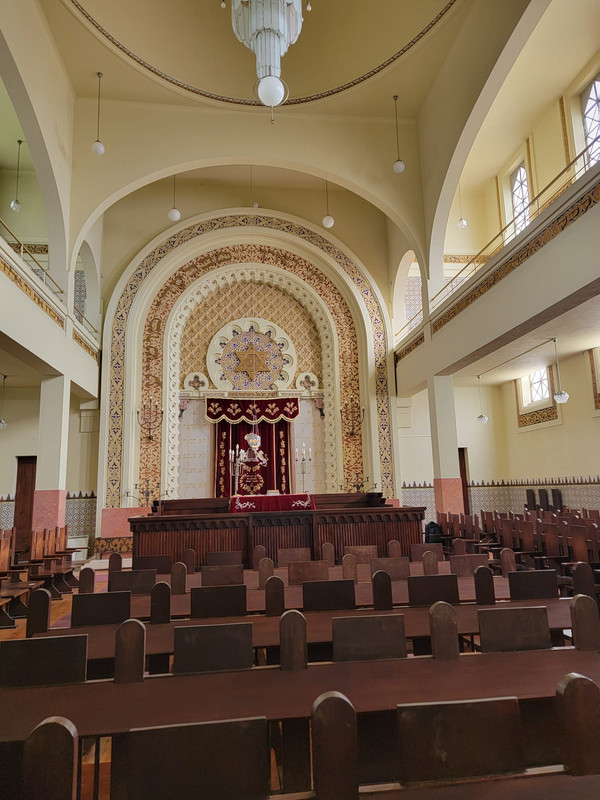
I then headed to the Museu do Holocausto do Porto. As mentioned above (see Lisbon) the Portuguese community is approximately half Ashkenazi, and many Polish Jews fled to Portugal during the early days of WW2. The museum is somber and beautifully done. Security here is extremely tight- you cannot take anything in, including your phone.
Sunday morning, I checked out of the apartment. I had reached out to the airport hotel, OPO Hotel, where I was staying at that night (since I had to pick up my car rental early Monday morning and I didn’t want to have to contend with Porto traffic on a Monday morning) to inquire if I could drop off my bags early- from this point on in my trip early check-in and accommodating staff was especially important since I was schlepping raw frozen meals from Sababa by Porto for the upcoming 2 weeks. They were very accommodating and had the room ready for me at 11:30AM when I dropped by, even though check-in isn’t officially til 3PM. They also stored my food in their freezers with no issues. The OPO hotel is surprisingly roomy and comfortable for how cheap it is. There’s a separate bathroom and shower, and the shower is large with jets, a removable showerhead, and a rain head showerhead. It seems that showers in Portugal must have multiple showerheads or else it’s not considered sufficient. From this point on all my hotels/apartments had at least a removable showerhead or jets, if not both.
After settling in I took the train back to the city center to view the sites.
Praça do Município
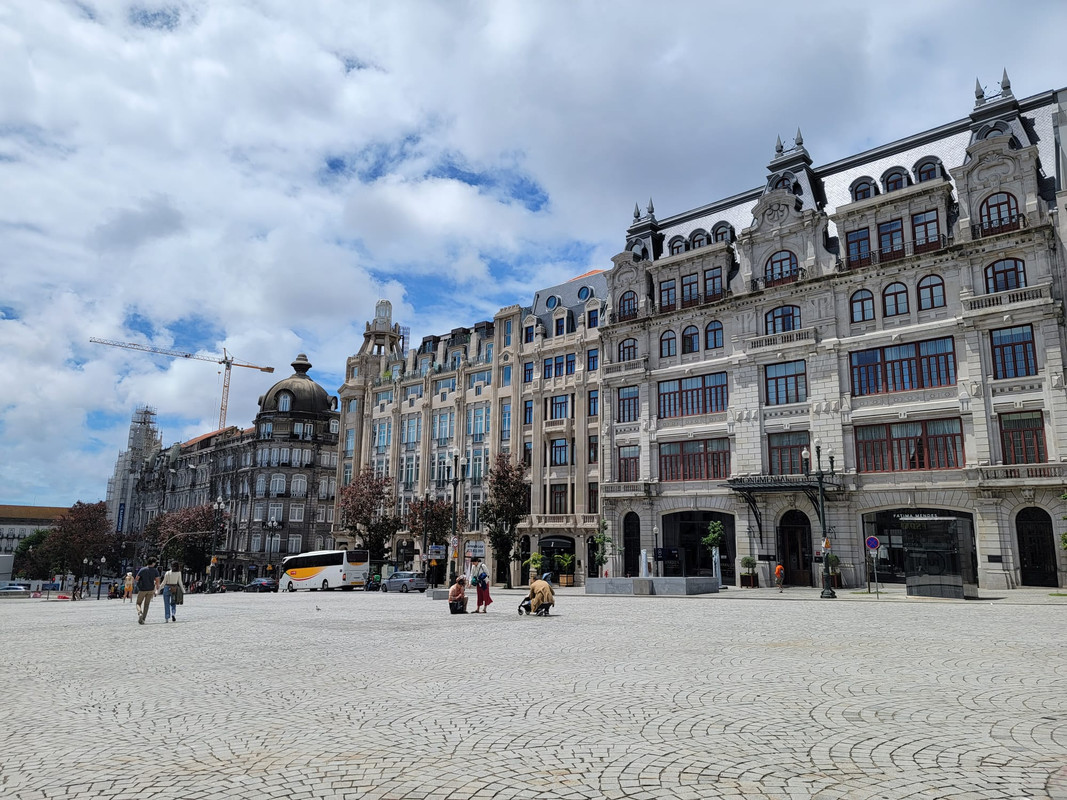
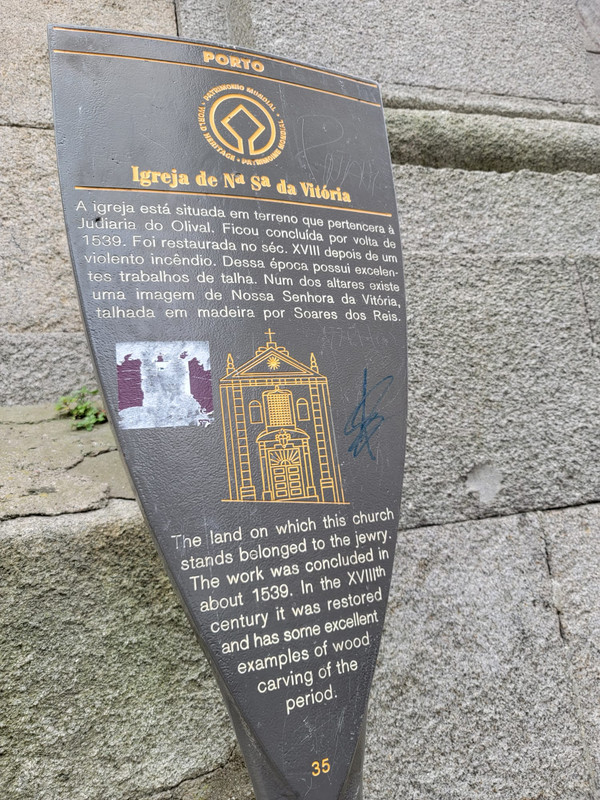
Igreja de Nossa Senhora da Vitória- this Church is built on previously owned Jewish land. I do not enter Churches, so I did not go inside here.
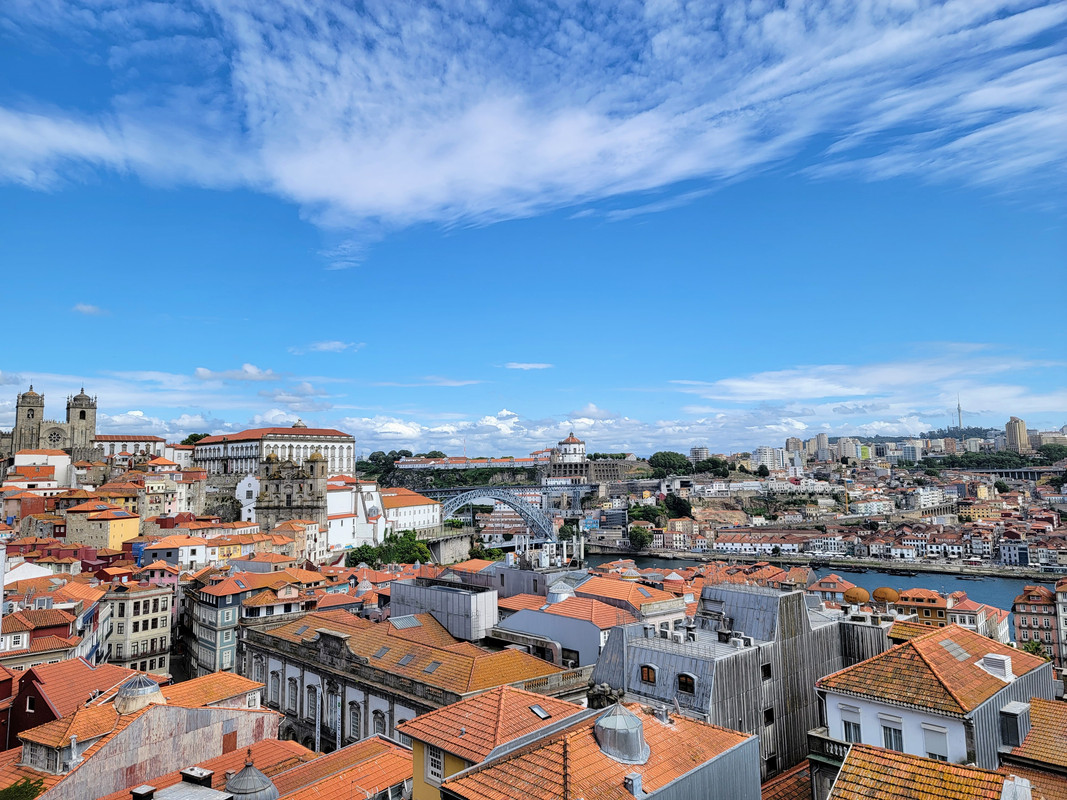
Miradouro da Vitória- this overlook is not as official as others I visited and is more of a neglected parking lot, but the views cannot be beat.
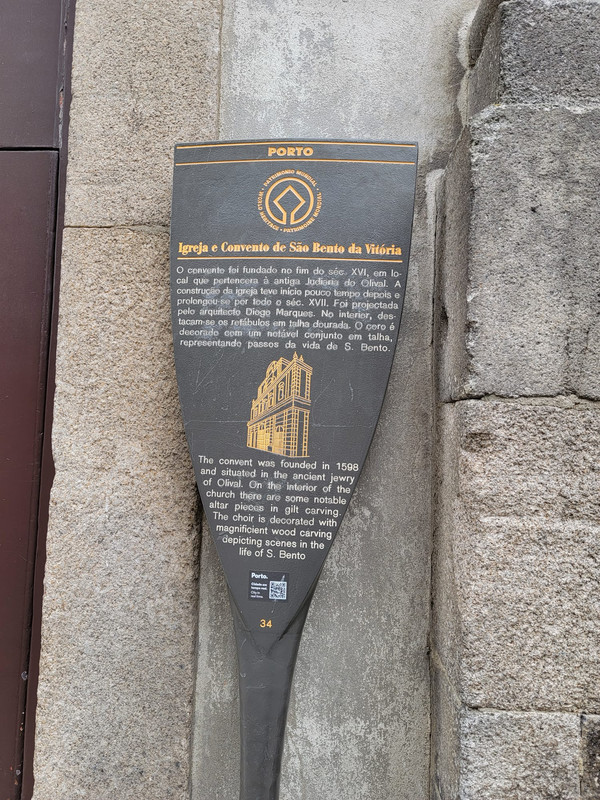
Mosteiro de São Bento da Vitória- this Church is built on previously owned Jewish land.
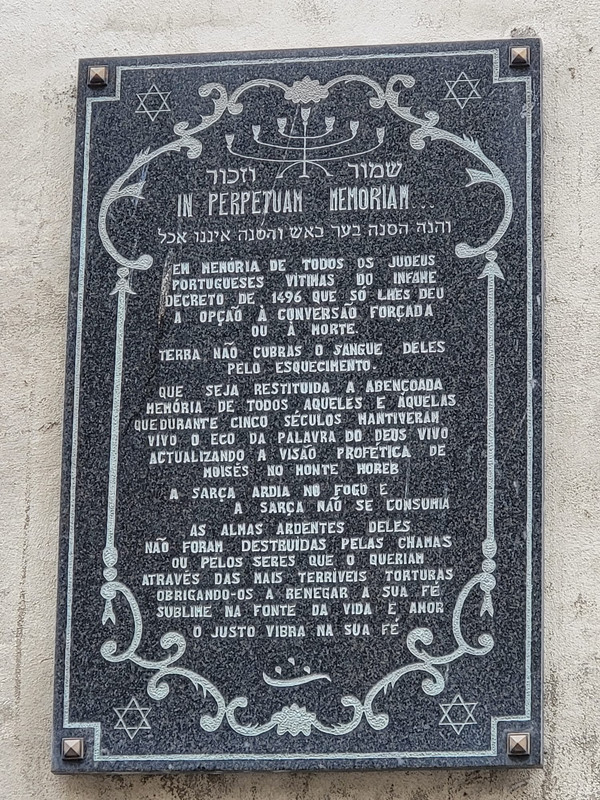
A plaque commemorating the victims of the inquisition.
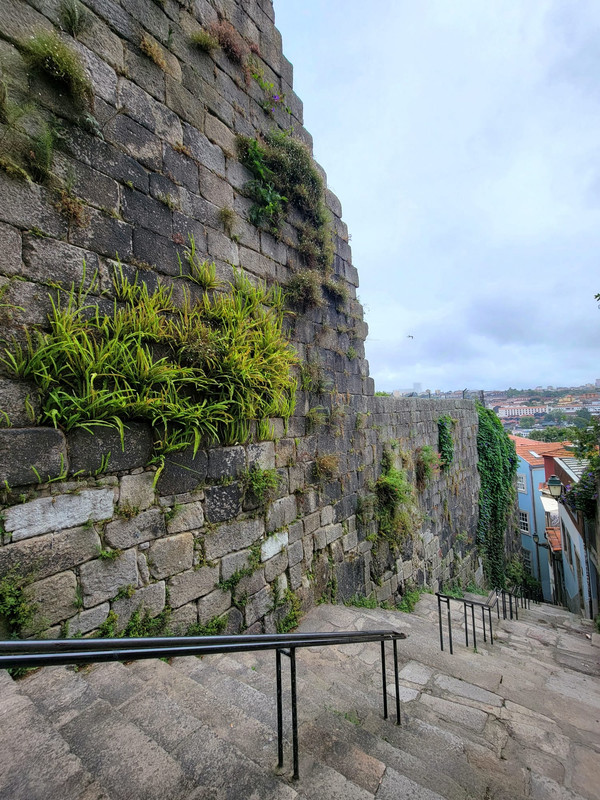
Muralha Fernandina- Porto’s old city walls
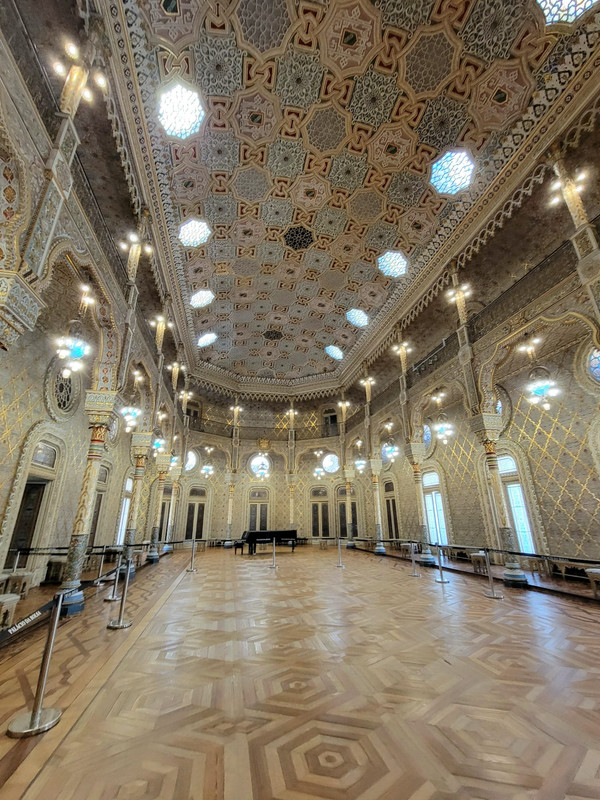
Next, I stopped by the Bolsa Palace, a luxurious building which used to house Porto’s stock exchange. The guided tour here lasts 30 minutes, but there are no advance tickets for purchase. The only way to book a ticket is to walk in and book the next slot available in your language. When I arrived the next English tour with open slots was an hour and 45 minutes out, so I booked my slot and came back when it was my tour’s time.
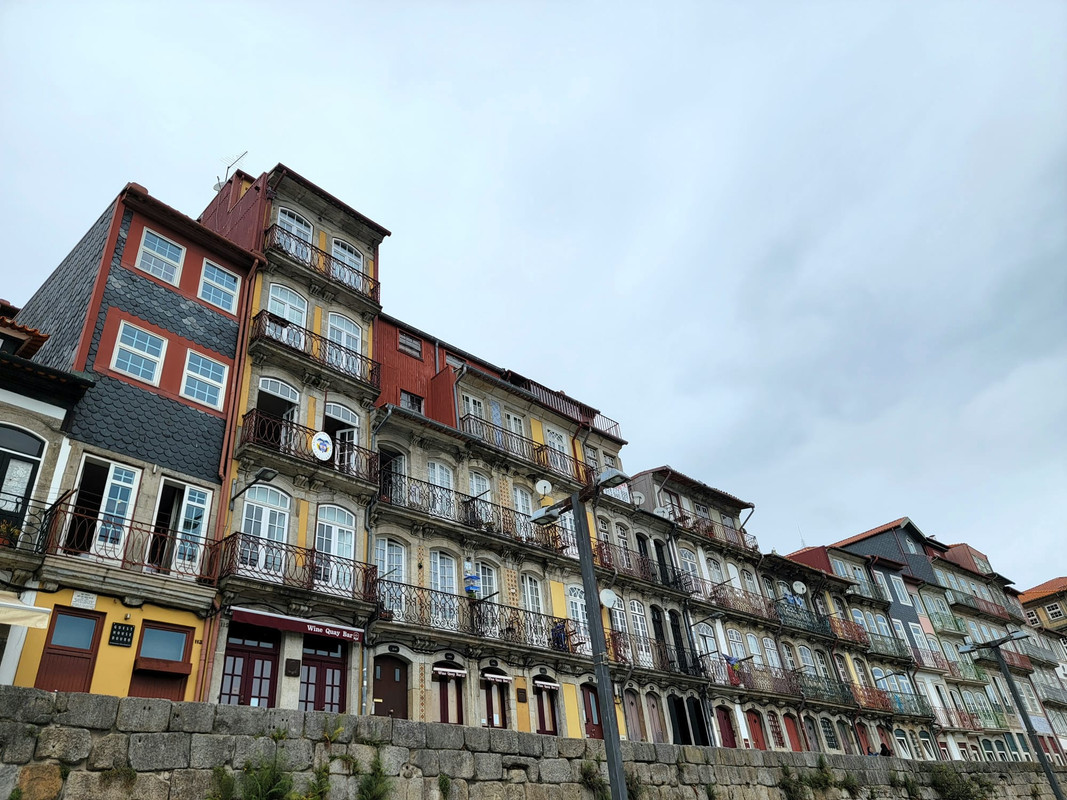
Cais da Ribeira- promenade along Porto’s waterfront
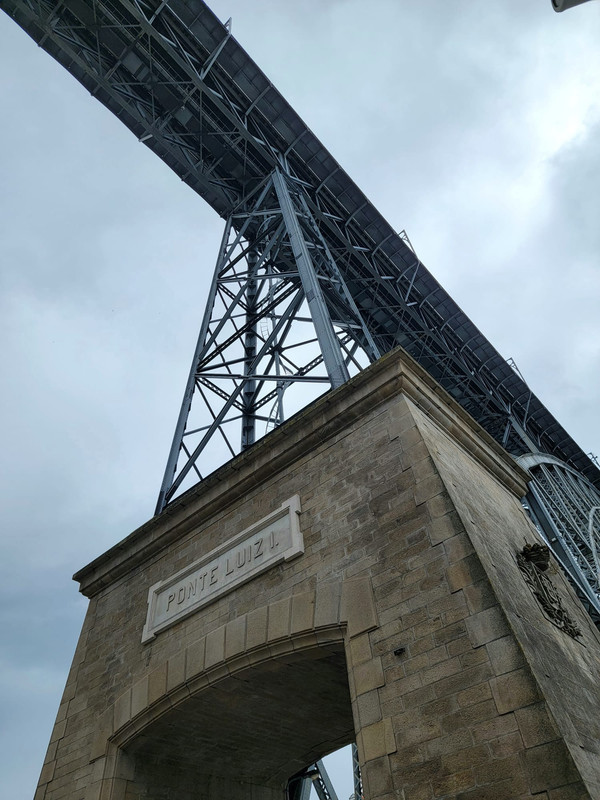
Luís I Bridge- this bridge crosses the Douro River, and links Porto to Vila Nova de Gaia. It has an upper walkway for great views, and a lower walkway for those that don’t want to climb up to the upper section.
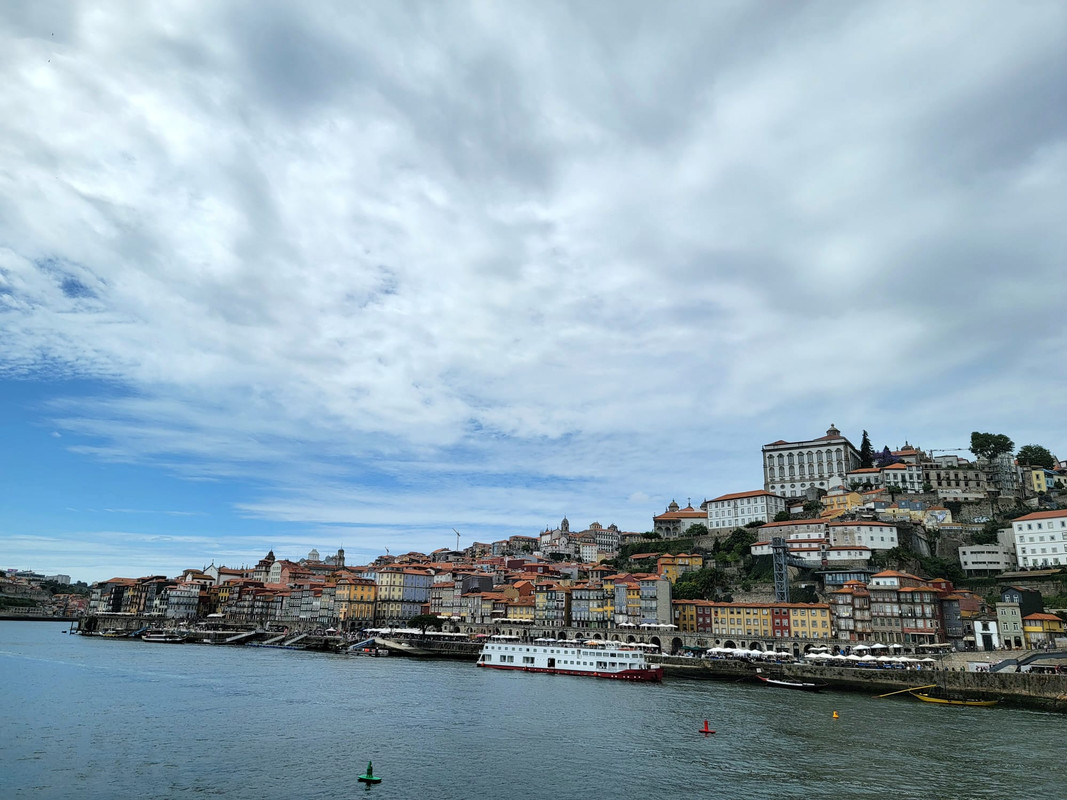
Jardim do Morro- this park is located in Vila Nova de Gaia, which is a neighborhood across the Douro River opposite Porto. The park has great views of Porto and the Douro River.
Monday morning the hotel’s shuttle dropped me off at Movyng car rental, where I had reserved an automatic car via AzoresGetaways (again they had the best rates) for the remainder of my trip, for ~$70/day. This included a one-way fee since I picked up the car in Porto, but the return was scheduled for Lisbon. The cheapest automatic vehicle they had available was a diesel sucking Mercedes A series. The downside of getting this “upgrade” which I didn’t want was a) a widebody vehicle which was a pain to navigate over the next 9 days through the tiny towns in Portugal’s countryside and b) the deposit was €1,600 instead of the standard €1,000.
Douro Valley & Alentejo Region
My plan for the upcoming week was to drive through the Douro Valley, then south through the Alentejo region (the area where most Jews lived prior to the inquisition) with a few detours, and then on to the Alrgarve, Portugal’s southern coast. The weather in the Douro and Alentejo was in the 60s and most days were sunny. I had a hard time finding suitable hotels that weren’t dumps on this route, but I managed to find something within reasonable distance of where I was planning to start the next day. Most towns and villages in the Alentejo have a free parking lot outside the city walls where I was able to drop off my car to avoid having to navigate through the tiny streets (although you are allowed to drive into most towns if you so desire, I don’t recommend it. It’s not worth the damage your car will very likely suffer, and 99% of the time you won’t find street parking inside the town walls anyway). I found it interesting that Jews chose to settle in the Douro Valley and Alentjo region, as it’s mountainous and not as accessible as coastal cities. (Below: map of Douro to Algarve route).
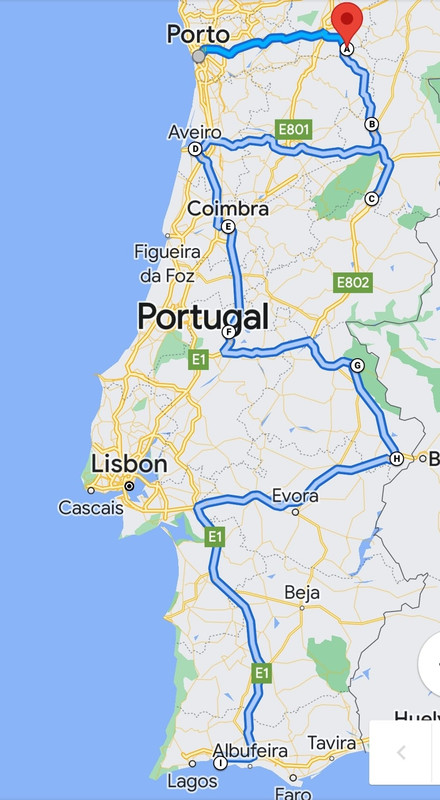
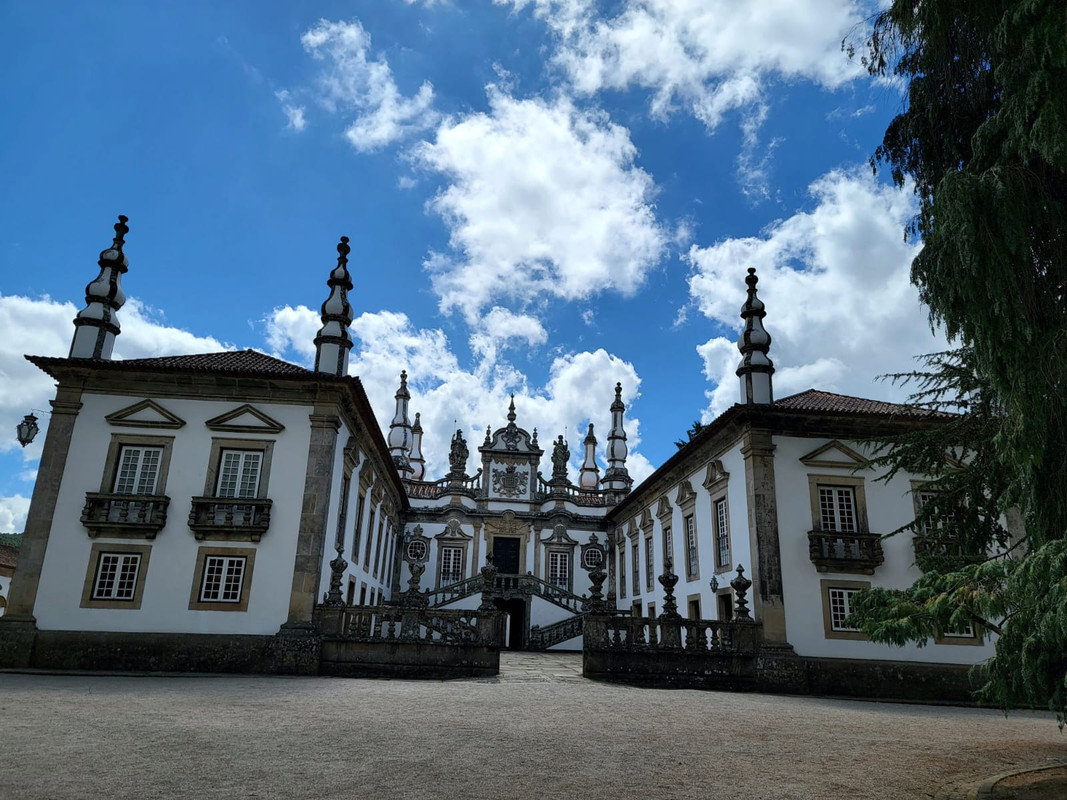
After leaving Porto, I headed along the Douro River, a scenic route that passes through the Douro Valley, Portugal’s wine country. My first stop was at the Fundação da Casa de Mateus (Mateus Palace). It was a good stop to break up the drive a bit, but it wasn’t worth my time. The gardens are nice, but the house is not a beauty.
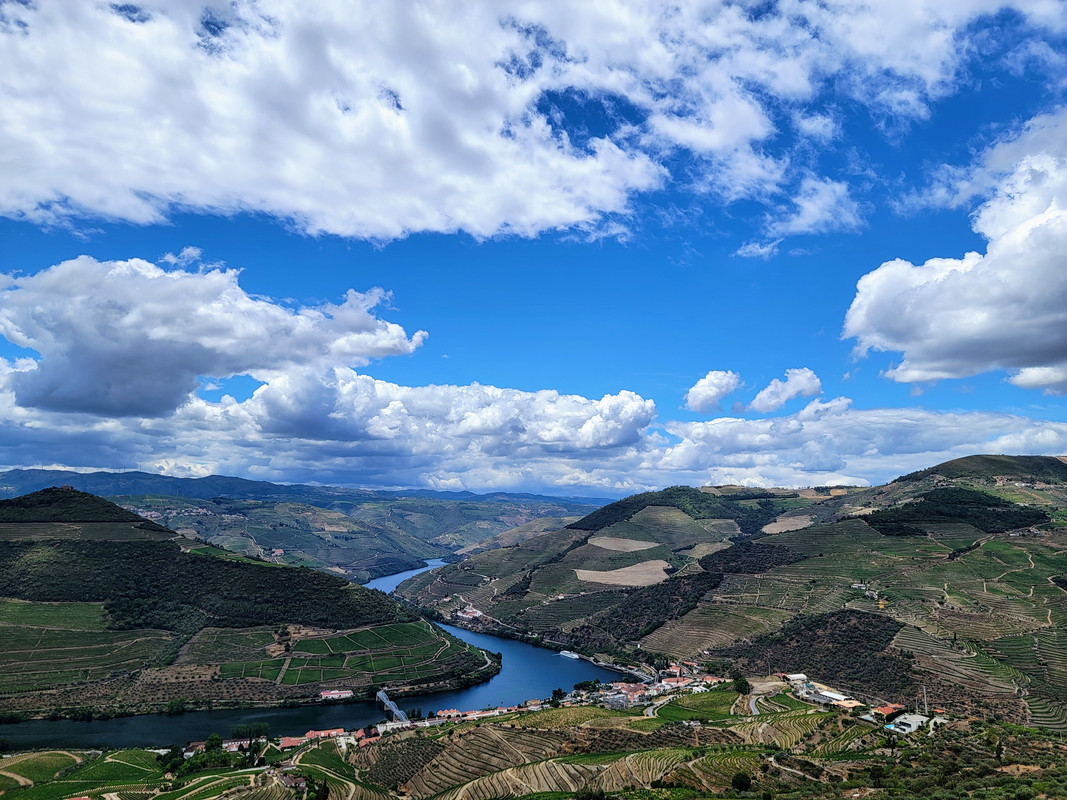
I then took the scenic route from Sabrosa to Pinhao villages. I stopped every few minutes at designated overlooks to admire the view.
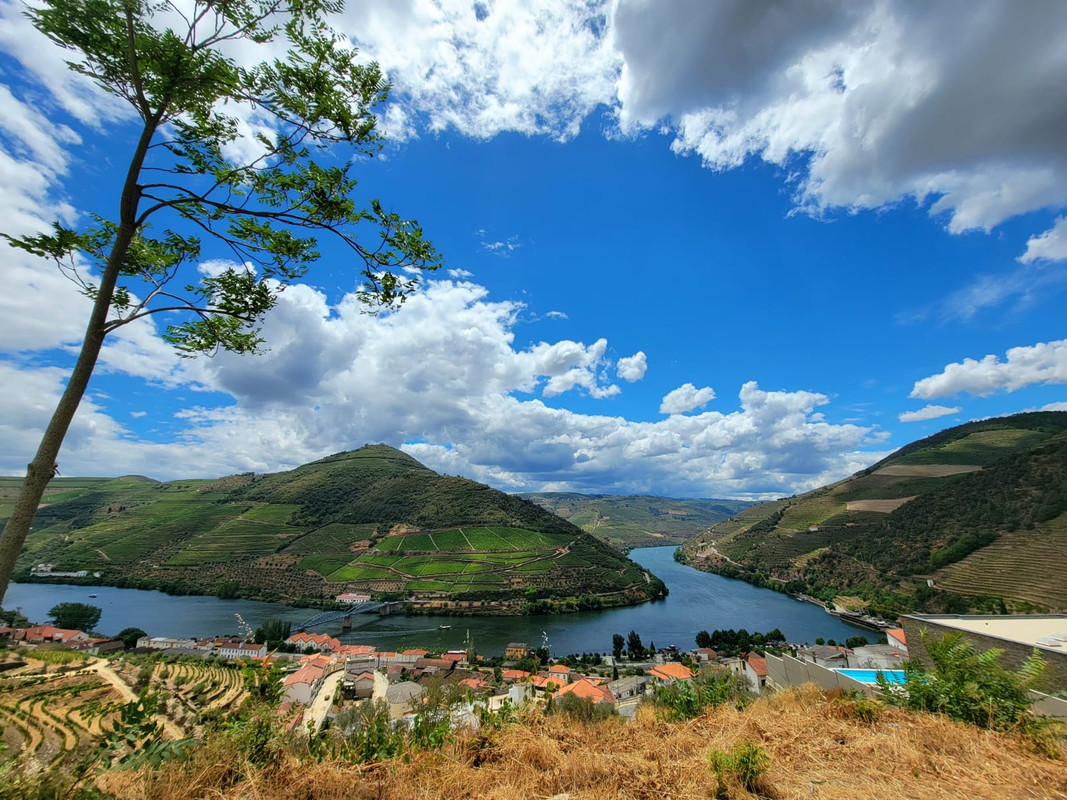
Miradouro de Casal de Loivos
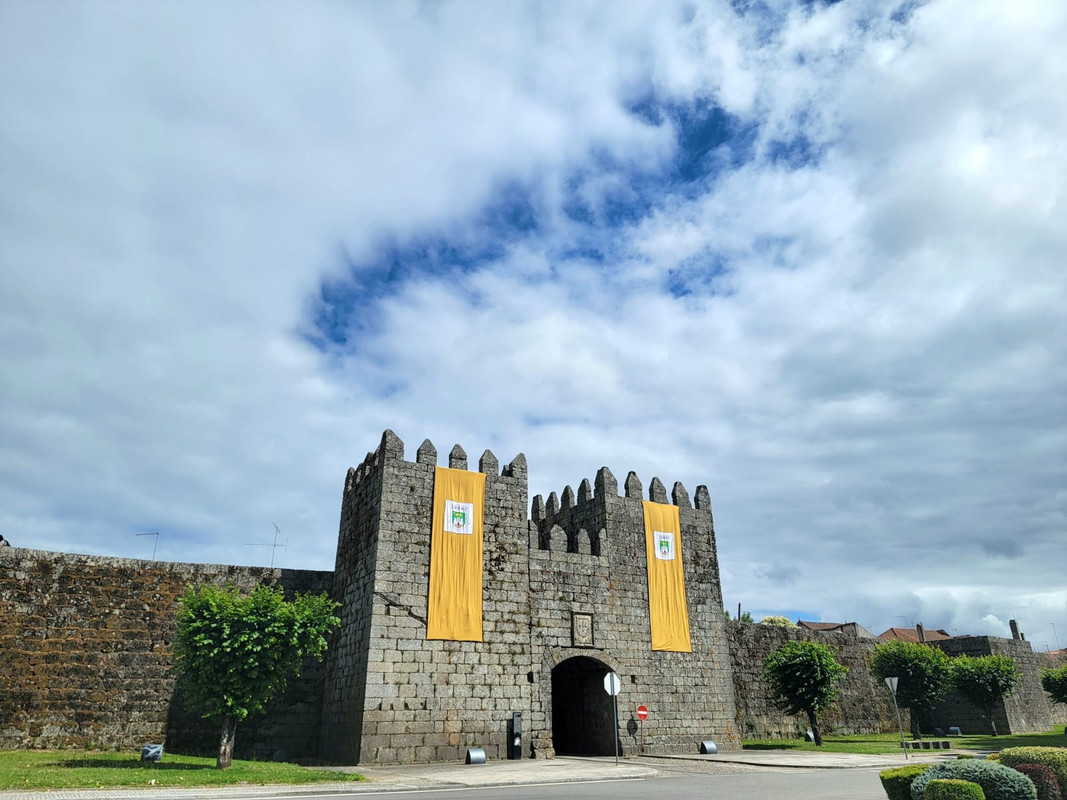
I then proceeded to Trancoso, a town which is famous for having its walls and doors decorated with stone carvings of New Christians. Prior to the inquisition Trancoso was almost entirely inhabited by Jews. When the edict of expulsion was issued about 150 Jews left Trancoso- the remaining Jews were all forcibly baptized, and many were later persecuted by the inquisition. Today, no Jews remain in Trancoso.
Portas D’El Rei Trancoso- Trancoso’s main gate
Centro de Interpretação da Cultura Judaica Isaac Cardoso/ Casa de Bandarra is a solemn museum of the inquisition, of Trancoso’s Jews, and an exhibit on Isaac Cardoso.
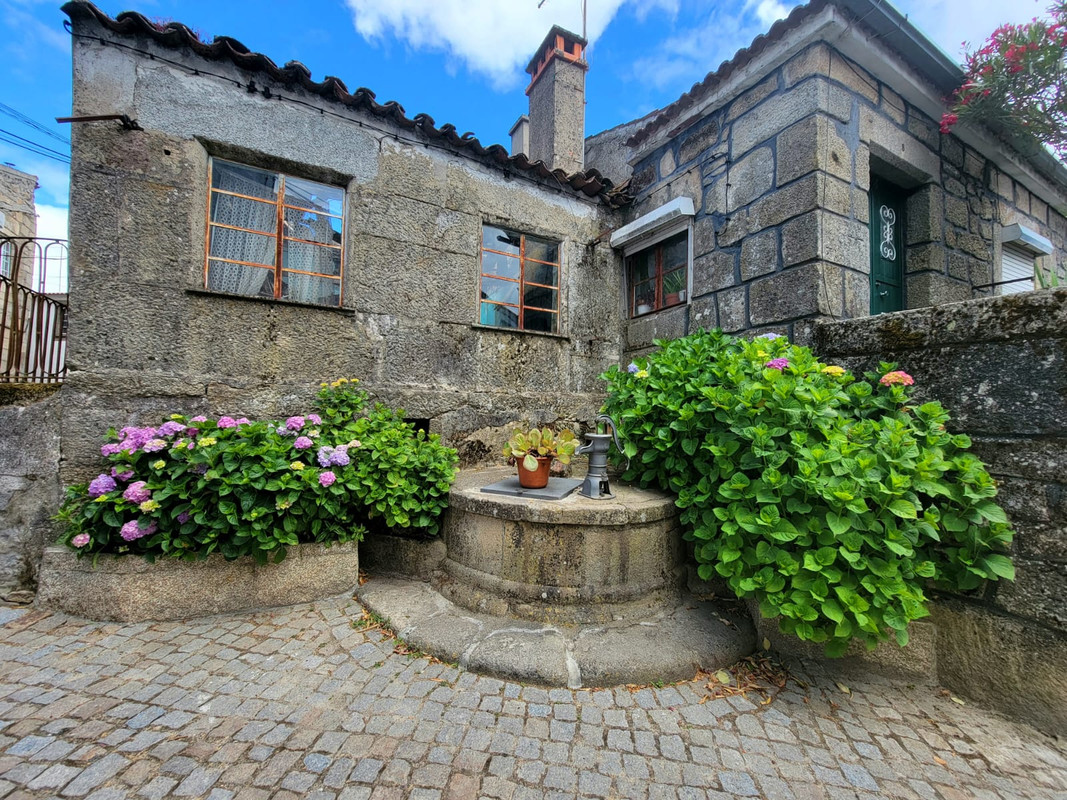
Poço do Mestre- this well was purportedly the location of the community’s mikveh
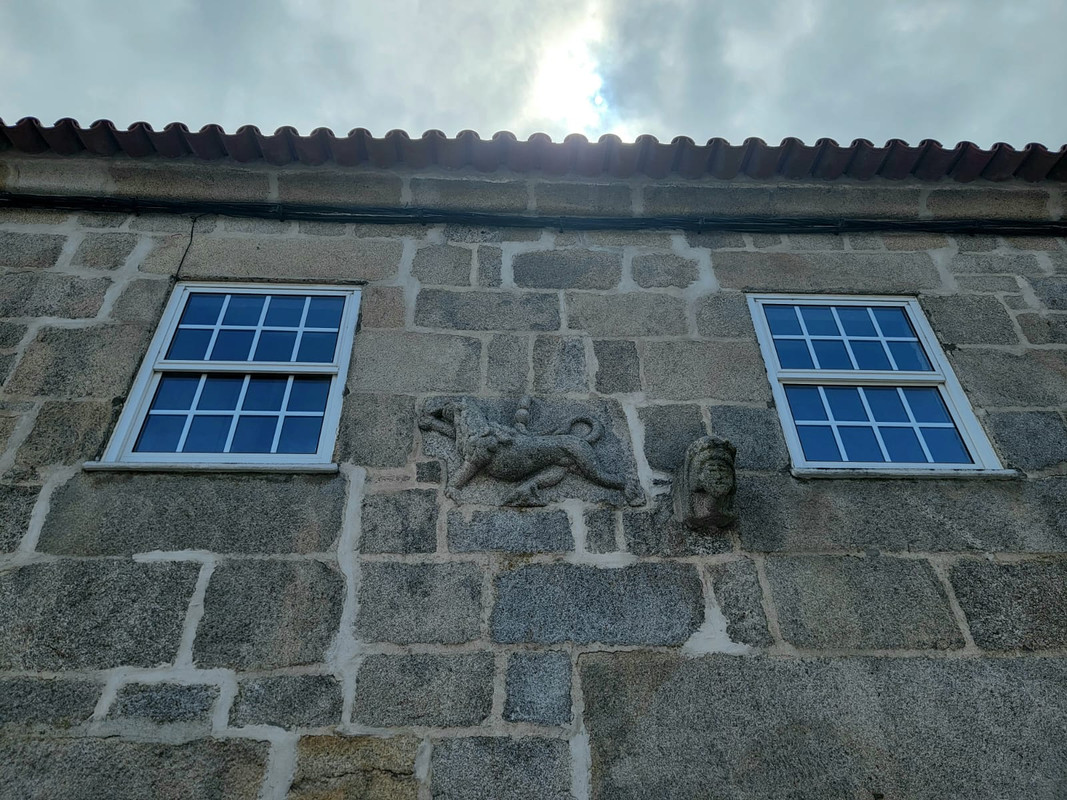
Casa de Gato Preto House- this house was originally inhabited by a descendant of Shevet Yehudah, hence the lion
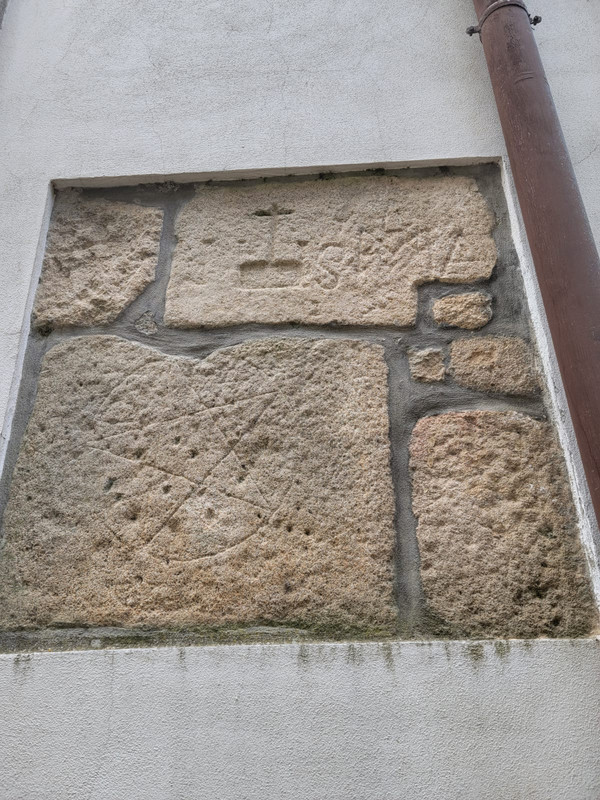
Marking etched into a house in Trancoso- there are approximately 300 marks like these etched into the houses in Trancoso, generally used to symbolize the home of a New Christian.
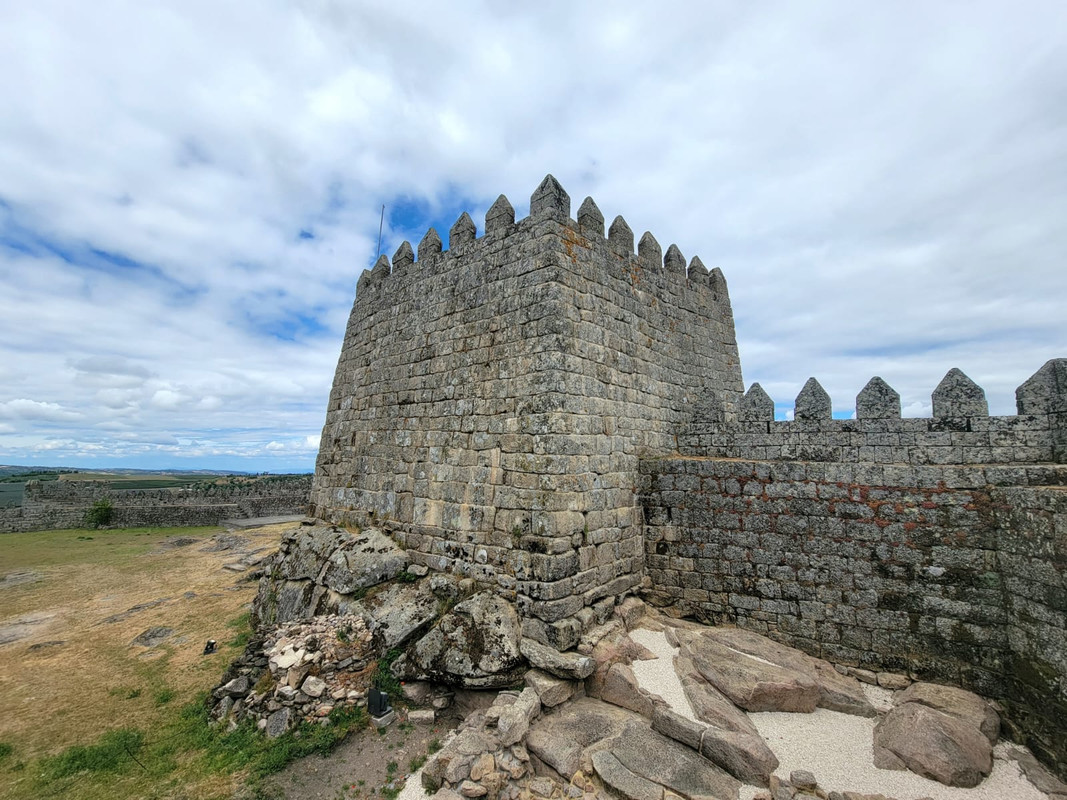
Castelo de Trancoso
I then drove to the Puralã Wool Valley Hotel, the closest decent hotel that I was able to find near the town of Belmonte. This turned out to be a great choice- the staff was courteous and helpful with my freezer needs, and the room was neat and clean.
Tuesday morning, I started my day in Belmonte. I had read a lot about this amazing community that was forced to convert in the 1500’s when the inquisition came knocking and managed to preserve their traditions for hundreds of years. They were discovered in 1917 by Samuel Schwartz, a Polish Jew in Portugal on business. In 1974 when Portugal’s dictatorship was overthrown, Belmonte’s Jews started the process of becoming more open about their practices. Most of them officially converted to Judaism in 1994 as they did not have documents proving their matrilineal line (I’m not a posek so I can’t say much about their geirus, or about the status of the current community and those that chose not to convert). About 50 Jews currently live in Belmonte, as majority of the community has since moved to Israel.
The second I drove into the town I felt like I was in an alternate universe. Many of the signs are in Hebrew, and stores advertise as kosher (more on that below). At the first shop I stepped into the shopkeeper wore a kippah and introduced me to his wife and daughter, who were overjoyed to meet an American Jew. They were very open in explaining to me that their kosher was not the same standard as what is generally accepted by Americans as kosher, and that I shouldn’t assume that anything is kosher unless I recognize the hechsher. The only thing that ended up being recognizably kosher was the wine- they have imports from Israel, France, and Spain.
Castelo de Belmonte- I purchased a 5-museum pass here for $10- it includes the Belmonte Castle, Olive Oil Museum, Jewish Museum, and Museum Descobrimentos.
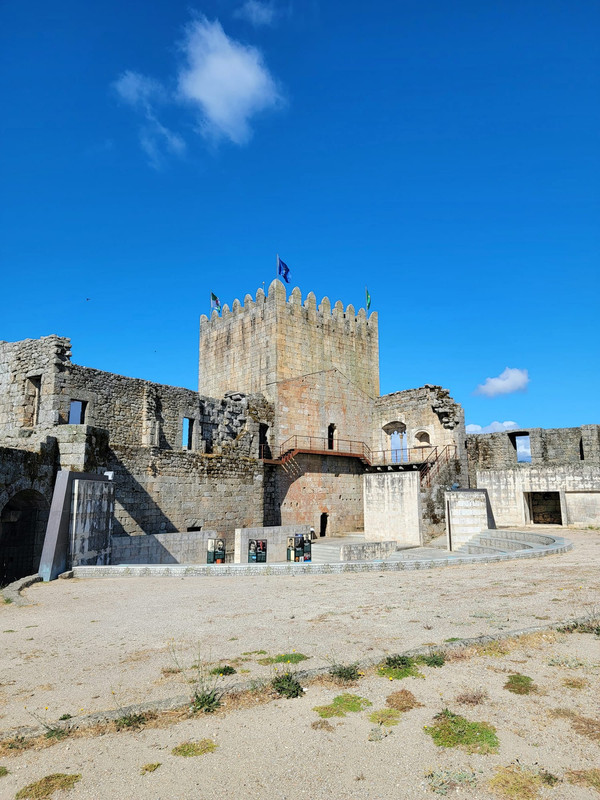
Olive Oil Museum- this is a tiny and rather boring museum. I stopped in to pass some time before my scheduled 11AM shul tour.
Sinagoga de Belmonte/ Sinagoga Beit Eliahu- I booked an 11AM tour here in advance ([email protected]). The shul has a minyan every Shabbos and Belmonte has an eiruv. The shul was built in the 80s after the Portuguese dictatorship was abolished, but before they officially converted.
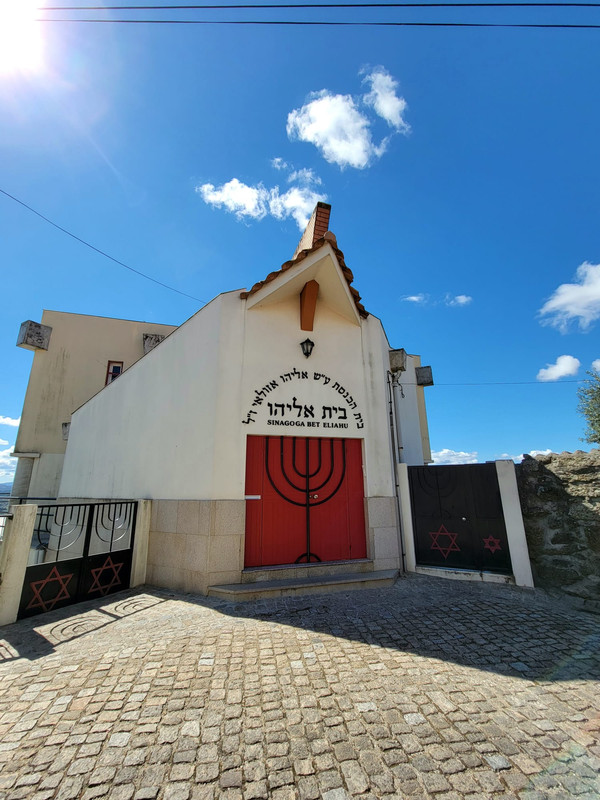
I then headed to the Jewish Museum of Belmonte. This fascinating museum explains some of the traditions the community held onto to preserve their Jewishness. They fasted on Yom Kippur and Taanis Esther (a popular fast day for Anusim), and before Easter they would go out at night to pick wheat in order to bake “cakes”. They had a special water pitcher only used for this activity, and they baked the cakes for 12-13 min start to finish. Next, I visited the Museum Descobrimentos, a museum devoted to the discovery of Brazil. While the signage is all in Portuguese, the interactive touchscreens have an English language option. I then stopped by the Belmonte Sinai Hotel. It’s advertised as kosher so went to check it out- the waitstaff informed me that the meat is not kosher, and that they use the same dishes for everything… not exactly my level of kashrus.
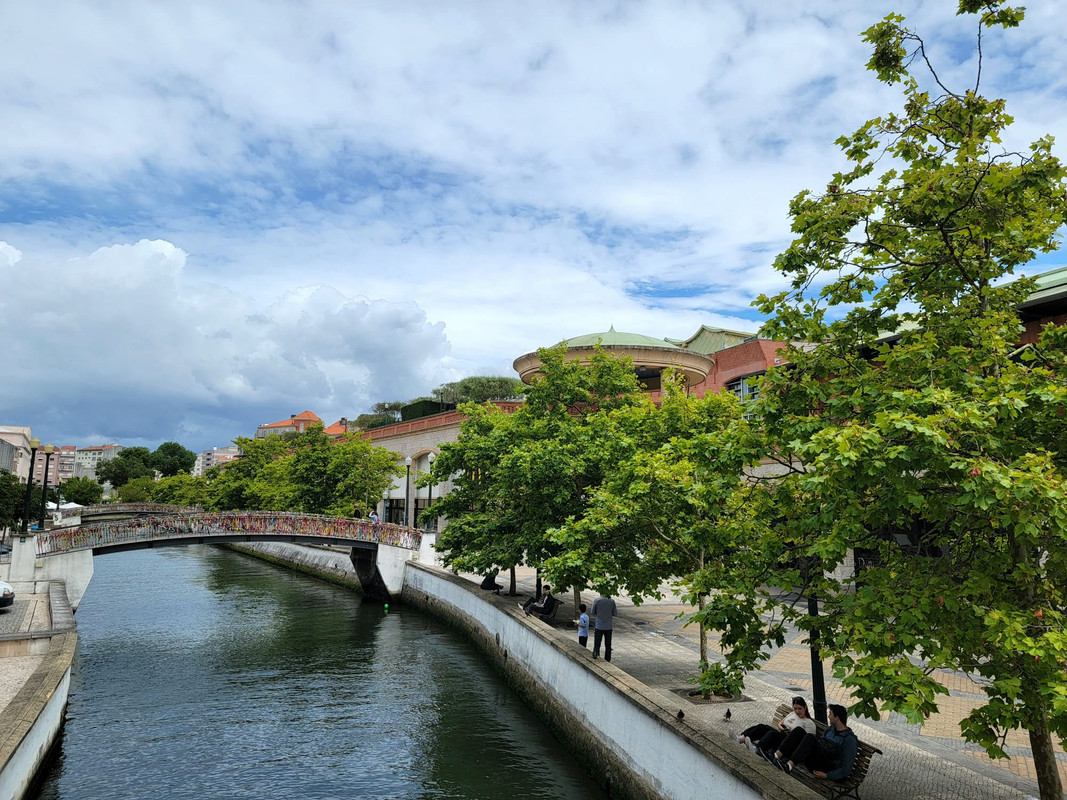
Next, I headed to Aveiro, which bills itself as the “Venice of Portugal” with many small canals. It was rather boring so unless you’re passing through here, I’d say skip it.
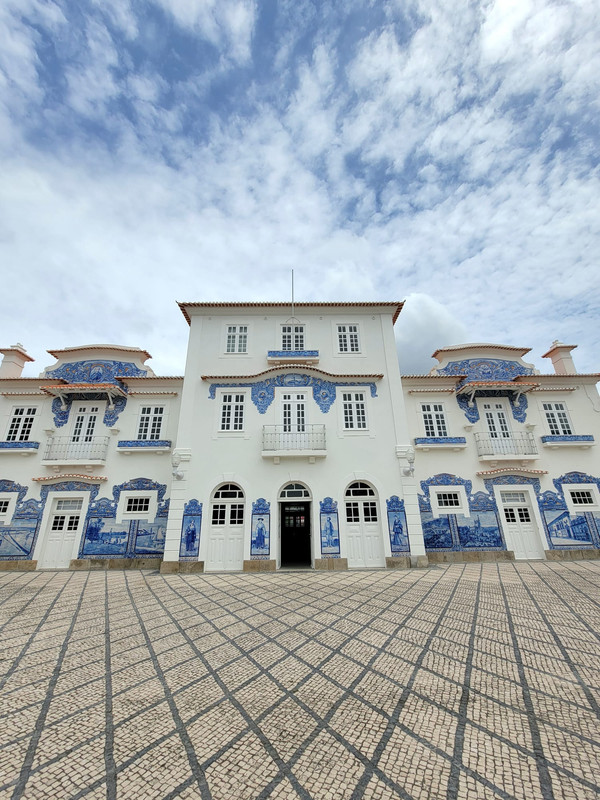
Aveiro Train Station
Cais do Cojo- canal streets
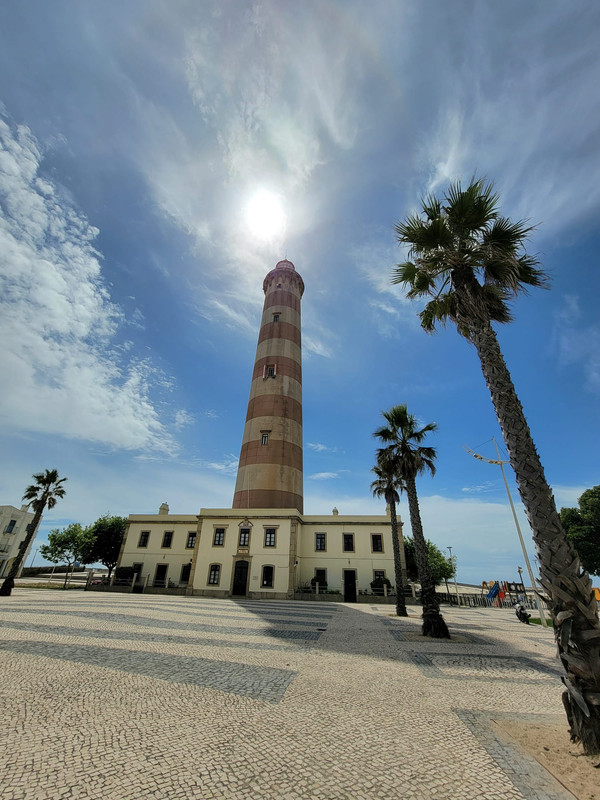
Farol de Aveiro
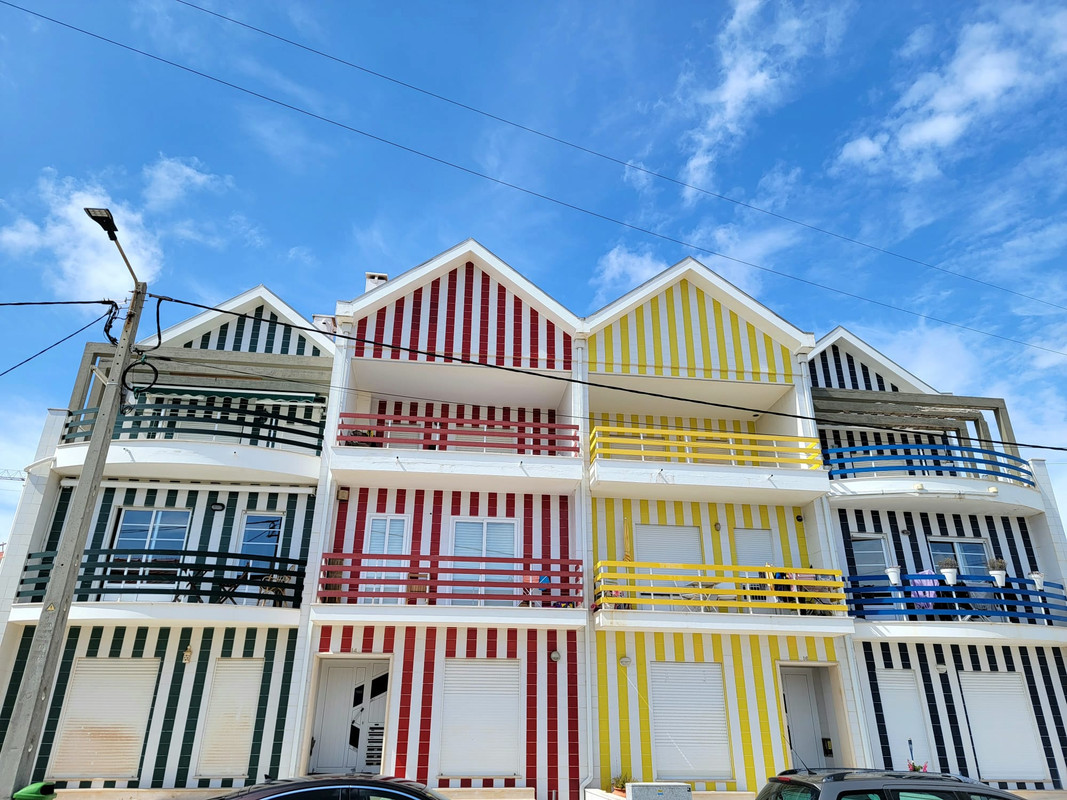
Praia da Costa Nova- this beach town is renowned for its colorful houses
Next, I headed to Conimbriga, an ancient Roman town with beautiful ruins. I arrived too late to view the ruins, which close earlier than the museum. I toured the museum and came back here the next day to view the ruins. I then headed to Coimbra and checked into the Archisuites Hotel (more of an Airbnb place really). Parking in Coimbra is a nightmare, but I managed to find an open spot nearby.
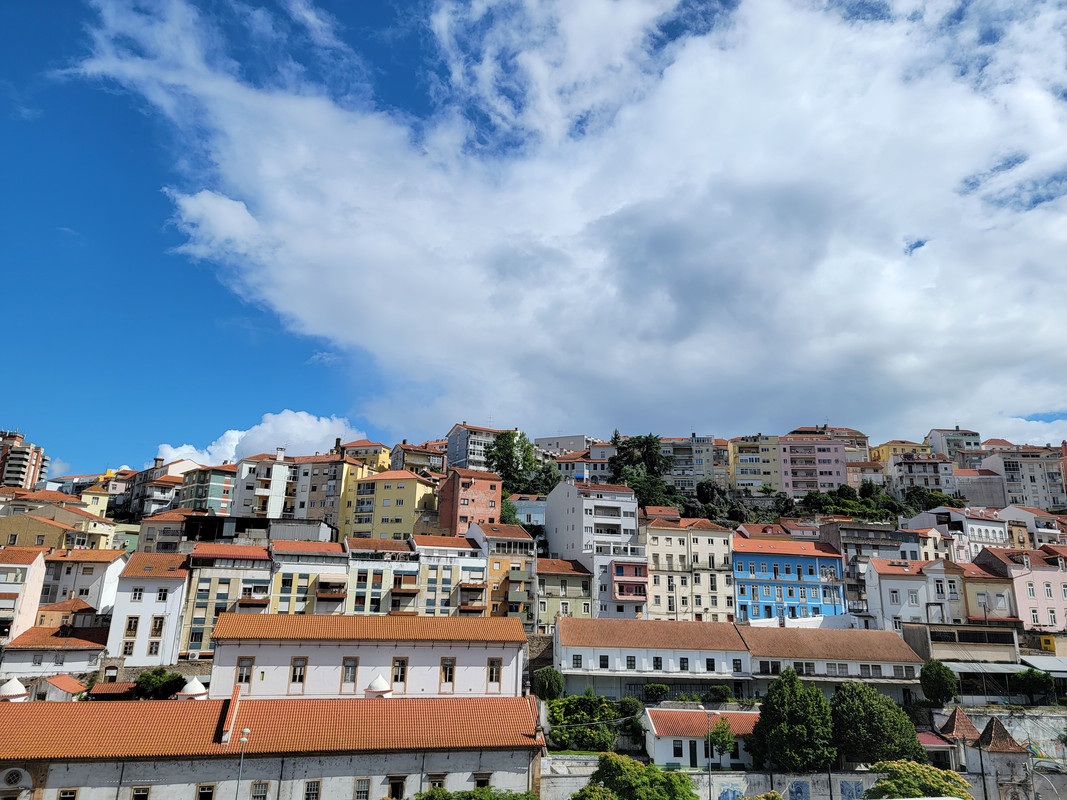
Coimbra was once the capital of Portugal, and houses Portugal’s oldest University. I had pre-purchased 9AM tickets to visit the university’s historical buildings, but the instructions on where the tour starts weren’t on the ticket, so I walked all the way to the visitor’s office only to find out that the tour starts at the Biblioteca Joanina library, which was a lot closer to my accommodations. They were kind enough to reissue my ticket for 9:40, even though all slots were full, so that my time in Coimbra wasn’t in vain. (There is an English guided tour of the University available most days on 3PM but it didn’t suit my schedule so I did the self-guided tour instead). Coimbra is also the site of the oldest known Jewish community in Portugal, with documents dating back to year 950.
Biblioteca Joanina- this is the most beautiful library I have ever seen (pictures of the interior are not permitted☹ ). They have a colony of bats here that were specifically bred to eat insects that damage the books. The library here has the Bíblia Hebraica de Abravanel, an illustrated handwritten Chumash which was commissioned by Don Isaac Abravanel in 1450 in Lisbon. The book is not available for public viewings, and I was not able to secure advance permission to view it.
Miradouro do Mercado Municipal D. Pedro V- overlook
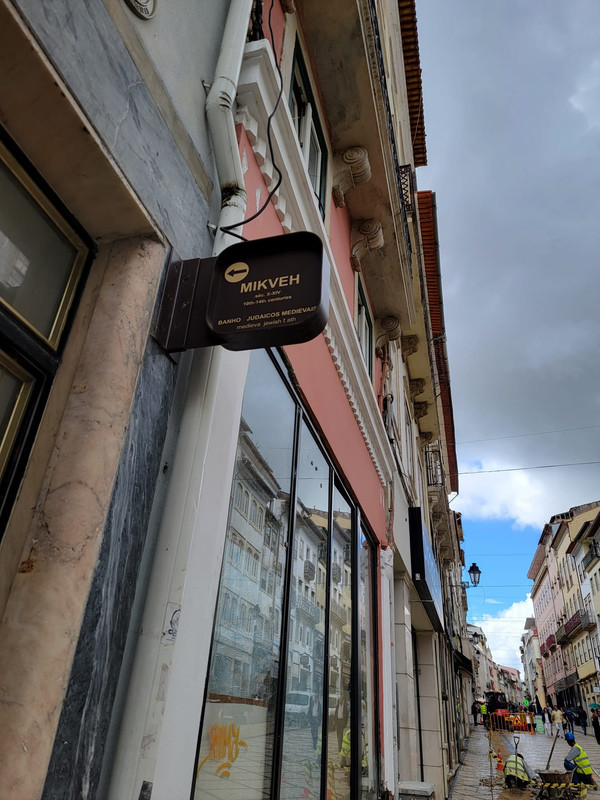
The site of what is believed to be the community’s mikveh of 1370 is on Rua Visconde da Luz 19/21. I met a few members of the historical council while I was there, and they plan to open the site to the public next year.
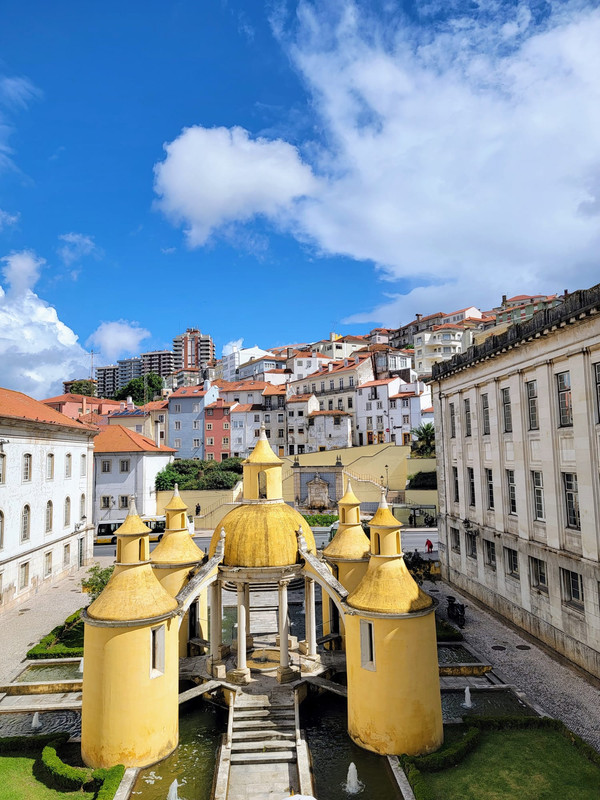
Manga Cloister- another good overlook of Coimbra
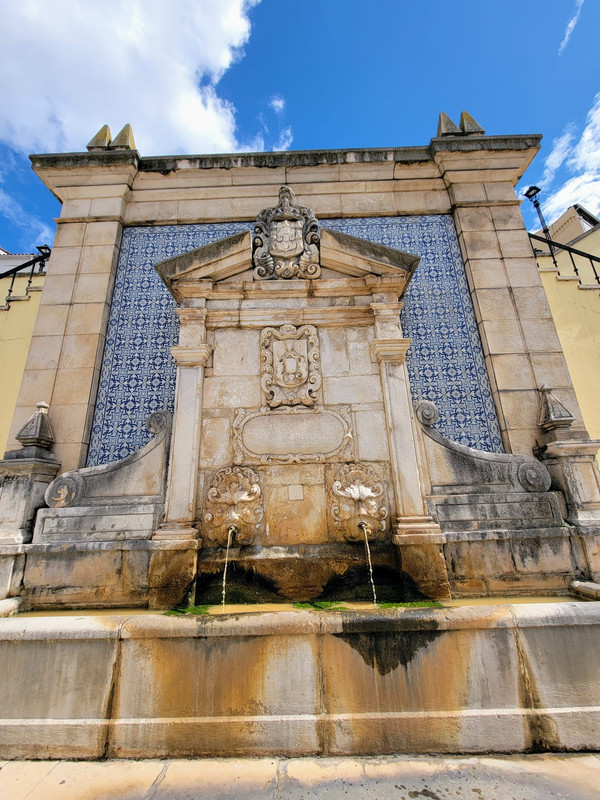
Fonte Nova ou dos Judeus- this fountain used to be at the boundary of the Jewish quarter, hence its name.
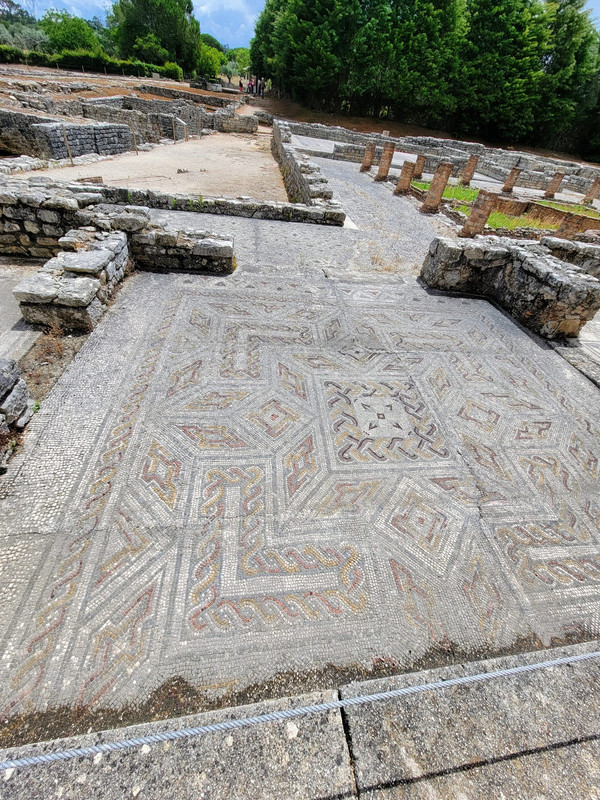
Next I headed back to Conímbriga to visit the ruins I missed out on the day before.
Back in Coimbra, I visited the Patio Inquisição where the inquisition was headquartered. The Coimbra Inquisition had jurisdiction over all cases from Central and Northern Portugal and logged over 11,000 cases. 200 New Christians were burned to death here in the Inquisition Square, as well as in Coimbra’s city square.
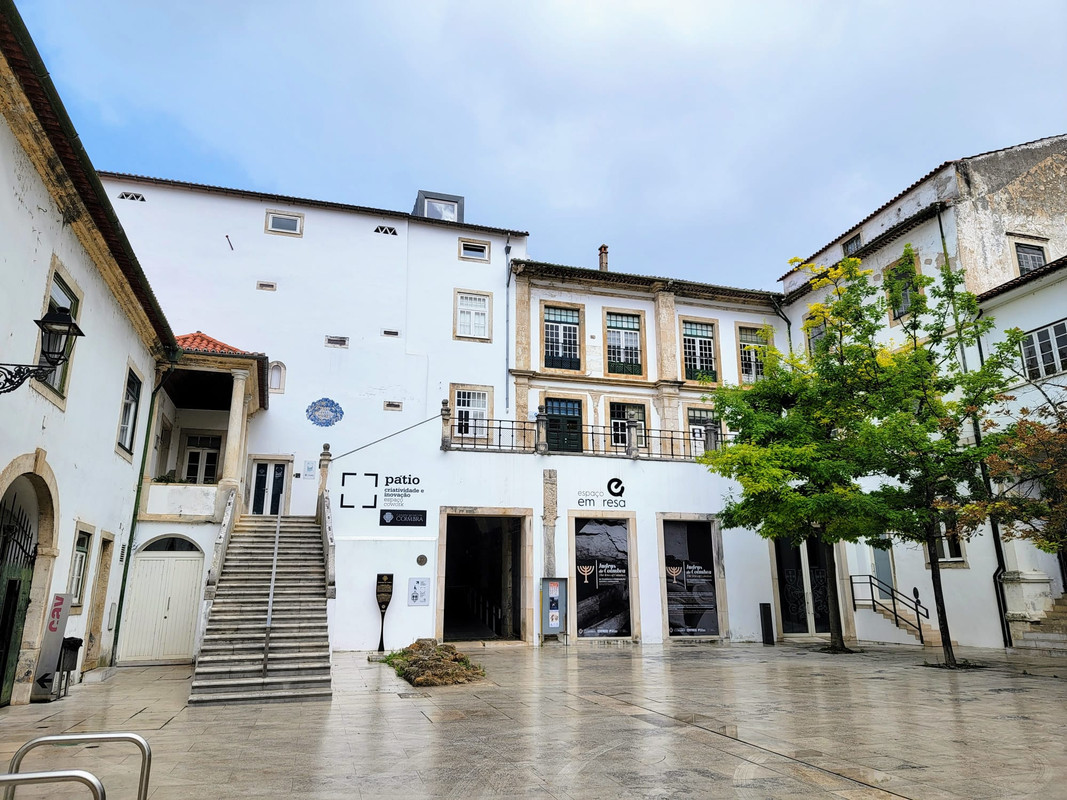
I found the exhibit here fascinating and professional- they have an audio app for download where there’s a ton of information available. It’s located in the former inquisition’s prison building, and the dungeons are open to visitors.
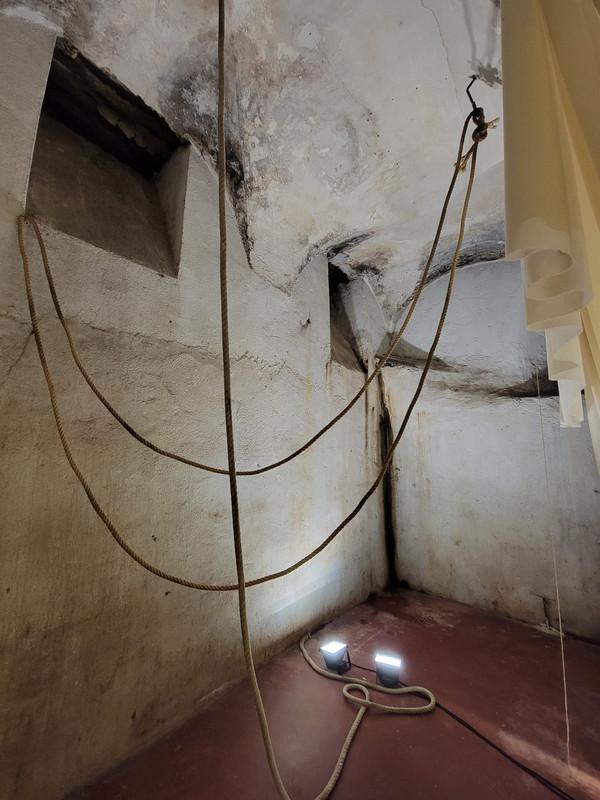
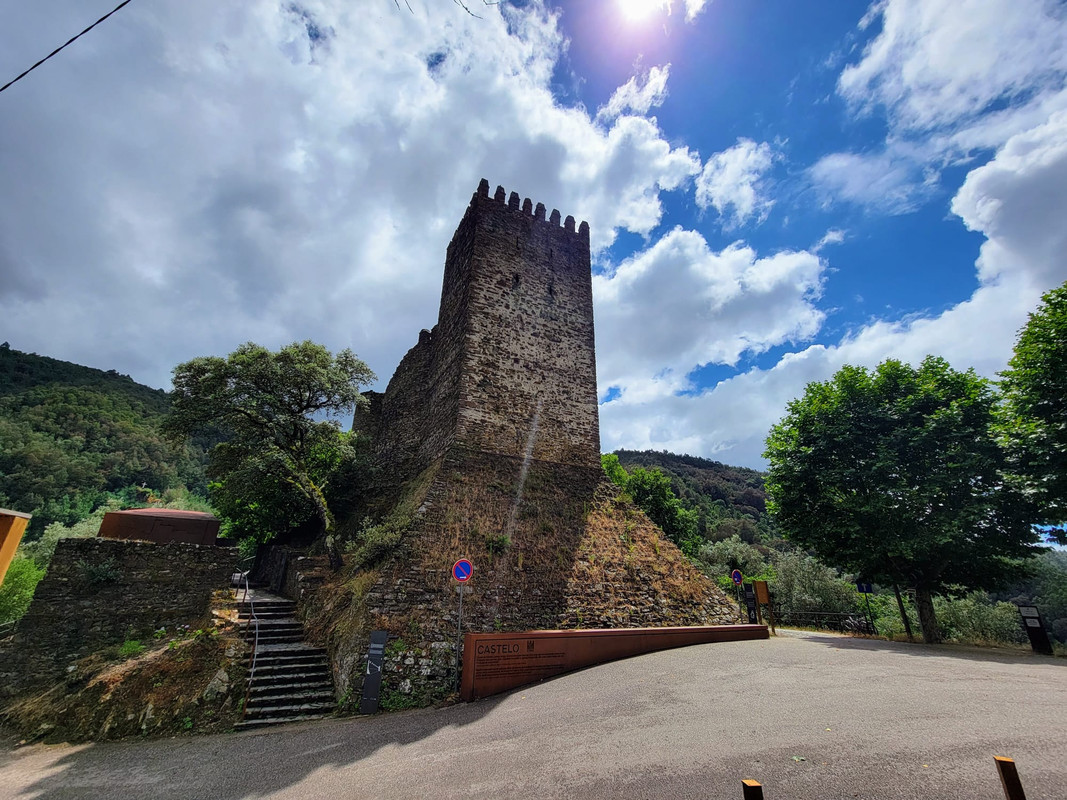
Next, I headed to the Castle of Lousã. This is tiny a castle that was good for a quick spot to stretch my legs but not worth it otherwise.
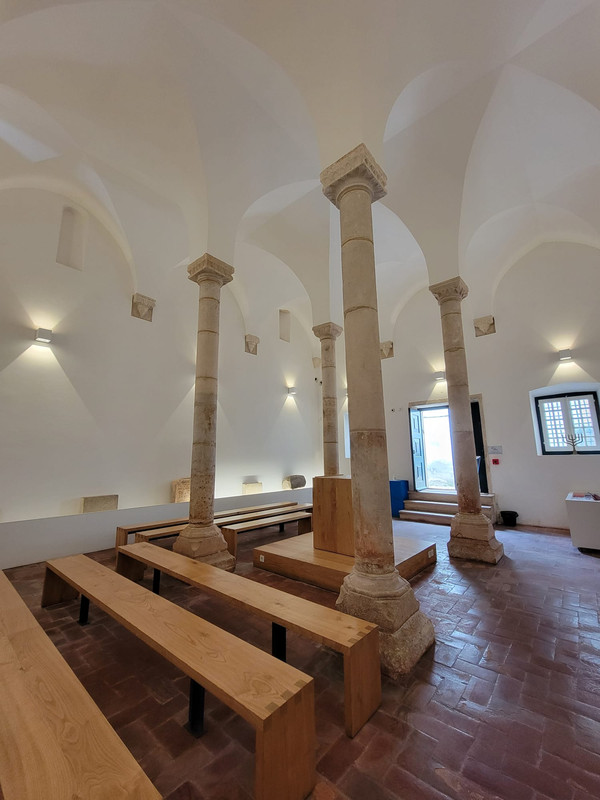
I then headed to the town of Tomar, where the Tomar Synagogue/ Luso-Hebrew Museum of Abrãao Zacuto is located. This shul was built in the 1460s and shut down in 1496 when Jews were formally expelled from Portugal. This is one of only two recognized pre-inquisition shuls in Portugal today.
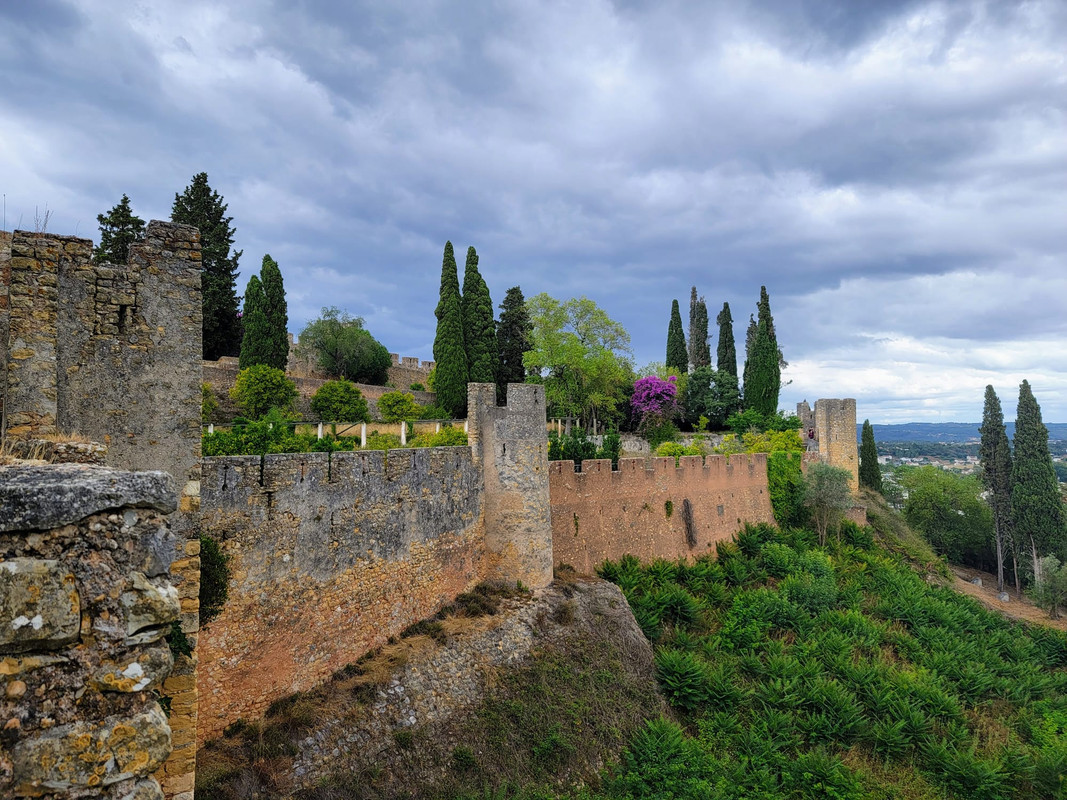
Castelo de Tomar- this is a large and beautifully maintained castle. I only visited part of it, as one half is a convent.
Next, I drove to Portalegre to check into the José Régio hotel.
The next morning, I started my day in the town of Castelo de Vide- many Jews fled from Spain into Portugal in 1492 and ended up here in this border town. While no trace of Anusim remains in Castelo de Vide today, many townspeople have a tradition to this day to bake unleavened bread before Easter.
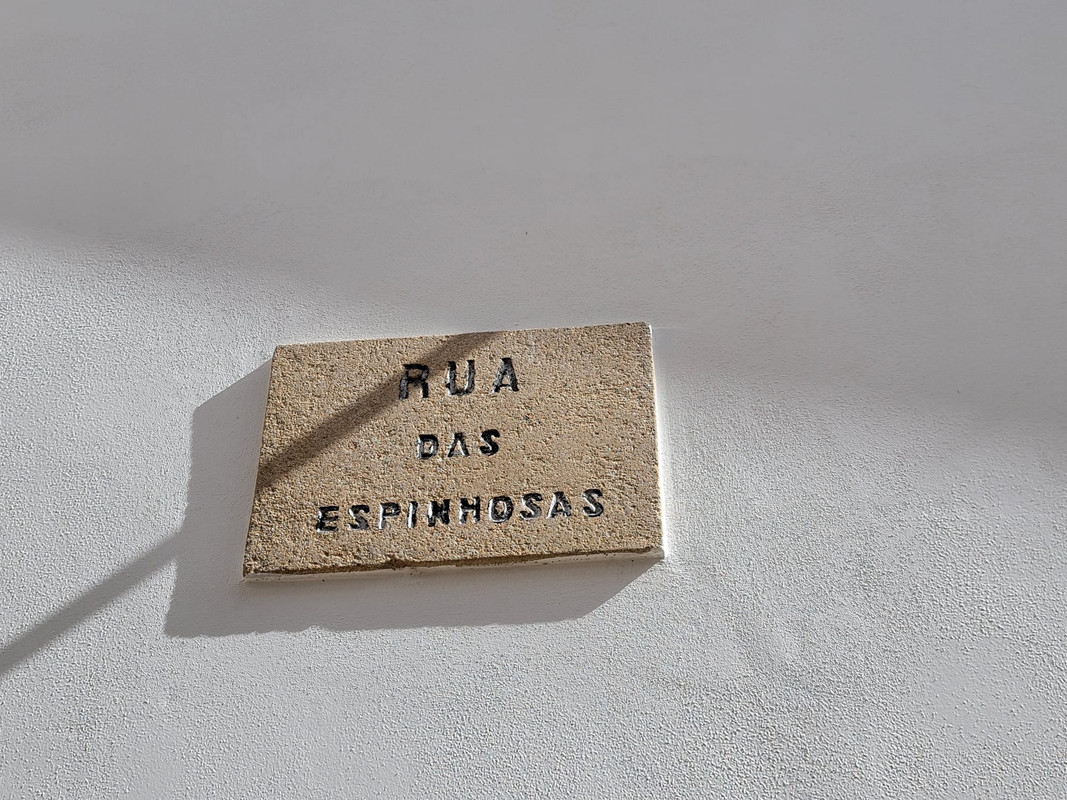
Rua das Espinosas- this street is named after Baruch Spinoza, whose father lived on this street. It’s rumored that he was born here as well.
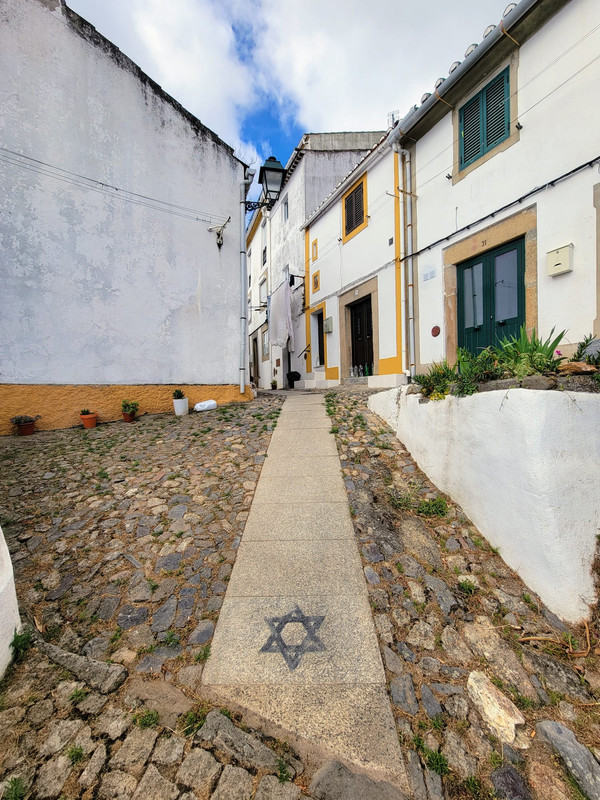
Judiaria de Castelo de Vide- these streets were once part of the town’s Jewish Quarter
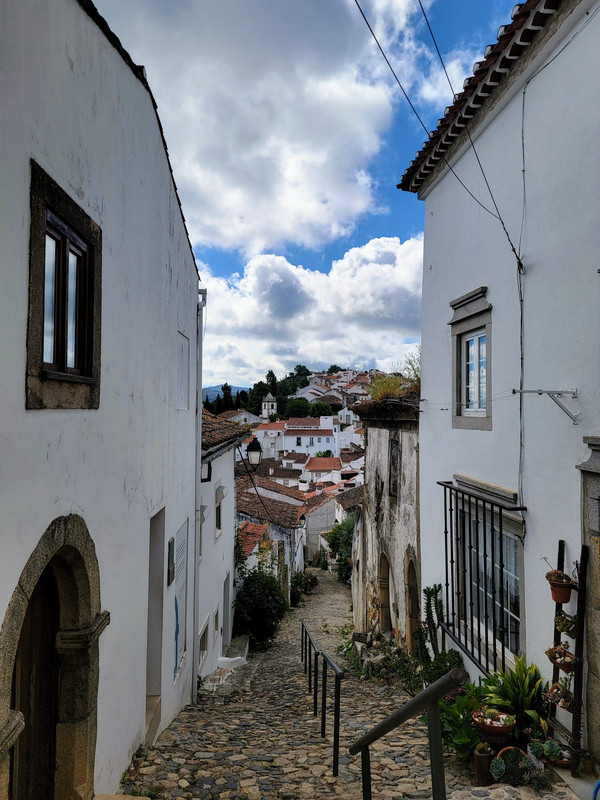
Sinagoga de Castelo de Vide- This synagogue was built in the late 1300s, discovered in 1969, and is the second of only two surviving pre-inquisition shuls in Portugal. Everything here is in Portuguese, but they sell an English language pamphlet explaining everything.
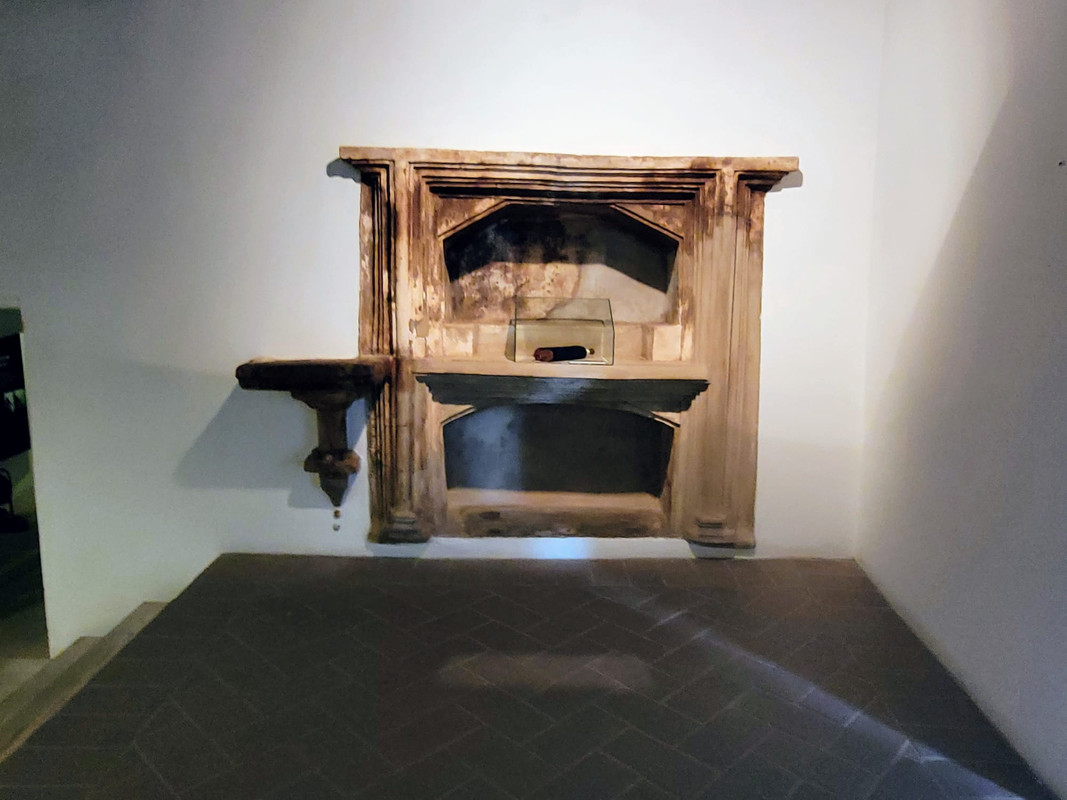
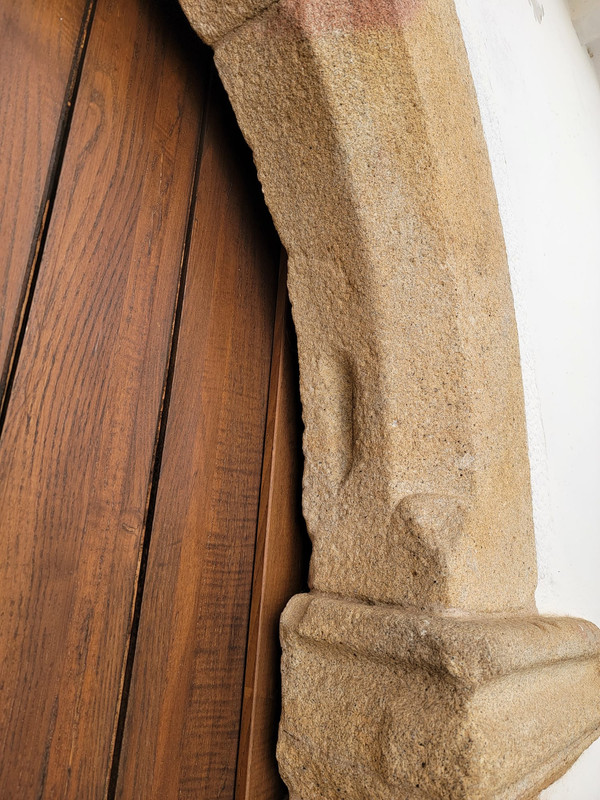
An indentation in a doorpost for a mezuzah.
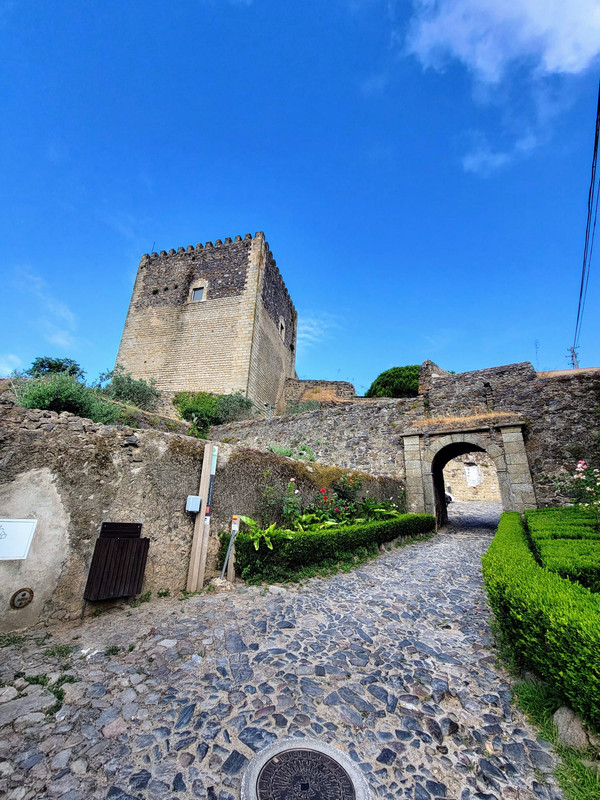
Castle of Castelo de Vide- small castle overlooking the town of Castelo de Vide.
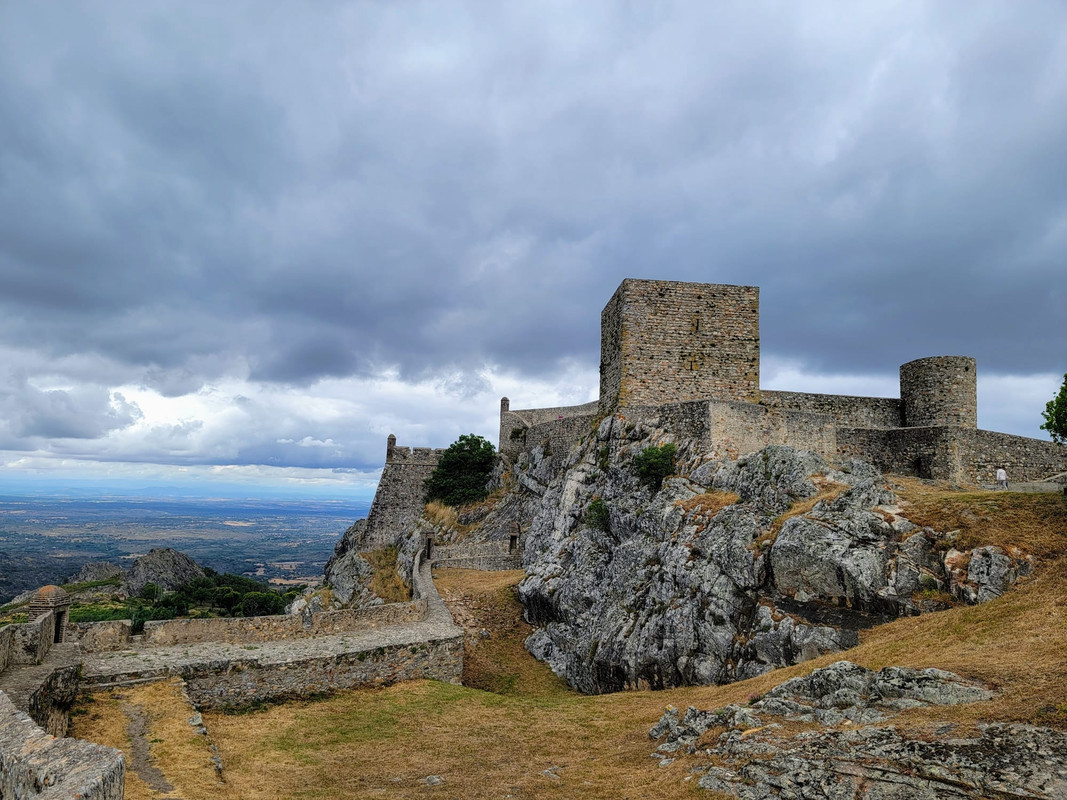
Next, I headed to Marvão Castle.
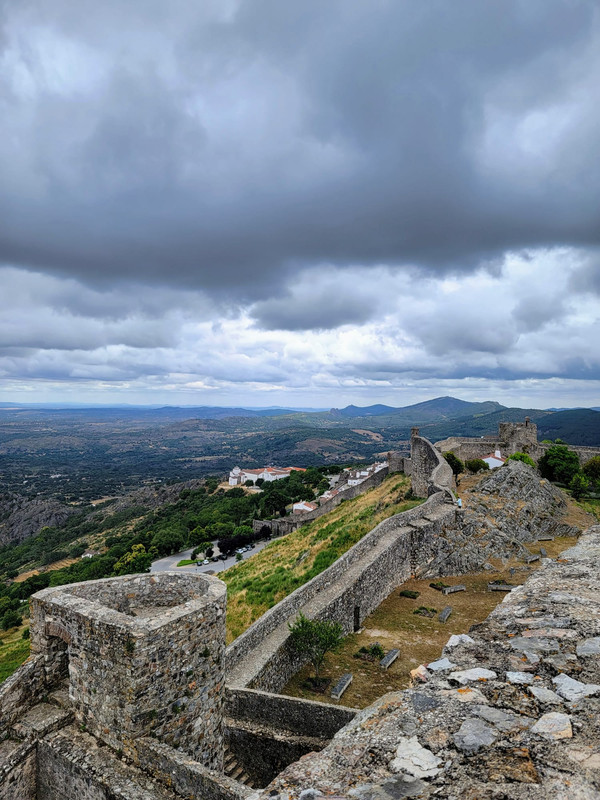
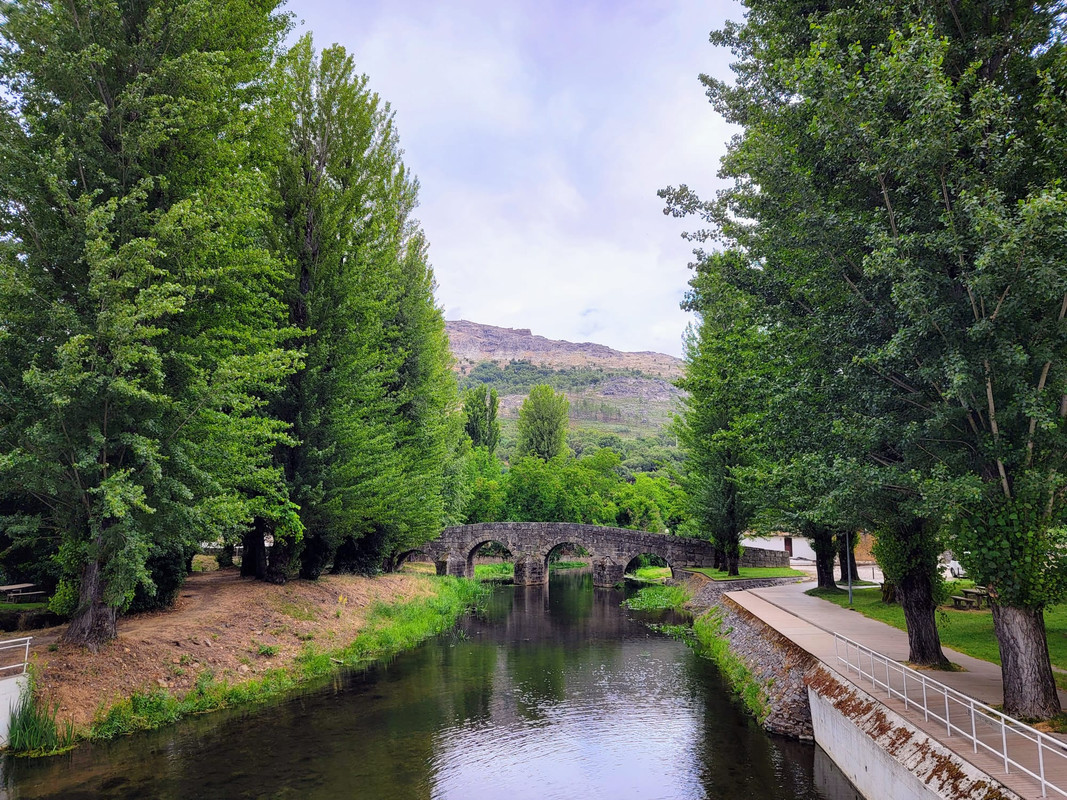
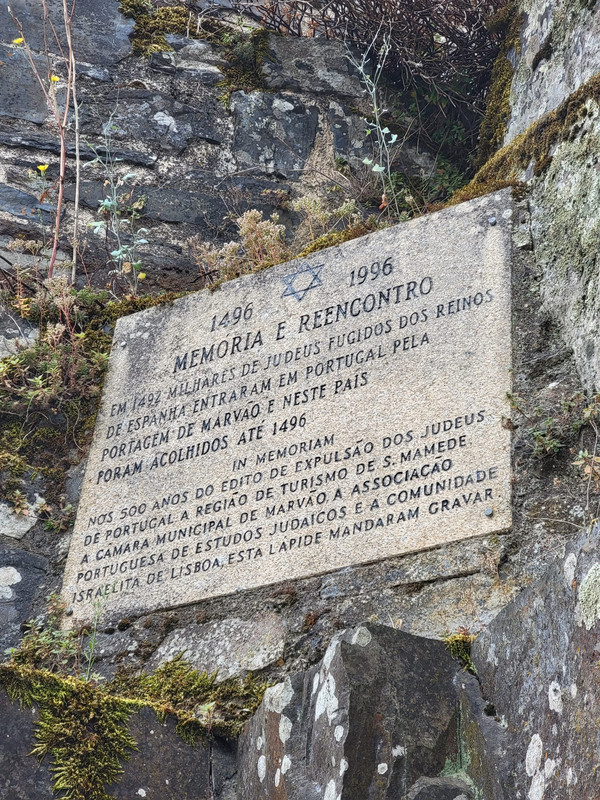
Outside of Marvão is the Ponte Romana da Portagem. This tollgate bridge was established by Portugal to control and tax the entry of Jews expelled from Spain that were pouring into Portugal in 1492 as refugees. Approximately 15,000 Jews entered through this bridge, and then continued onto Marvão and Castelo de Vide where various Chessed organizations were set up to help them settle in Portugal (unfortunately they were forced to continue on just a few short years later).
Memorial to the refugees who made the crossing in 1492.
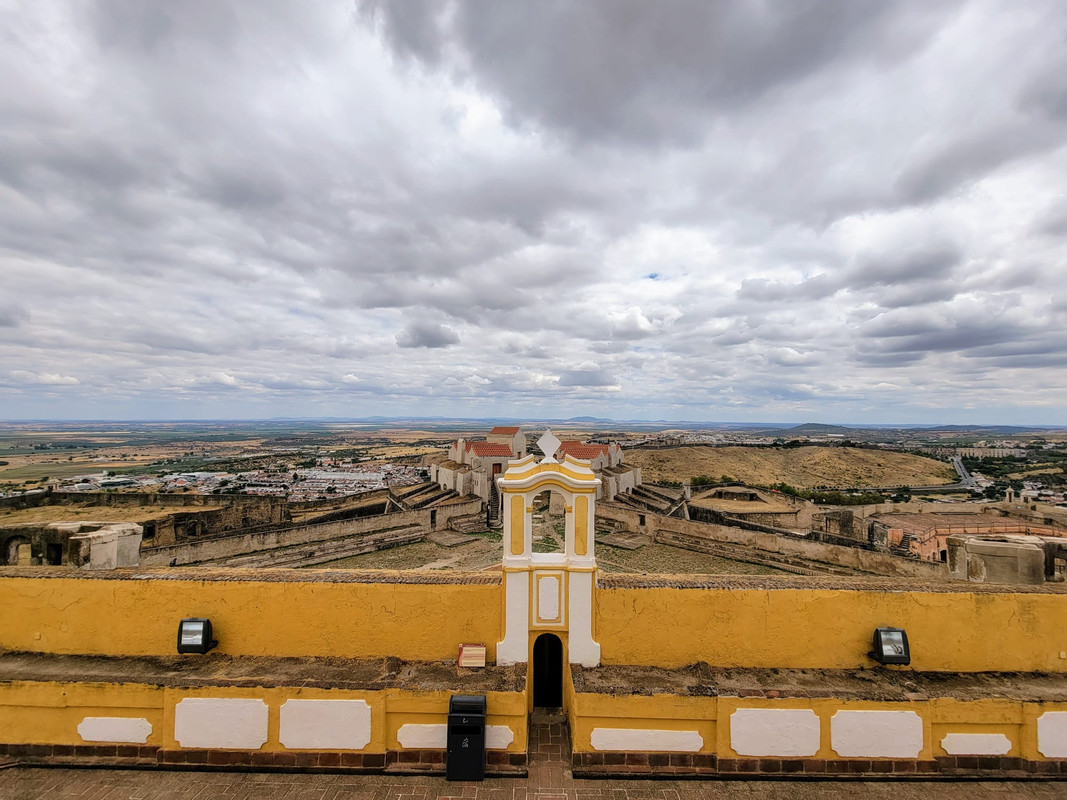
Next, I headed to Elvas. My first stop was at the Forte de Nossa Senhora da Graça, a huge military fort. You can wander here for hours, although all the sides of the fort are mirror image so if you see one side of it you’ve seen it all.
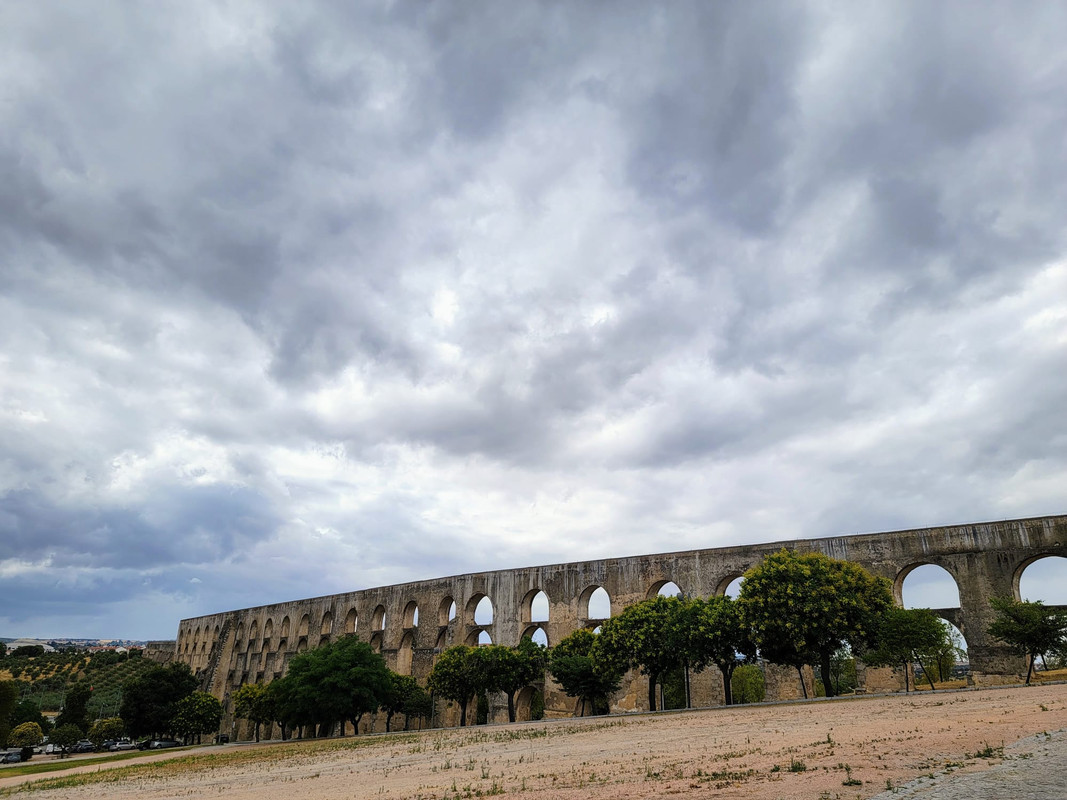
Amoreira Aqueduct
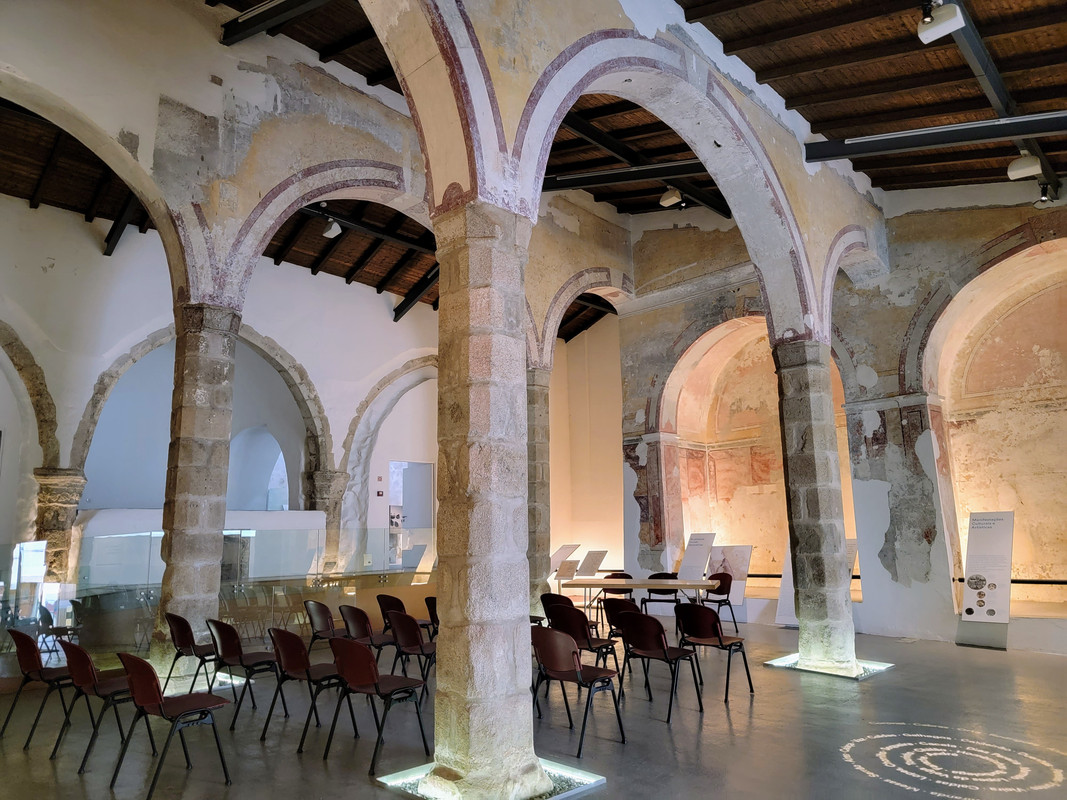
While Portugal only has two officially recognized shuls (in Tomar and Castelo de Vide) that predates the inquisition, the Casa da História Judaica de Elvas is expected to become the third once historians reach a consensus that it was indeed used as a shul. The twelve columns are thought to correspond to the Twelve Tribes of Israel.
Castelo de Elvas
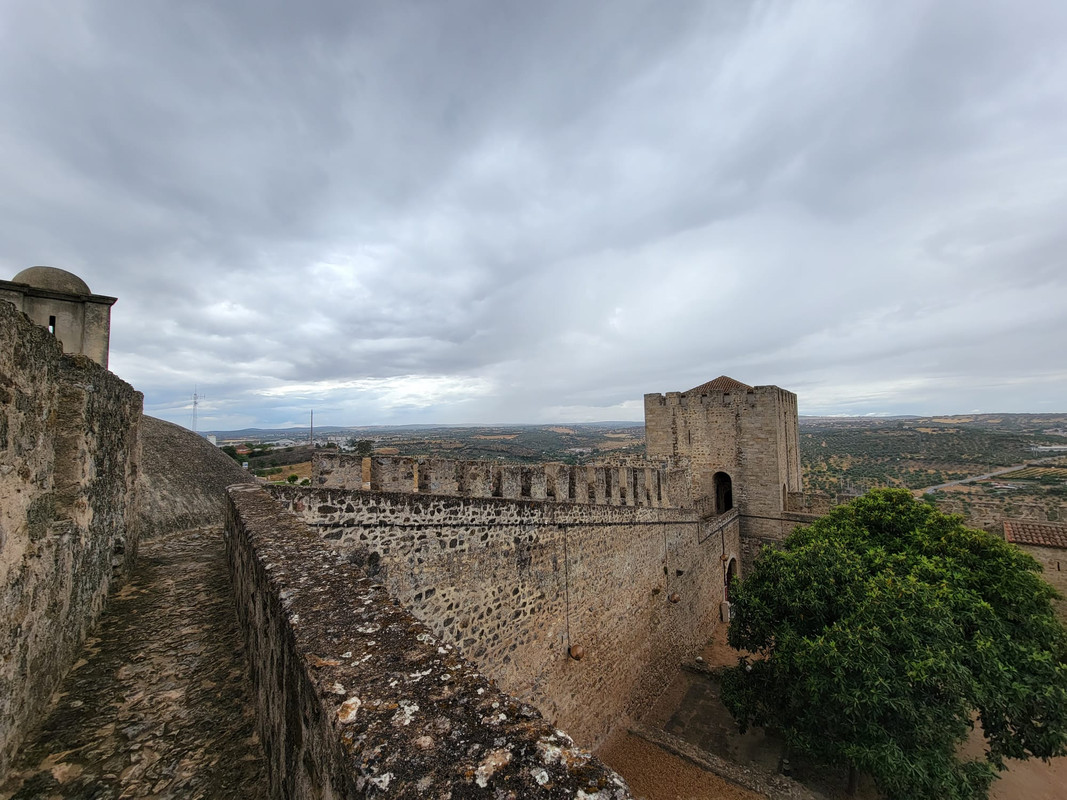
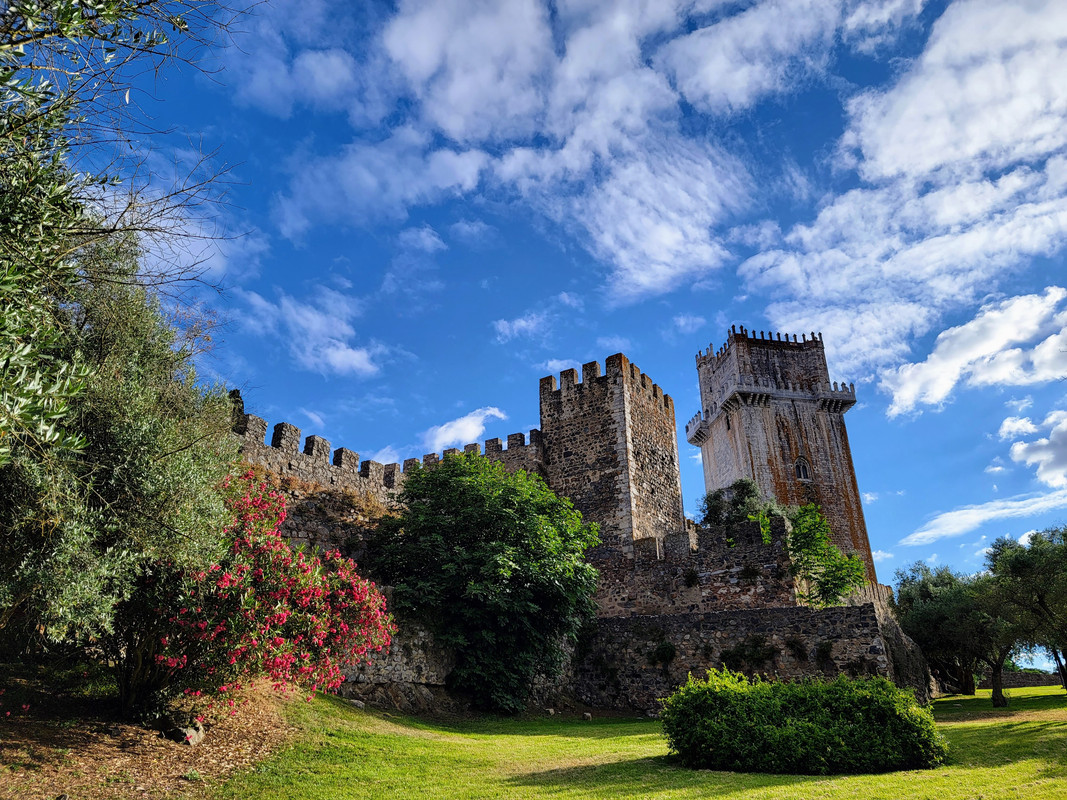
I then started the 3-hour drive from Elvas to the Algarve (per Google Maps it should take closer to 3.5 hours, but with speeding being the name of the game in Portugal, I managed to cut down with 30 minutes). On the way I stopped at Beja Castle to stretch my legs.
I visited Evora, a town in the Alentejo with a rich Jewish past towards the end of my trip, so continue reading if you’d like to hear more😊
Algarve
I had booked an Airbnb in Carvoeiro, a charming beach town. I thought I was getting a good deal as it was a new listing with no reviews yet. Lesson learned. It might have been a new listing, but the place was in no way new. While the apartment had a dedicated parking spot, a must in any city in the Algarve, the hot water was a pain, the place was noisy, and on day three I discovered a colony of ants in the bathroom. Management was not of much help either.
Friday morning, I started my day in Albufeira, one of the bigger cities in the Algarve. I only discovered Ezra’s kosher market late in the day, so I was unable to order any fresh food for Shabbos. Most of the large supermarkets in the Algarve have self-service fresh orange juice stations where a small bottle is less than €1. The temps in the Algarve were in the mid-70s most days (I was lucky- temps can be in the 90s in the Algarve in June), but the sun is very strong so most days it felt hotter. There is always a good breeze coming off the ocean though which helps counter the sun somewhat.
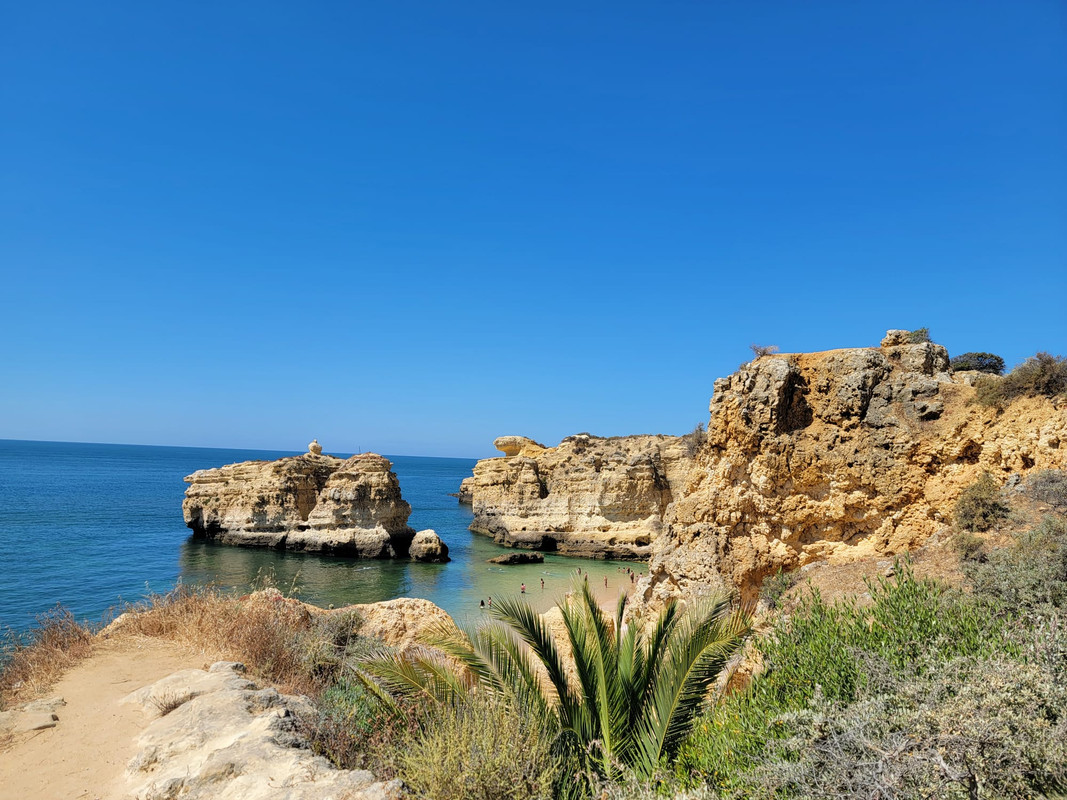
My first stop was at the Praia da Coelha beach. I was there early in the morning, so parking was easy, and the beach wasn’t too full, but later in the day it is one of the busier beaches.
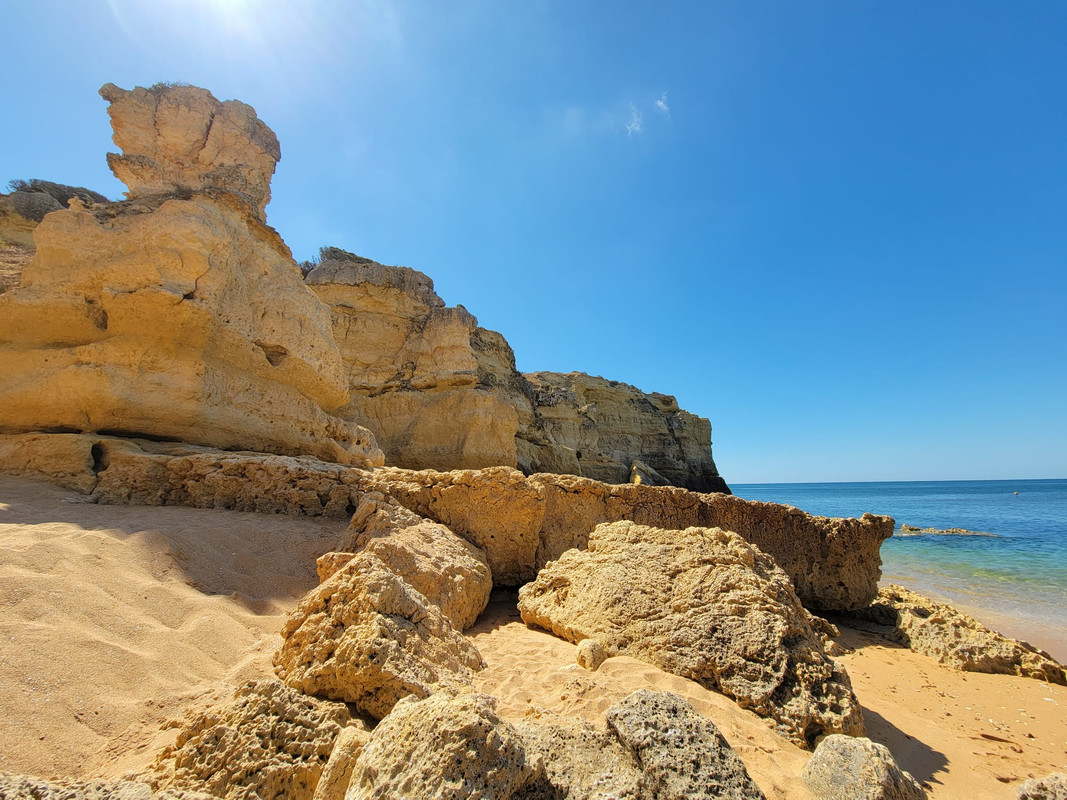
Praia de São Rafael
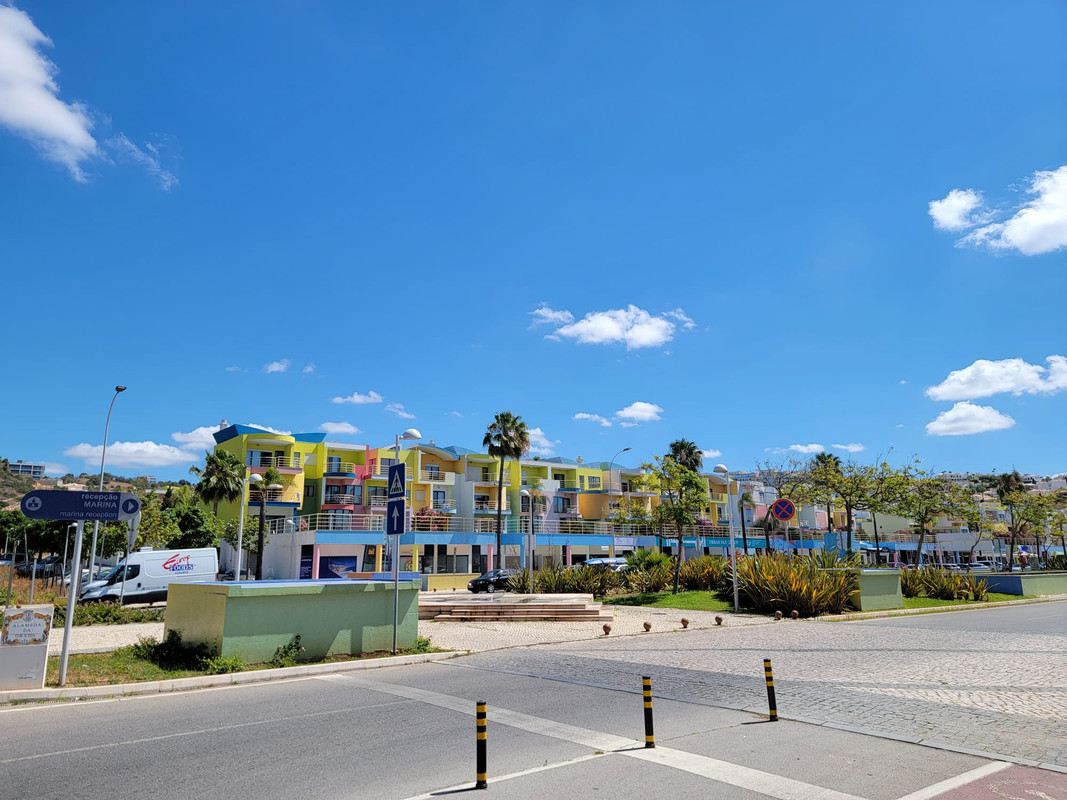
Marina de Albufeira
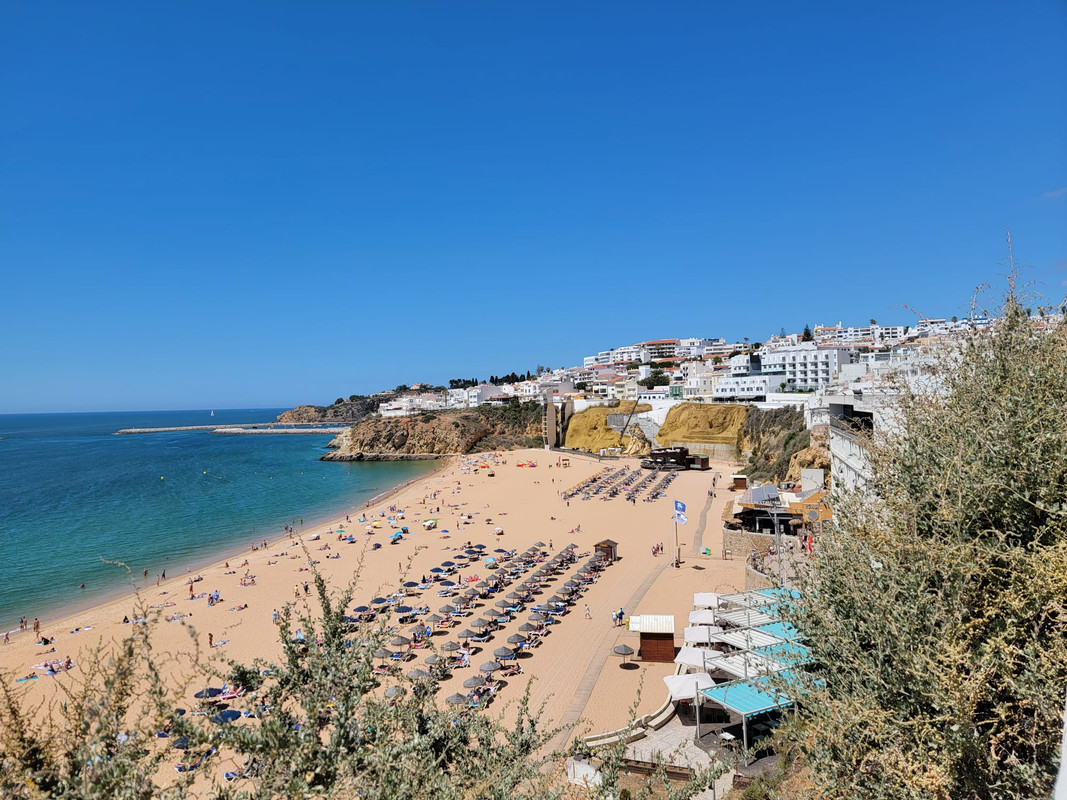
Antigo paiol do Castelo de Albufeira- nice beach lookout
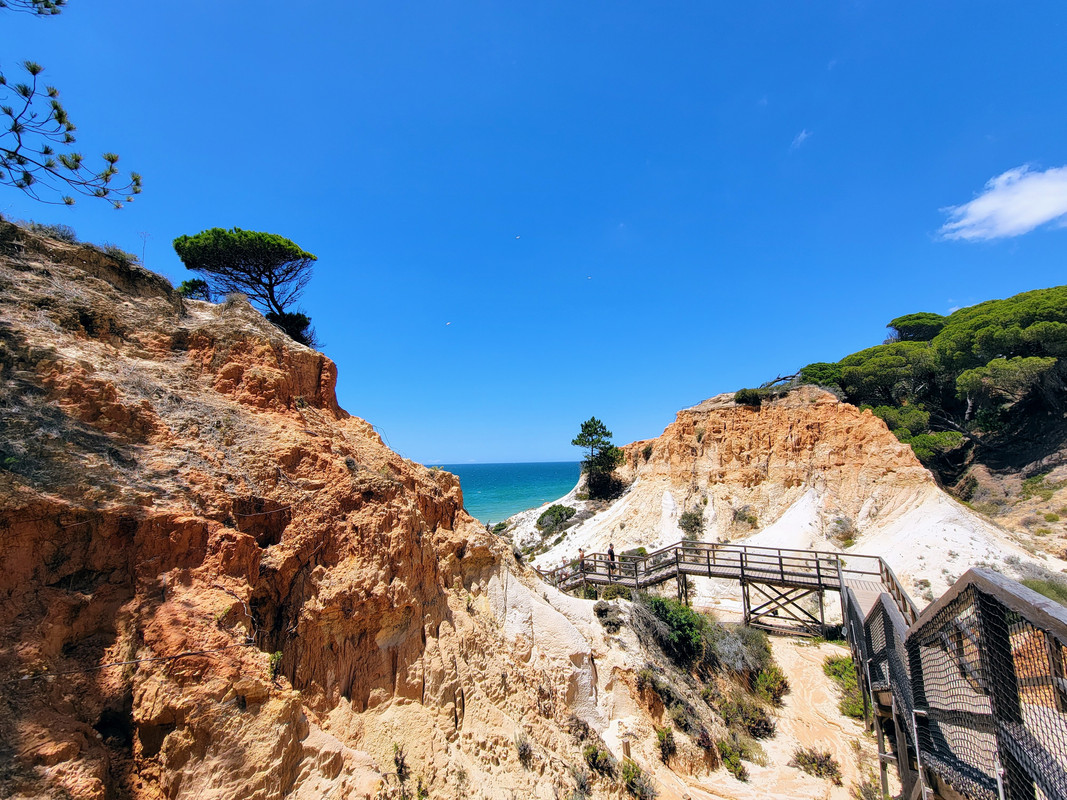
Praia da Falésia- one of the most beautiful beaches I encountered on this trip due to the stunning rock formations, but also the most crowded. Possibly also a nude beach so do your homework. (It’s possible to access a quieter area of the beach via private entrance from the resorts located directly behind the beach).

Next, I headed to Faro, the largest city in the Algarve.
Arco da Vila- town walls/gate
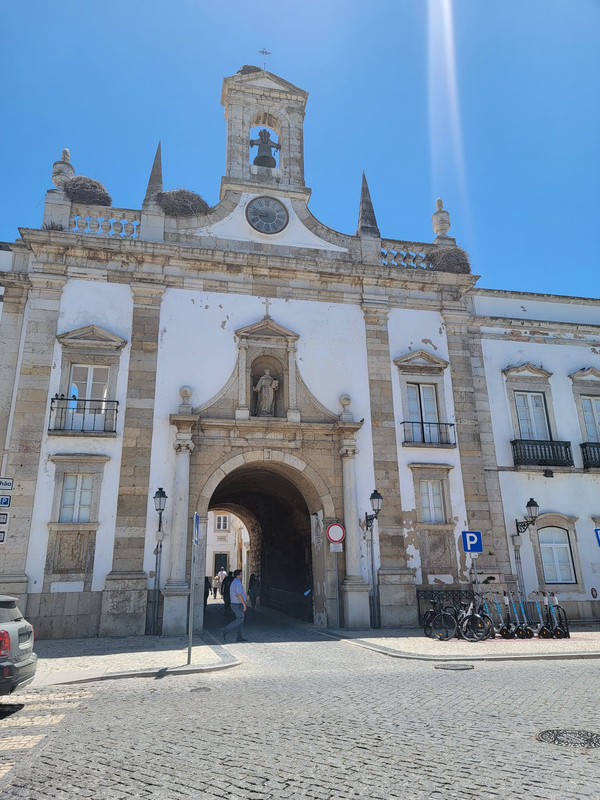
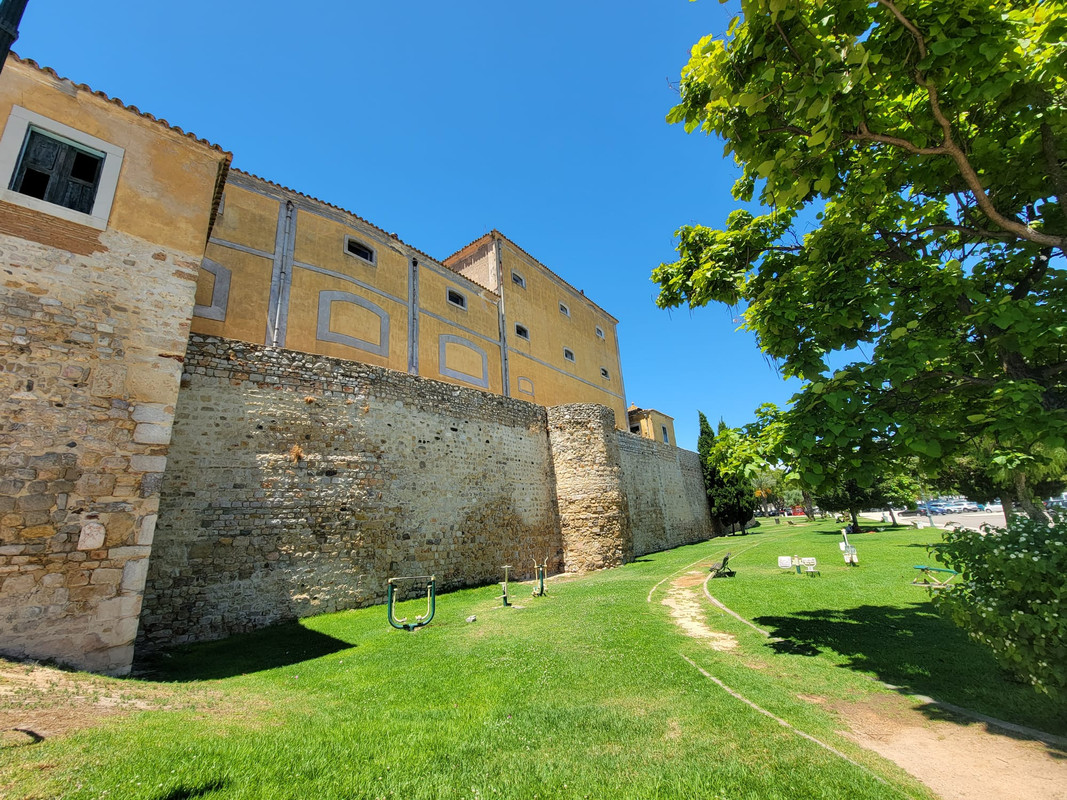
Cidade Velha- Old Town
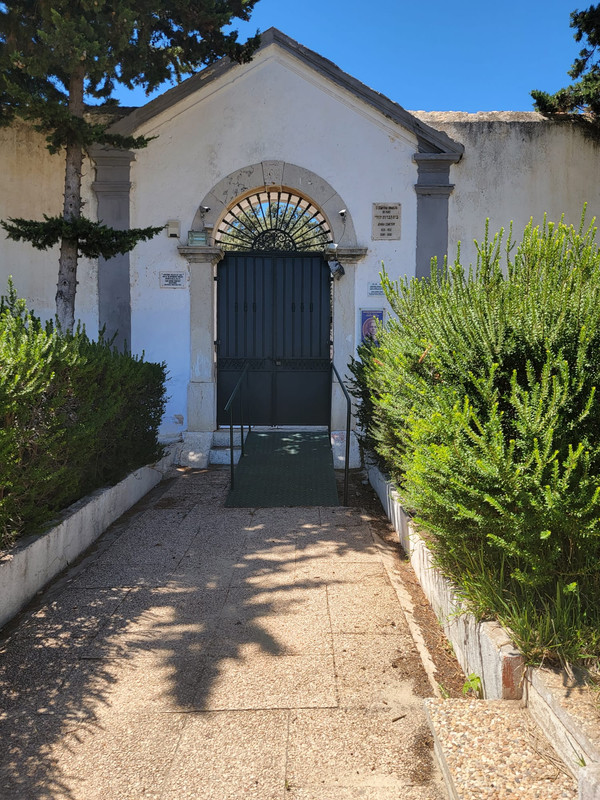
I then headed to the Centro Histórico Judaico de Faro- the Jewish Cemetery which also has a small museum and shul on site. I had reached out to the caretaker but never received a response. Based on the outside appearance it seems that they are no longer open to visitors.
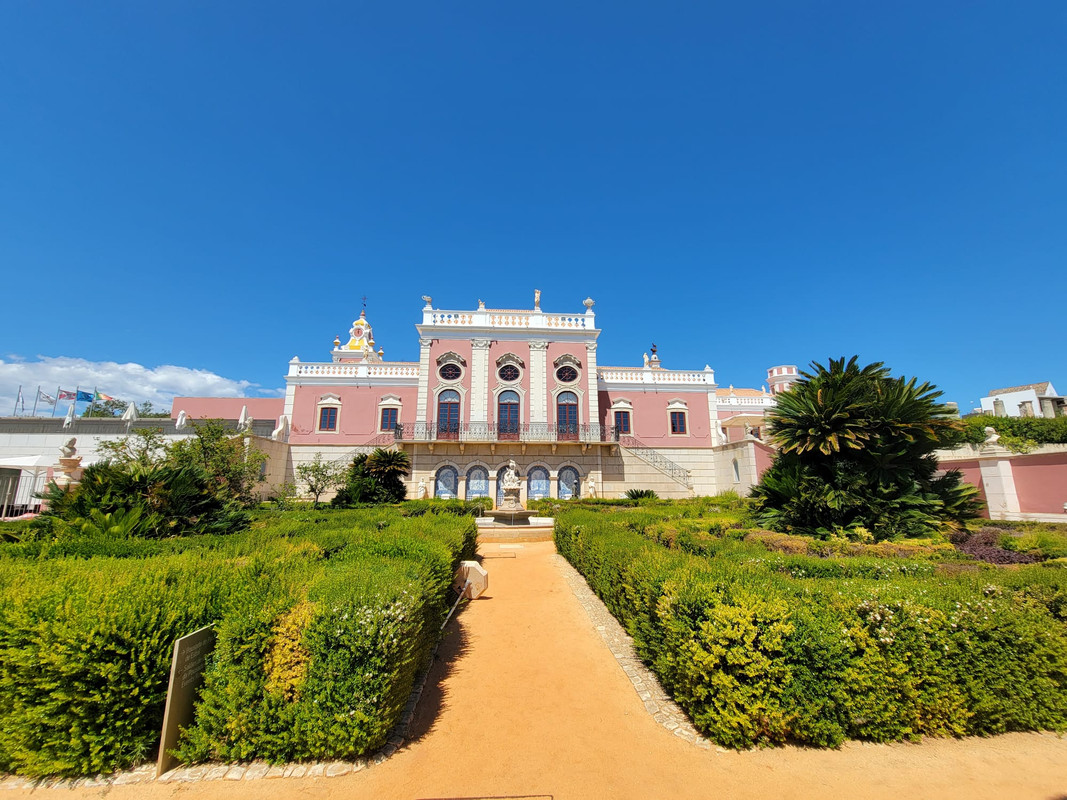
Palácio de Estói– this was a palace that is now a hotel (bookable via Hyatt). The surrounding property is not very well maintained, but it’s still beautiful.
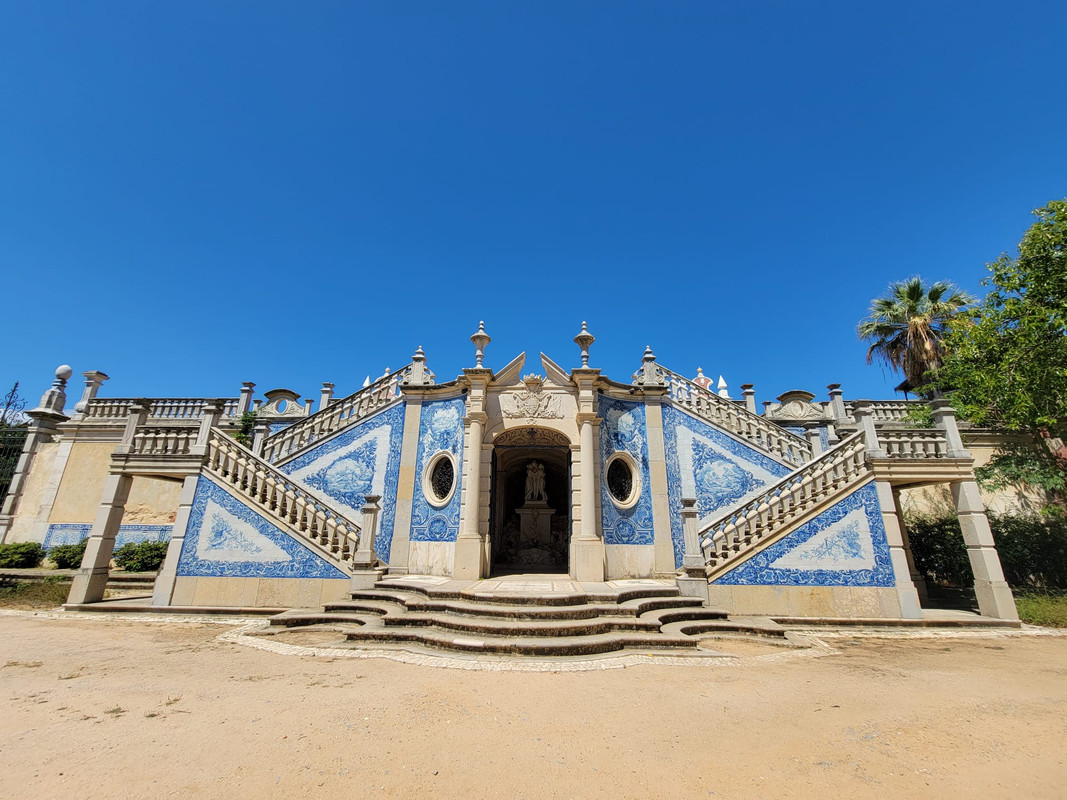
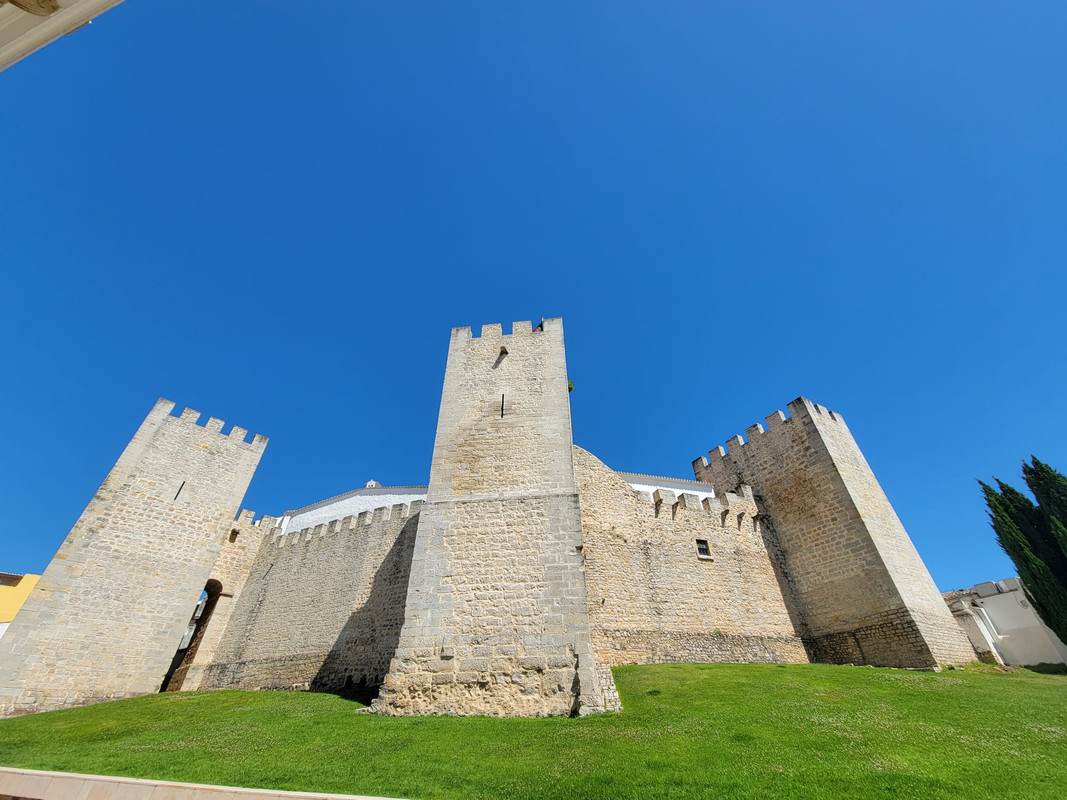
My last stop of the day was in the town of Loule, starting with the Castelo de Loulé,
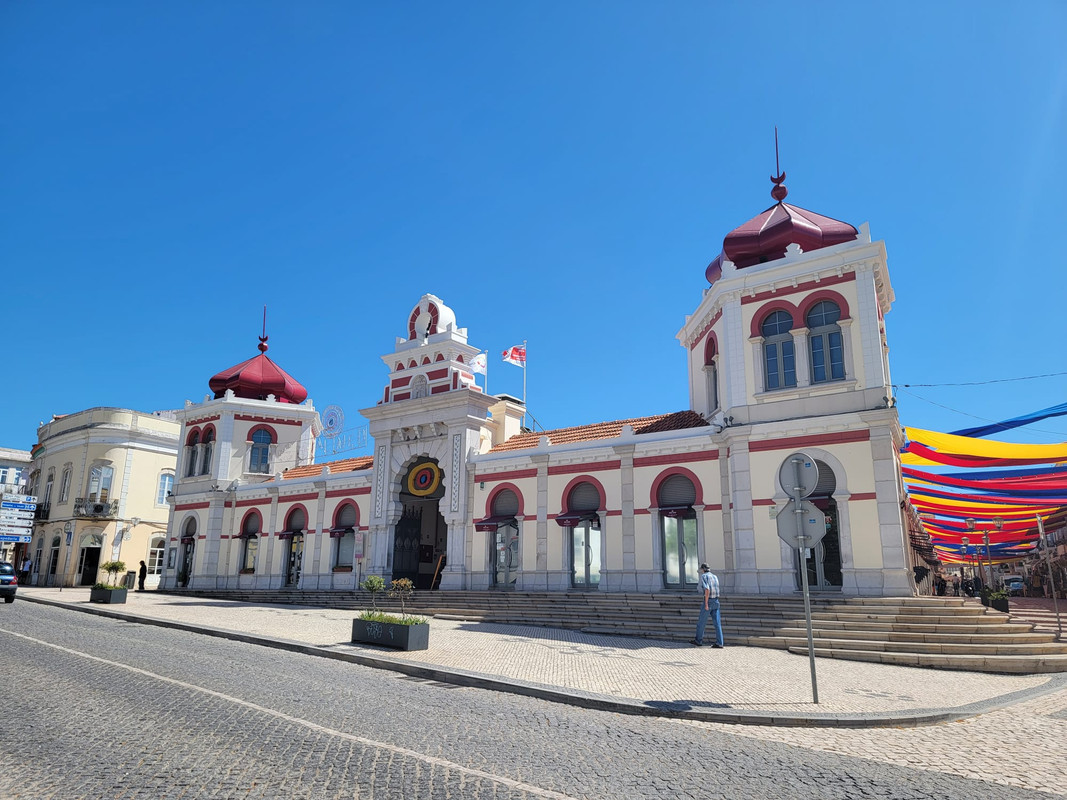
and then the Mercado Municipal de Loulé (market). Most stalls close early in the day, so I didn’t get to haggle much.
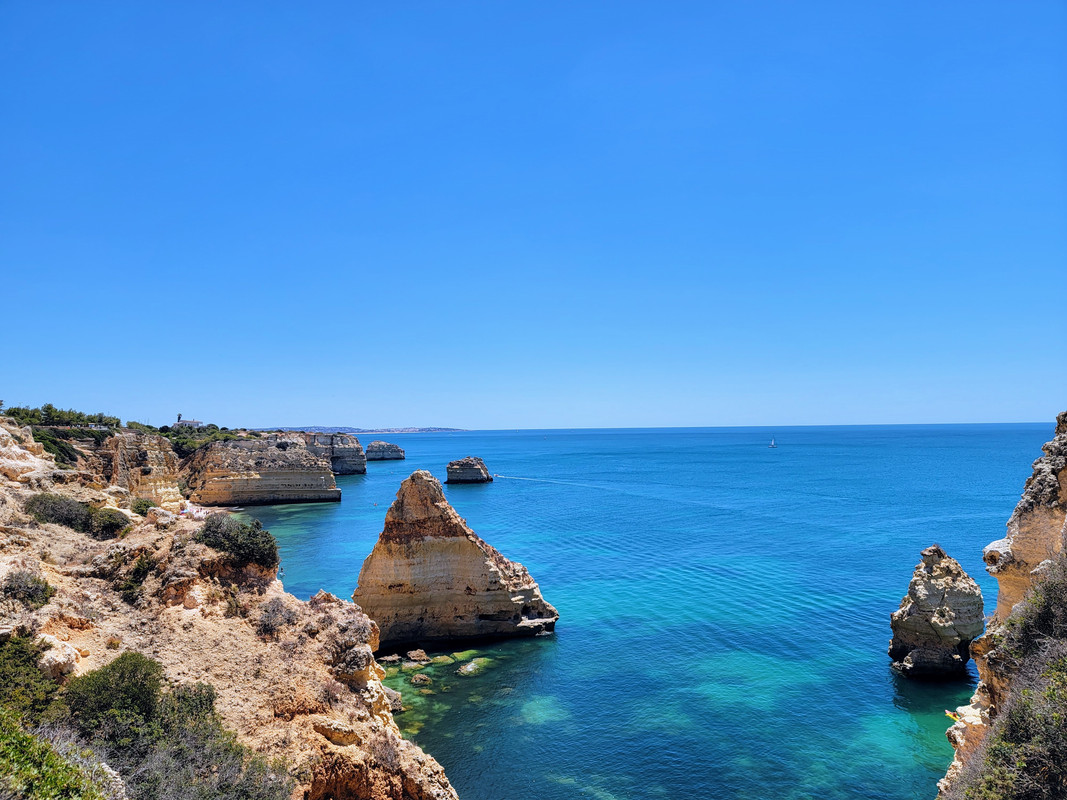
Sunday morning I hiked the 6 km Seven Hanging Valleys Trail. I hiked this trail one way, and then took an Uber back to my car. There are no major elevation gains on this trail, so it’s quite easy. Since it’s on the coast there’s a constant breeze, and the trail is well marked. It took me less than 1.5 hours to complete.
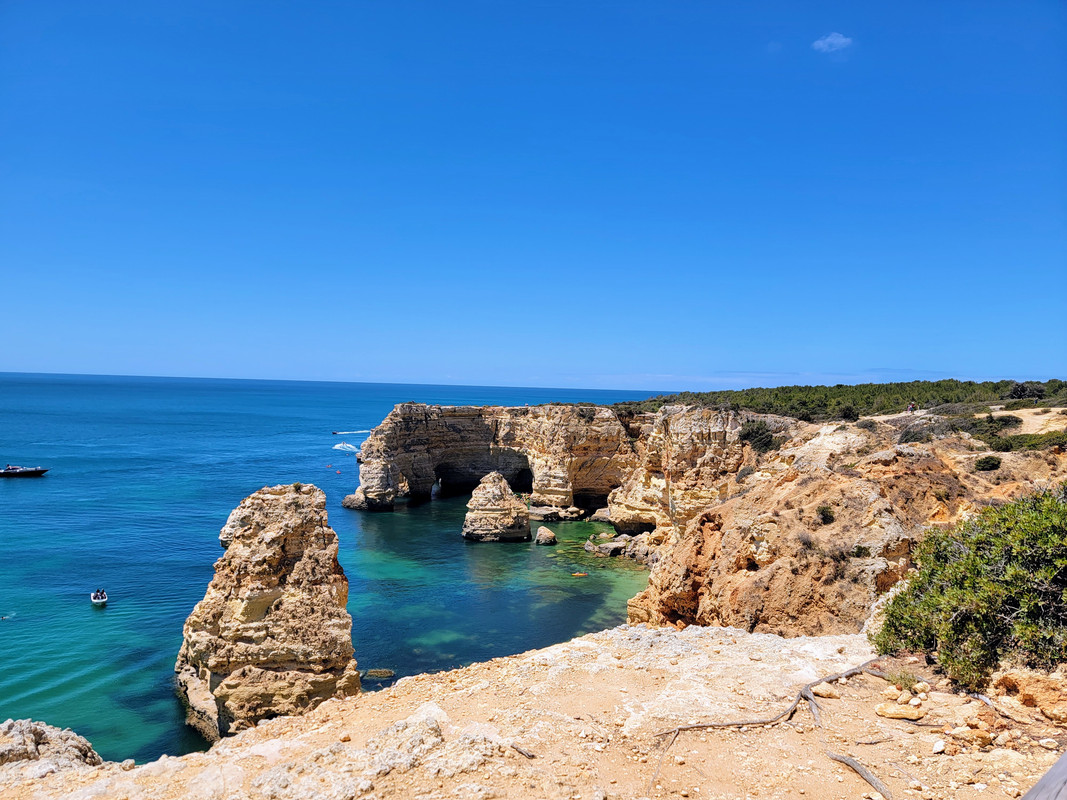

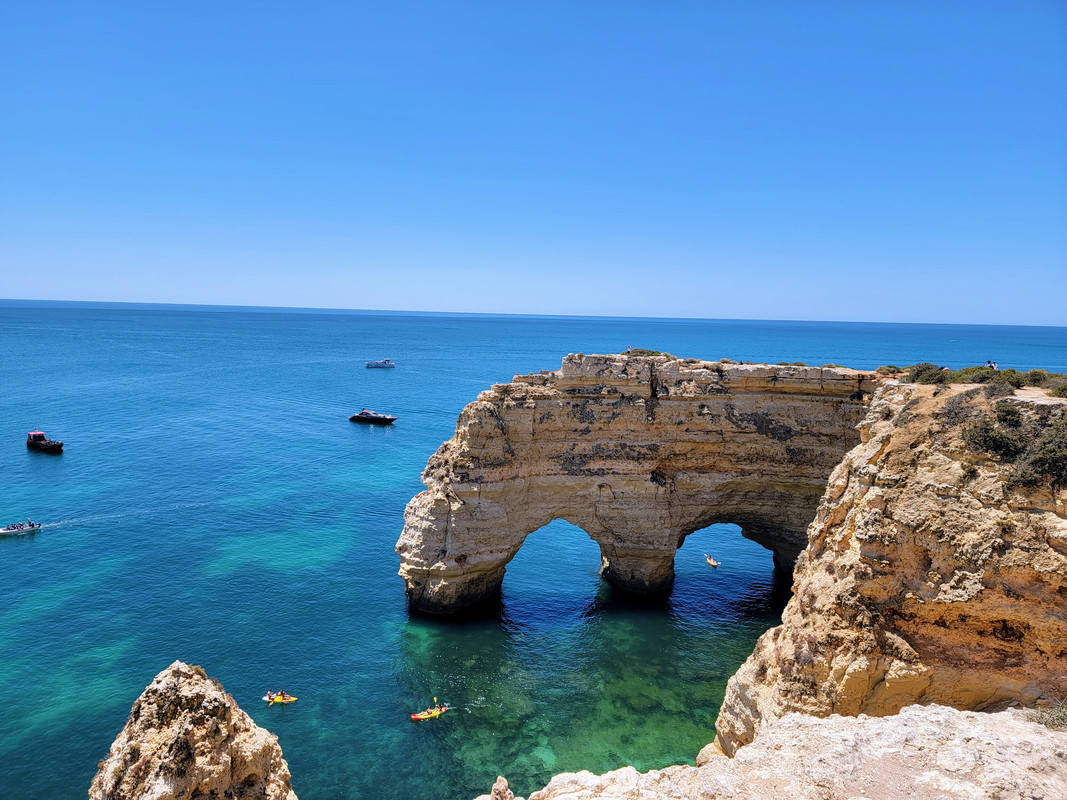
Along my hike I passed Praia de Benagil and I stopped here for an hour to do a 30-minute boat ride to the Benagil caves. There are also 1.5-hour boat ride options that allow you to disembark for a few minutes in the caves, but I didn’t want to spend that much time here. The boat ride was fun, but the caves are overrated and packed. There are much nicer and quieter caves you can visit either by boat or via hiking trails.
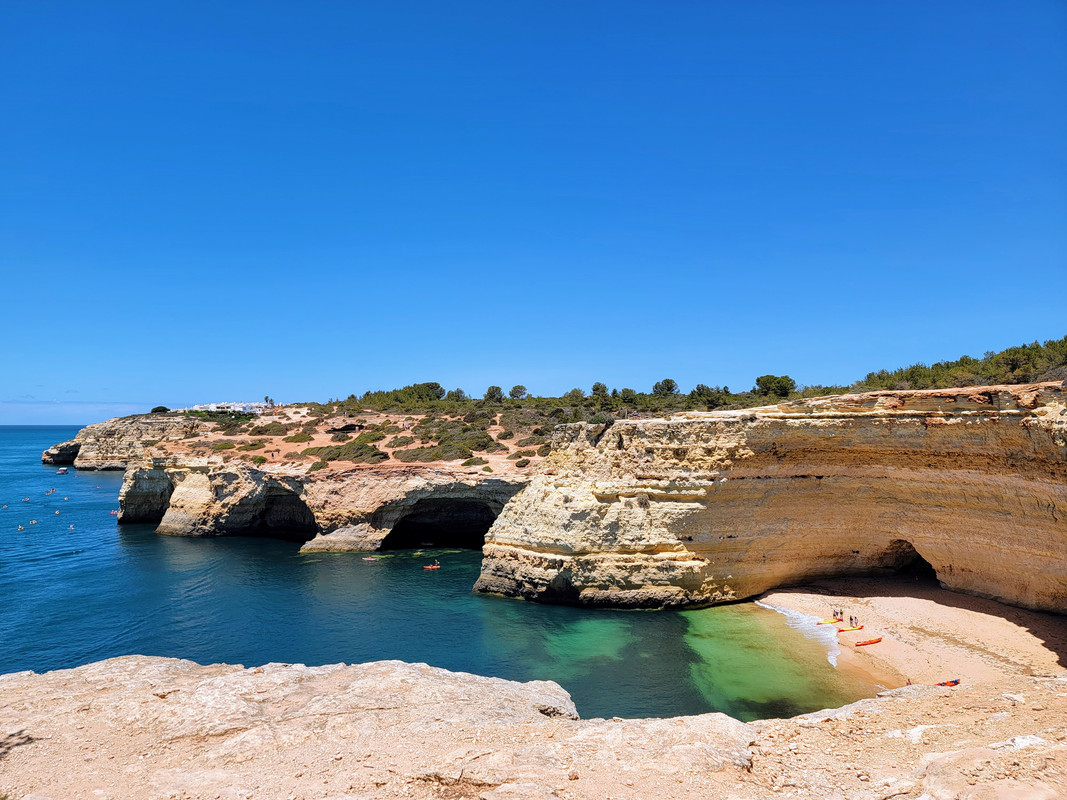
Praia do Carvalho was the quietest yet accessible beach I encountered on this hike. I drove back here for lunch later in the day. Note that it is only accessible via a tunnel. (Below: some of the views along the Seven Hanging Valleys Trail).
After lunch I headed to Sagres, the westernmost point on the Algarve. My firsts stop was at the Torre de Aspa lookout. This is a breathtaking overlook (both metaphorically and physically)- the wind here is crazy powerful to the point that my car was rocking back and forth. There is a 3 km dirt road to access the lookout, so some offroad driving is required.
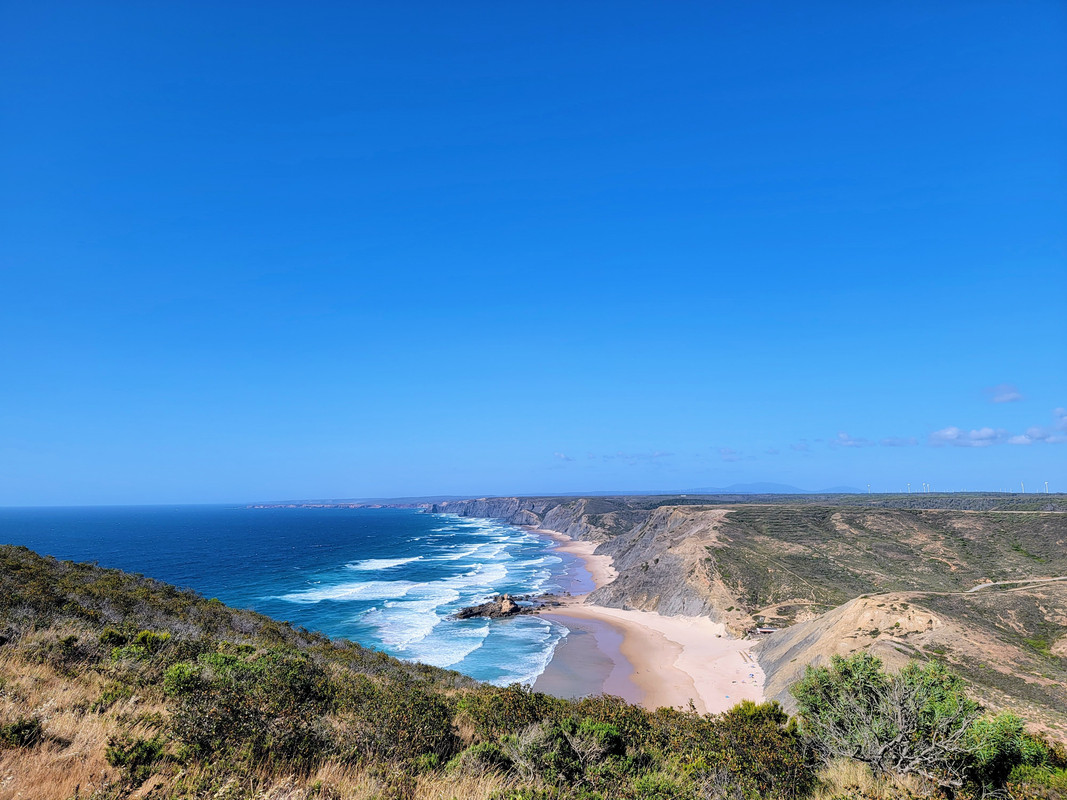
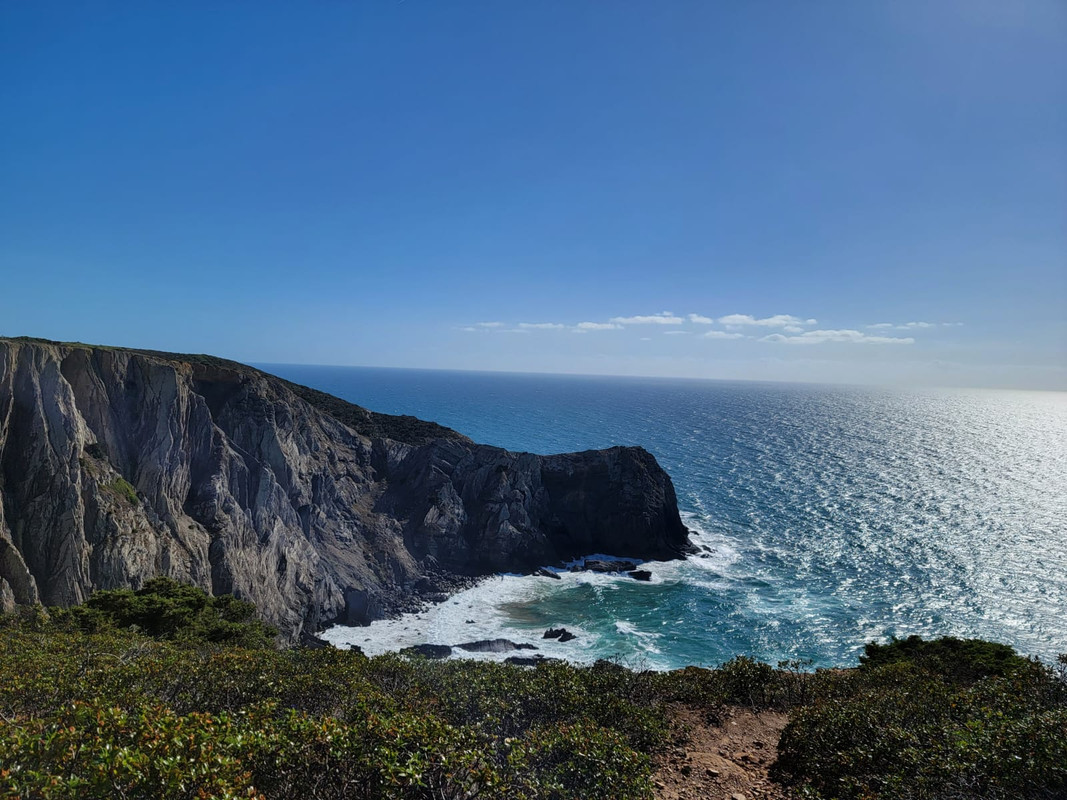
Fortalez de Sagres- the fort itself is nothing major, but the views are nice.
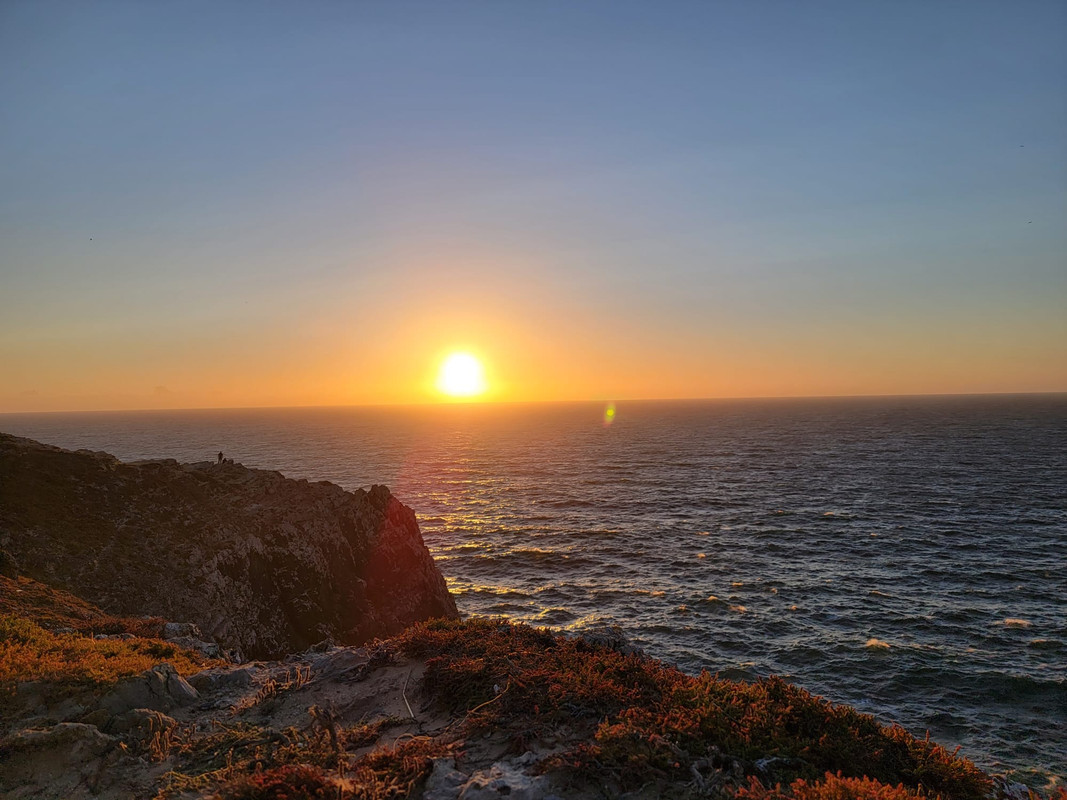
Cabo de São Vicente- sunset here is a magical event. The wind is rather harsh here as well.
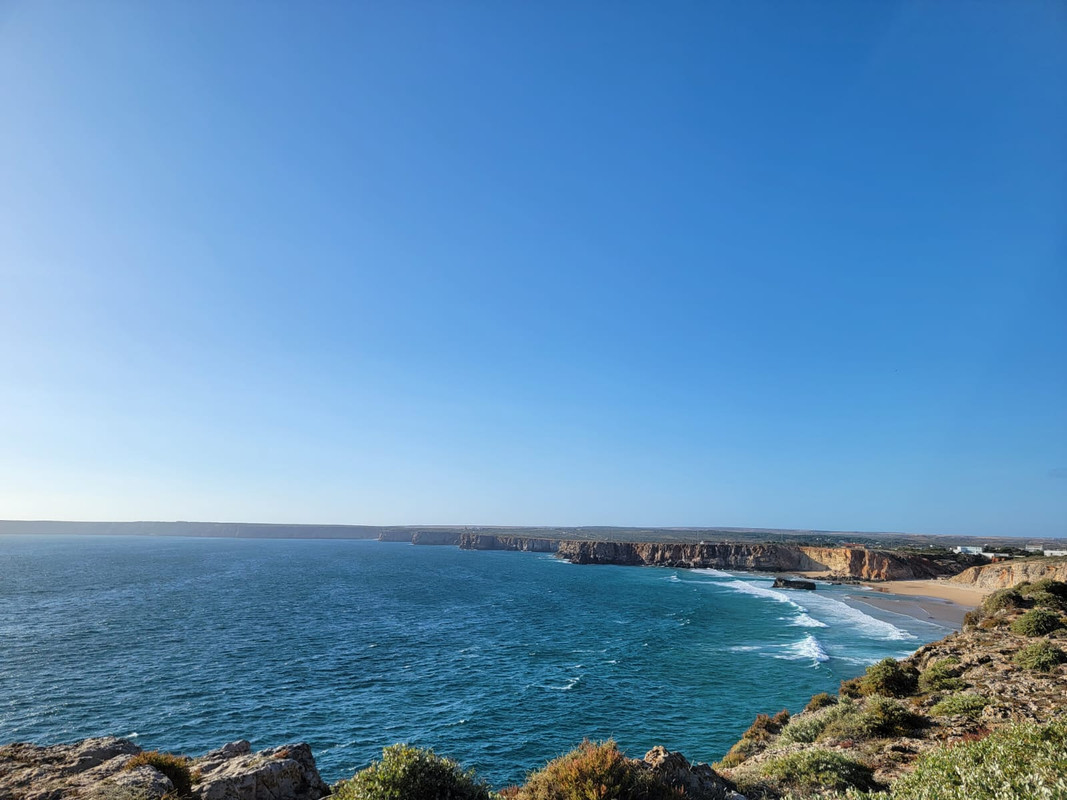
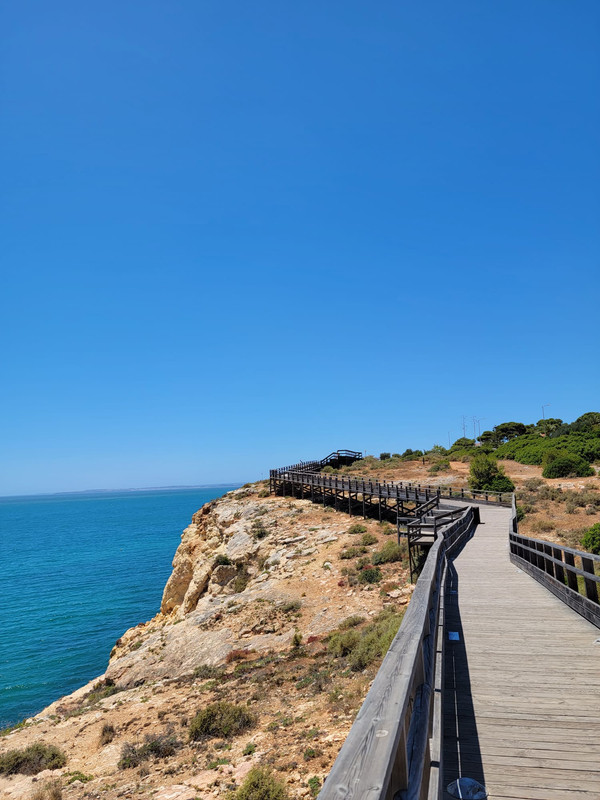
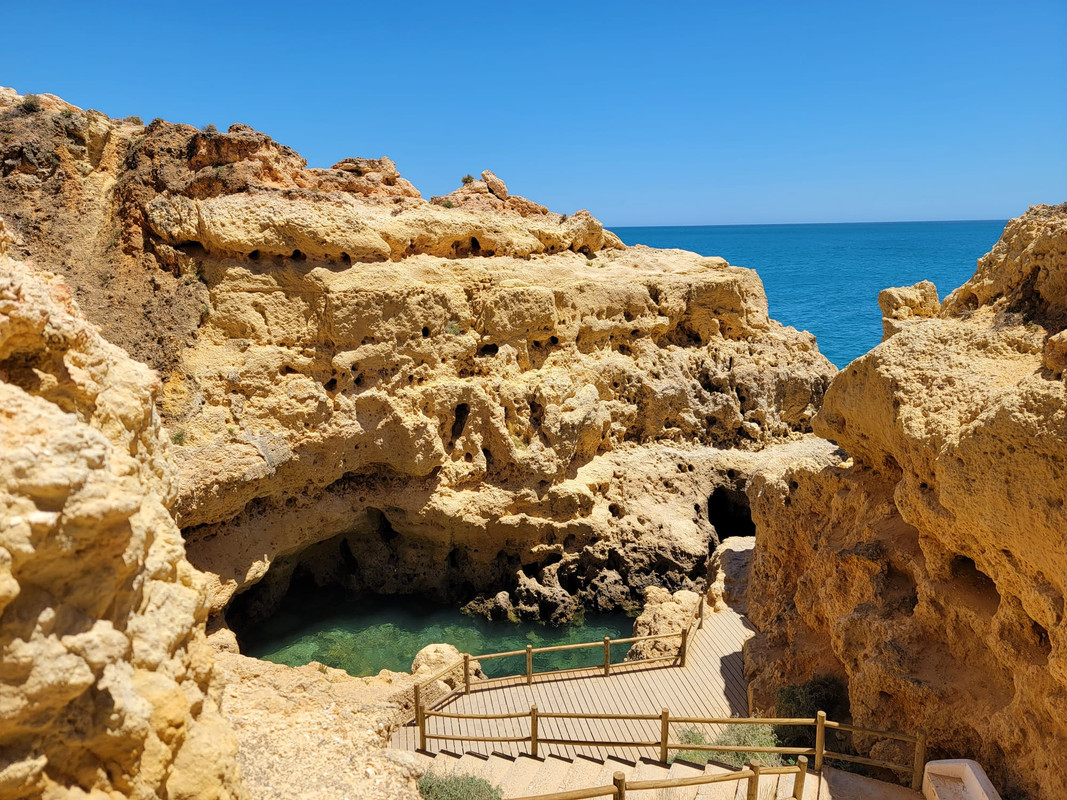
Monday morning I hiked 8 km starting with the Trail of Headlands and finishing at Algor Seco. It took me a little over 2 hrs. Parts of the trail were closed due to cliff instability which required a few detours. This trail is slightly more difficult that the Seven Hanging Valleys trail, but a lot less crowded.
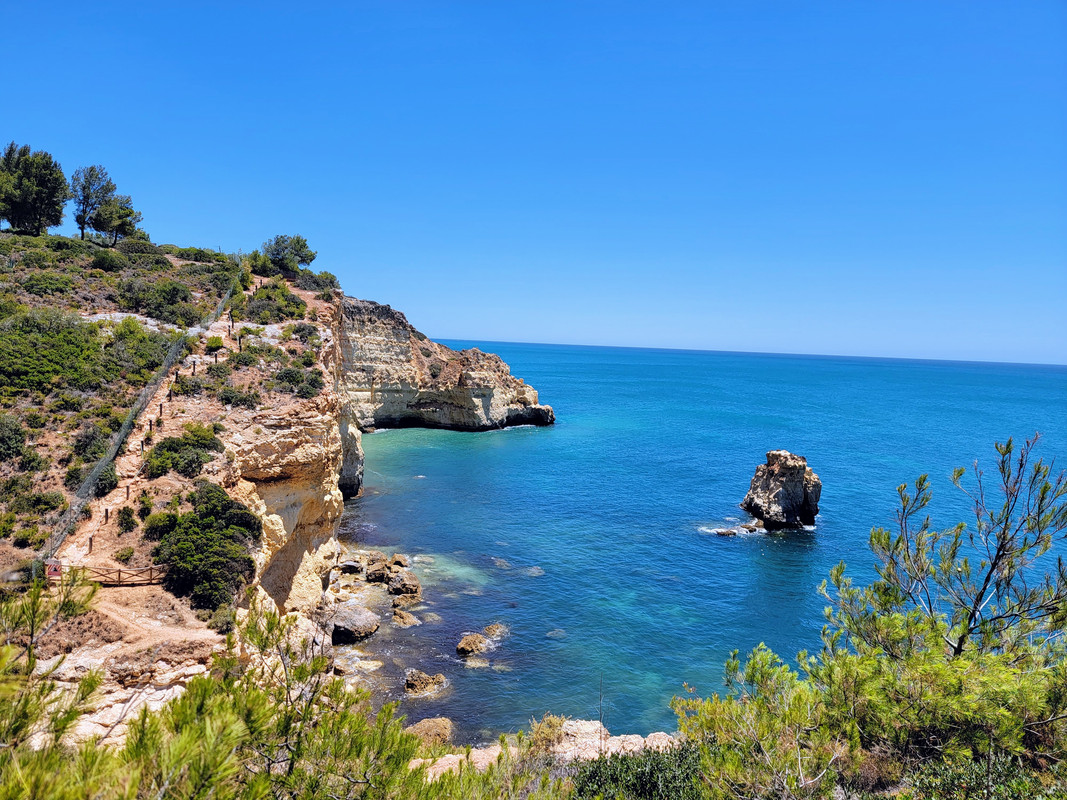
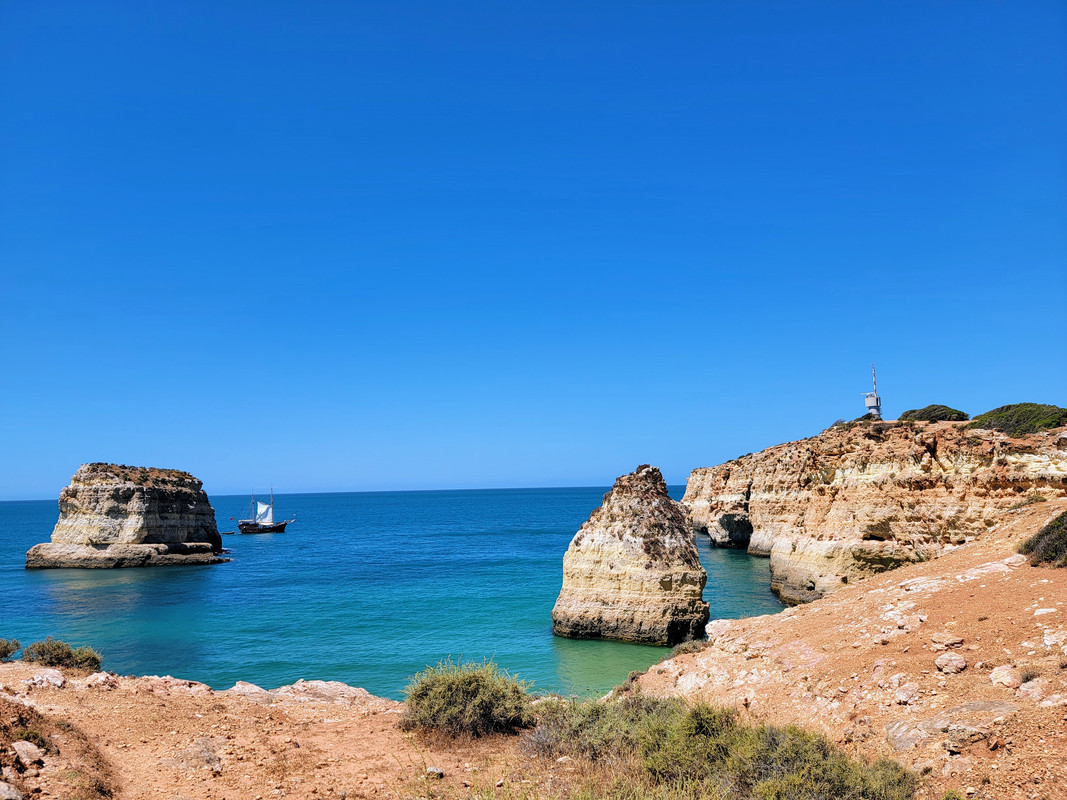
Many of the beaches on the way are not accessible via land.
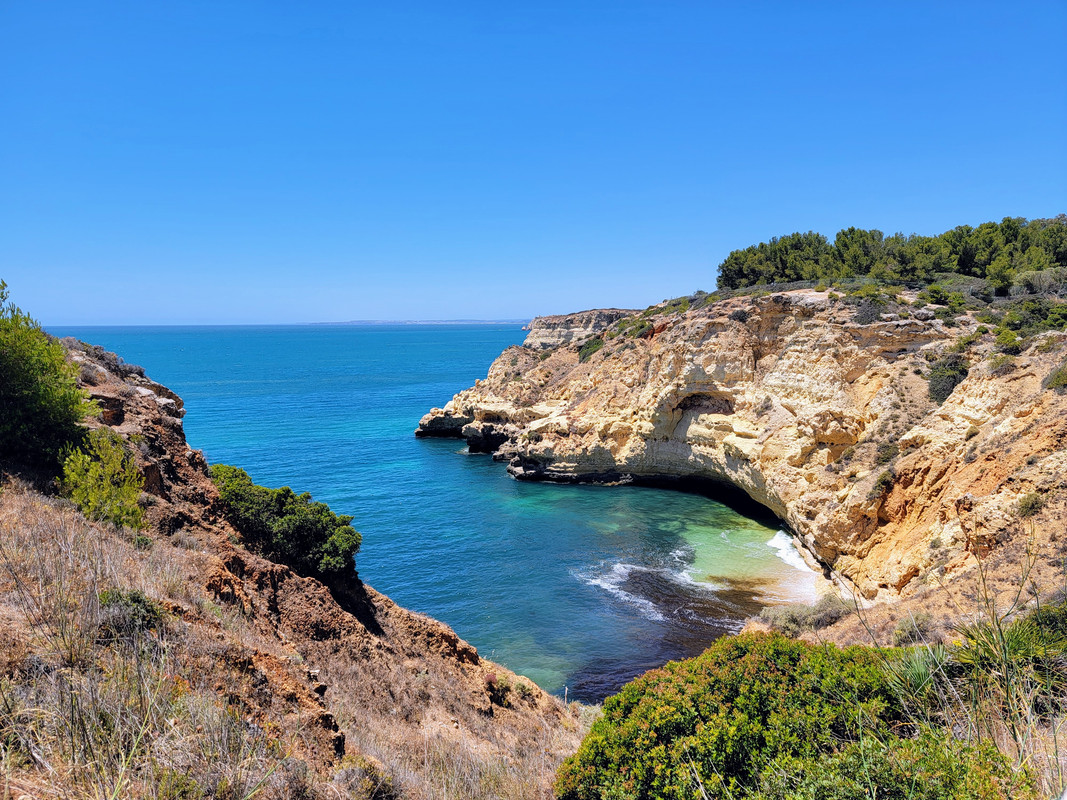

Carvoeiro Boardwalk
Algar Seco- stunning caves with amazing views! You can also swim in the natural pools here
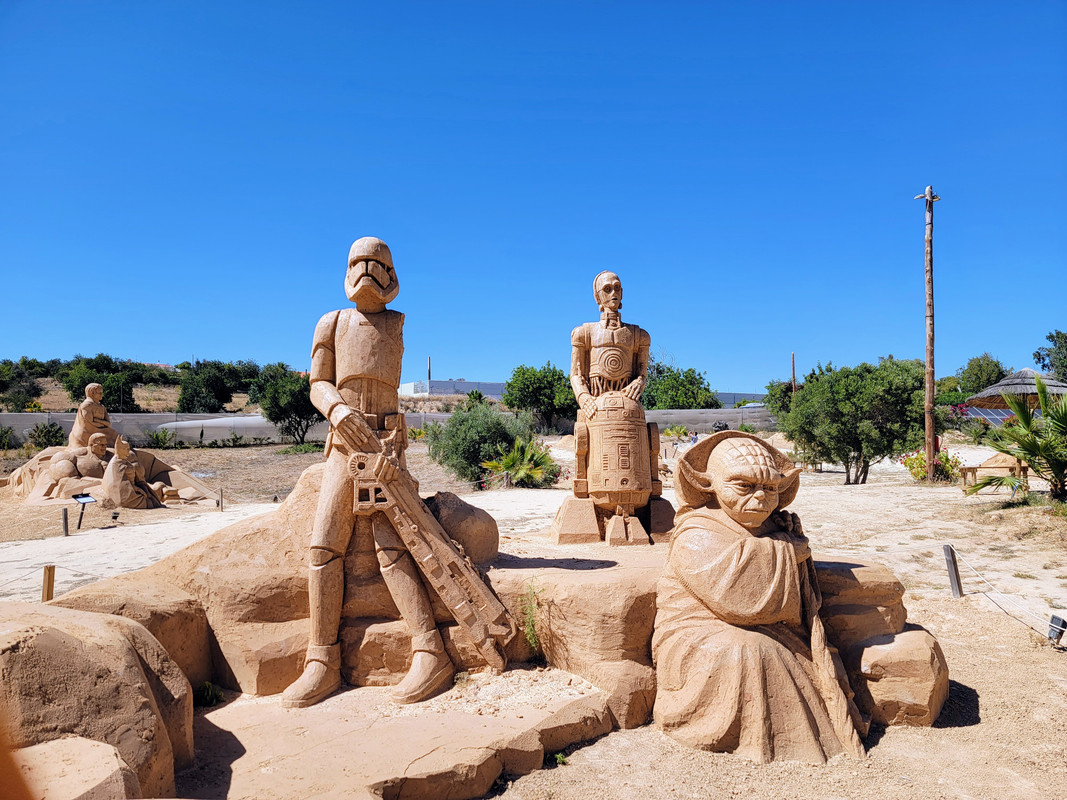
Next, I headed to Sand City in Lagoa. This was not originally on my schedule, but I saw it advertised and decided to check it out. I loved it! Made me feel like a kid again😊
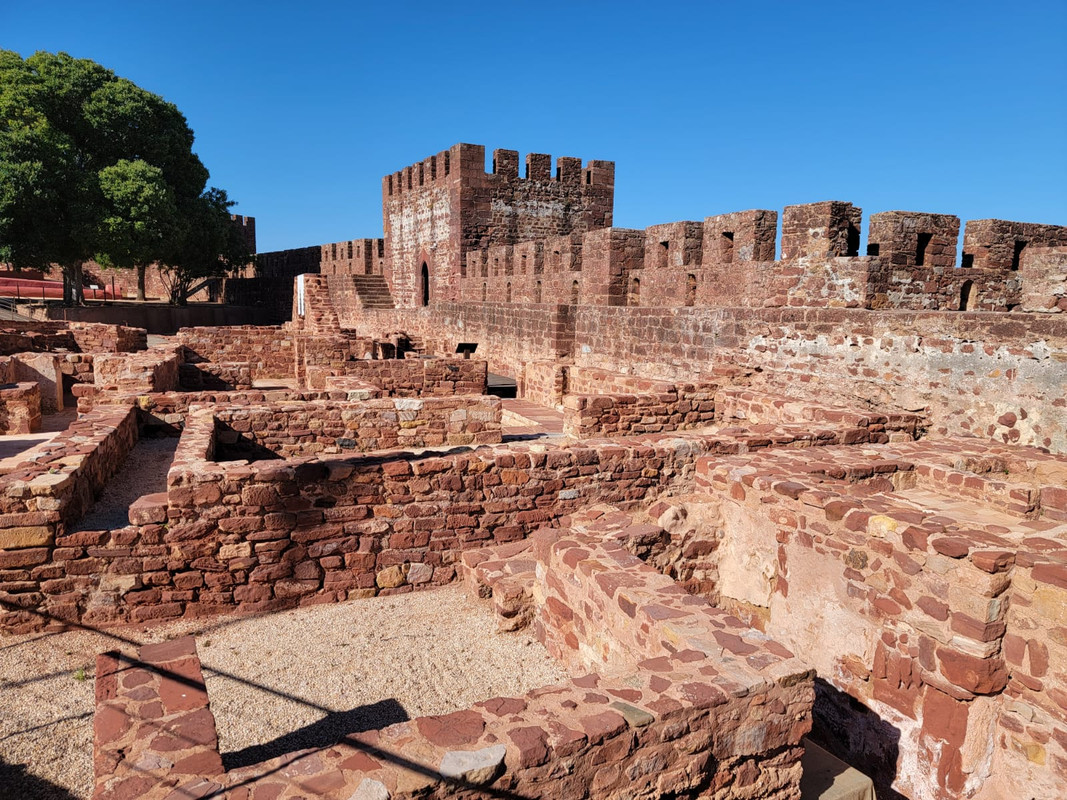
I then headed to Castelo de Silves. The castle also has an exhibit on the Iberian Lynx- considered one of the most endangered cats. There’s a lynx habitat nearby.
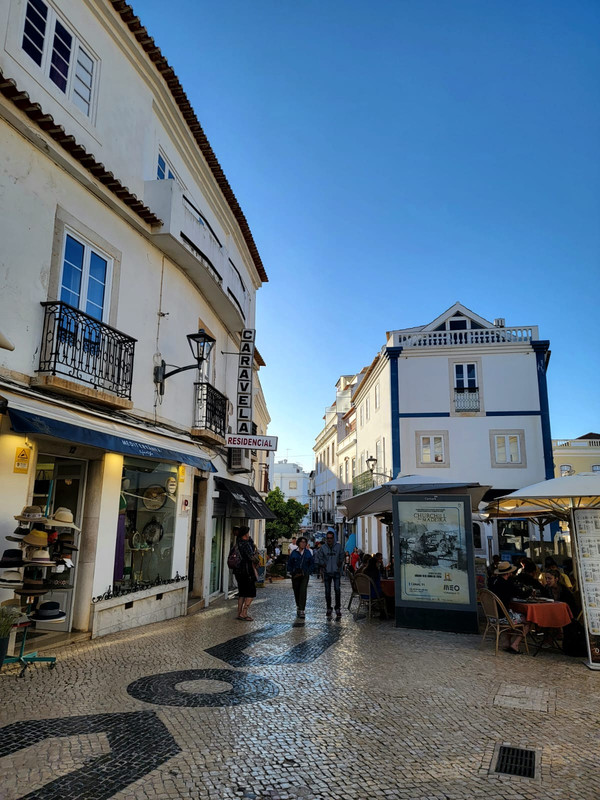
Next, I headed to the town of Lagos. I didn’t have a lot of daylight left so I couldn’t spend as much time here as I would’ve liked. Lagos Old Town is a sweet little town with a few interesting museums.
Castle of Lagos

Lagos Old Town
I then headed to some nearby beaches for sunset. These beaches have beautiful rock formations, and in hindsight I should have spent some more time here exploring.
Praia dos Estudantes & Lagos Roman Bridge
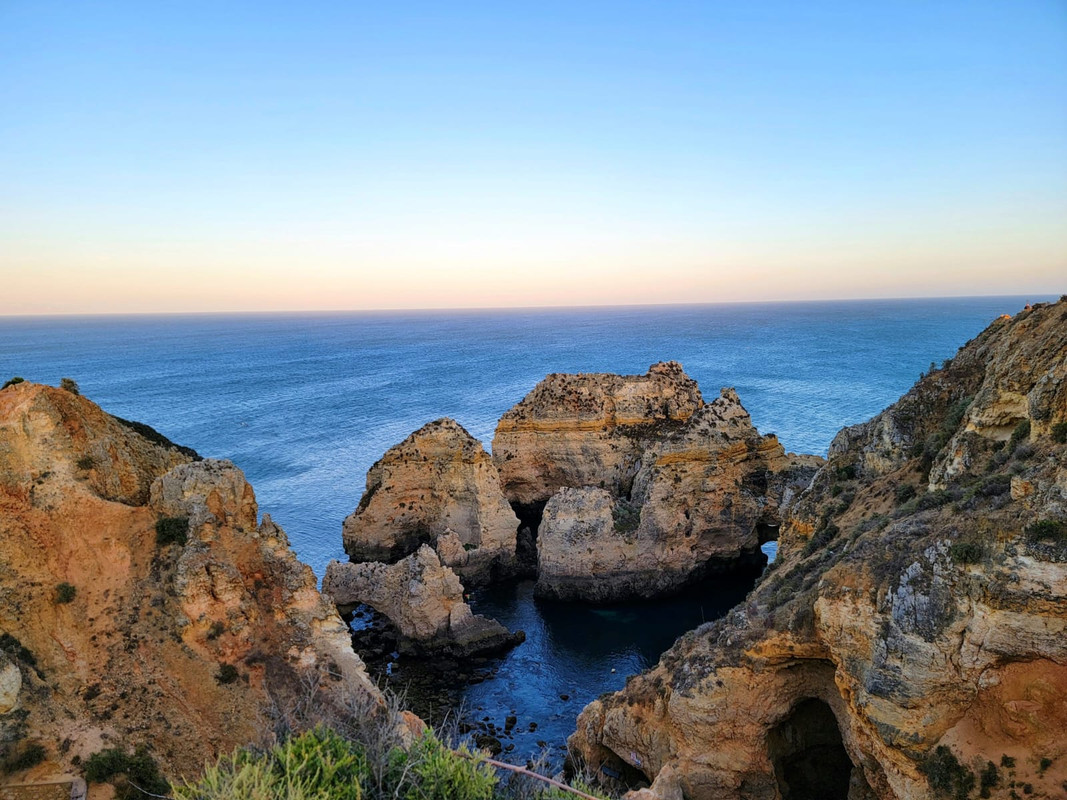
Praia de Dona Ana

Praia do Camilo
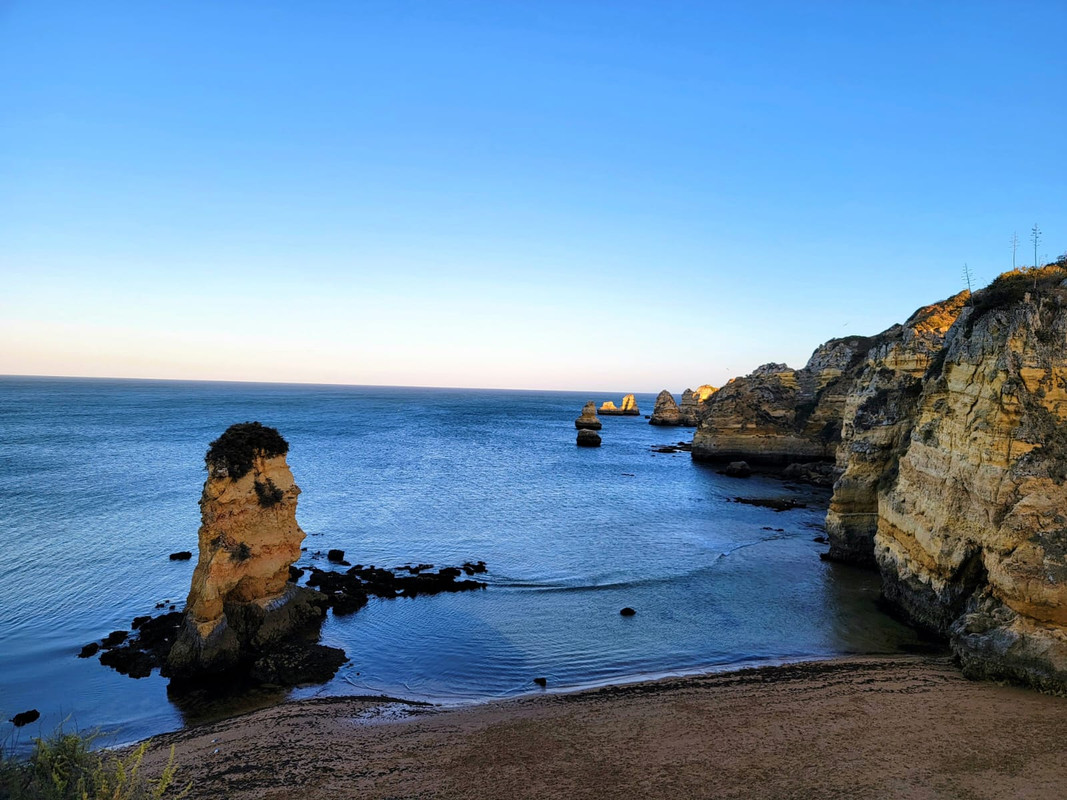
Ponta da Piedade
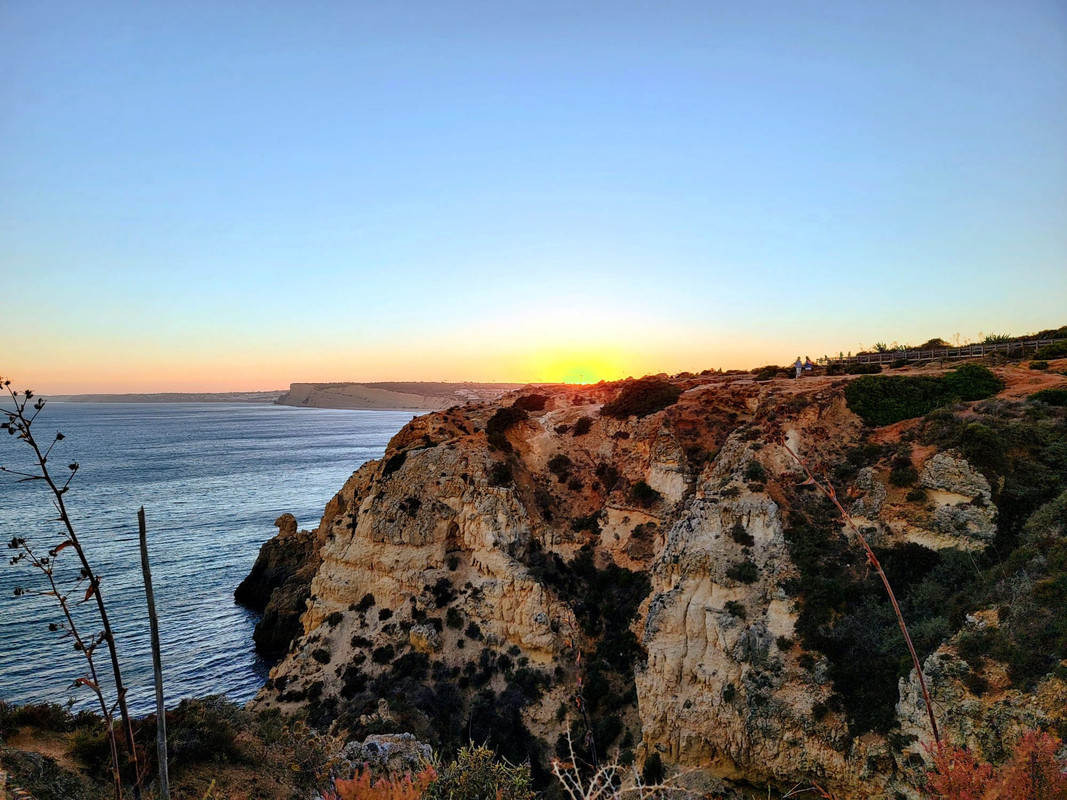
Evora
Tuesday morning, my last full day in Portugal, I started my drive back to Lisbon with a stop to explore Evora. Evora had one of the largest Jewish communities in Portugal prior to the inquisition, and the Jewish Quarter included a mikveh, 2 shuls, a Bais Hamidrash, and a school. The Evora Inquisition processed the largest number of cases for Judaizing- over 9,500 cases.
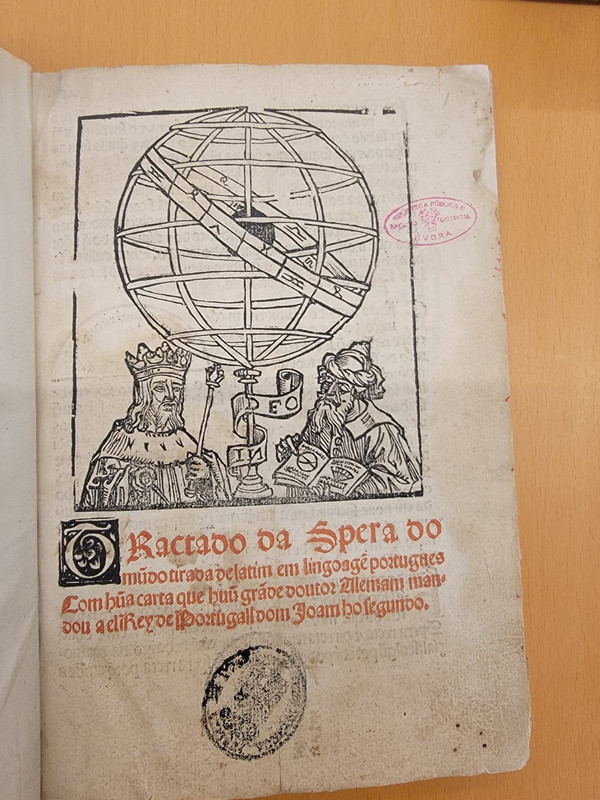
My first stop was at the Evora Public Library where I had scheduled an appointment in advance to view the 1496 first edition of the Almanac Perpetuum (originally written in Hebrew and named HaChibur Hagadol) and Nautical Guide written by R’ Abraham Zacuto. He fled from Spain to Lisbon, where he served as astronomer for King Joao II, creating most of the marine charts used by navigators including Vasco de Gama. When the inquisition started in Portugal he fled to Constantinople, and likely died in Damascus or Jerusalem.
Templo Romano Évora

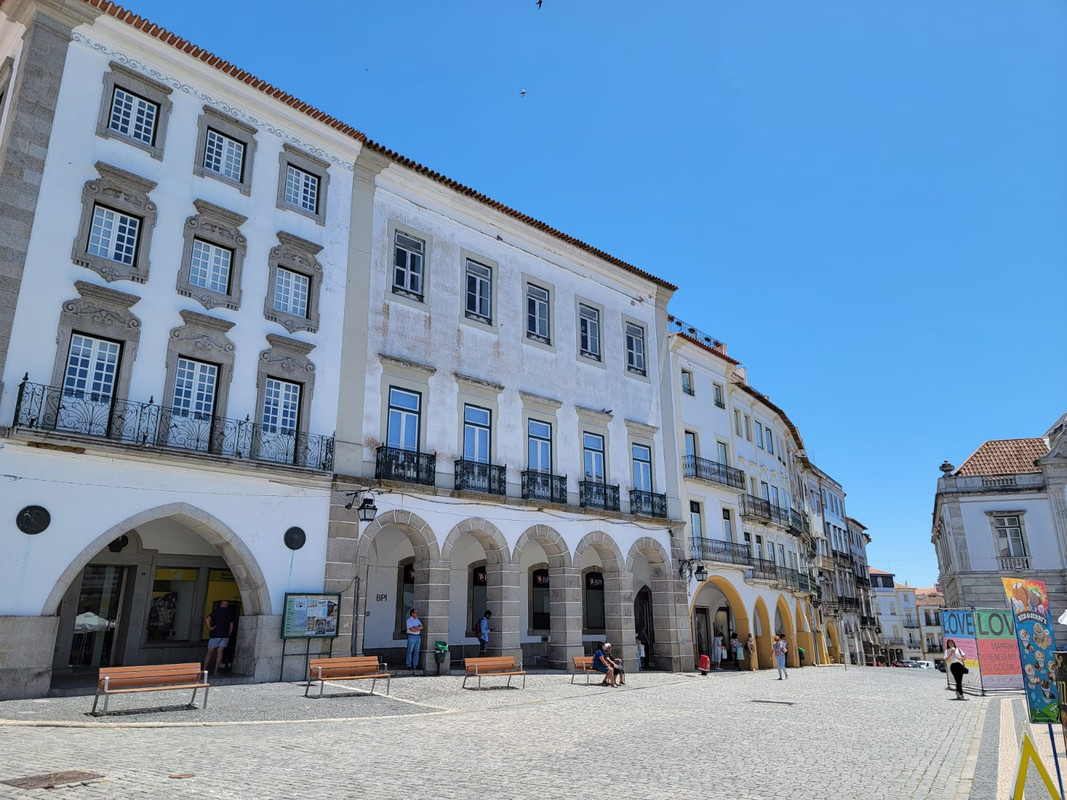
Palácio da Inquisição- many buildings surrounding this town square have the inquisition crest over the door, as they were originally inquisition buildings.
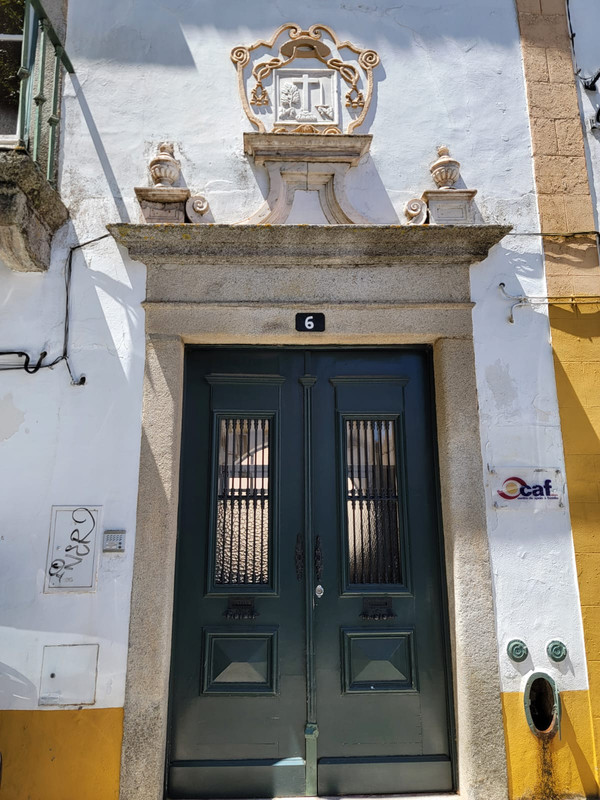
The Inquisition Courtroom

Museum Frei Manuel do Cenáculo- I visited this museum with the intention of viewing some Judaic artifacts dating from 1378, but I was unable to locate it and the curator was not of much help.
Praça do Giraldo- this square was originally built by Jewish merchants. Over 300 Jews were executed and burned at the stake in this square.
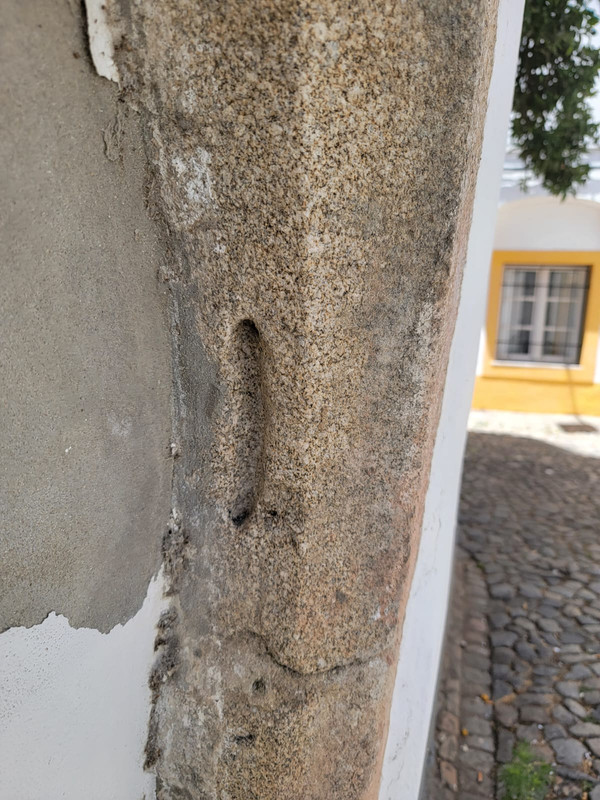
Mezuzah indentations in the Jewish Quarter- this is the only remnant of the once vibrant Jewish community.
The Capela dos Ossos- (chapel of bones) is the main attraction for most tourists in Evora, but it’s located on Church grounds so I decided to skip.
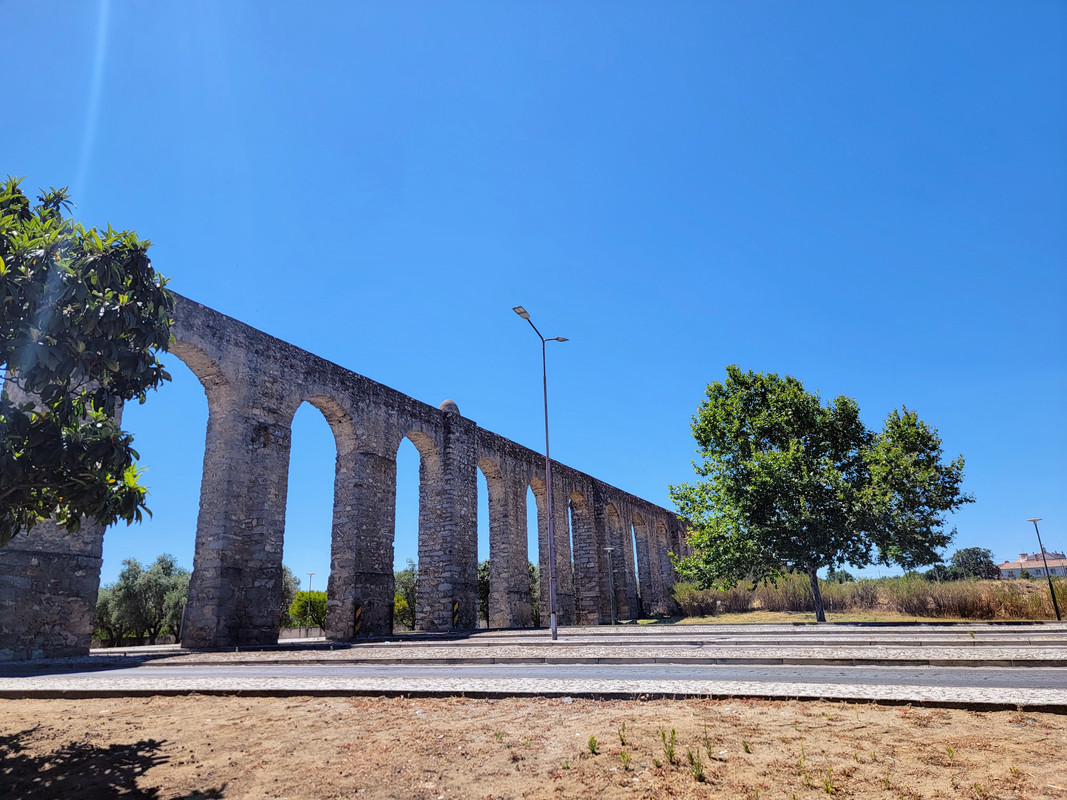
Agua de Prata Aqueduct
I then continued my drive north to Cascais, near Lisbon.
Cascais, Estoril, & Sintra Coast
I made it to Cascais late in the day and headed to Boca do Inferno. During high tide, when the surf is strong, the waves crash against the cliffs with incredible power. There wasn’t much of an “inferno” when I was there, and the ocean was mostly calm.
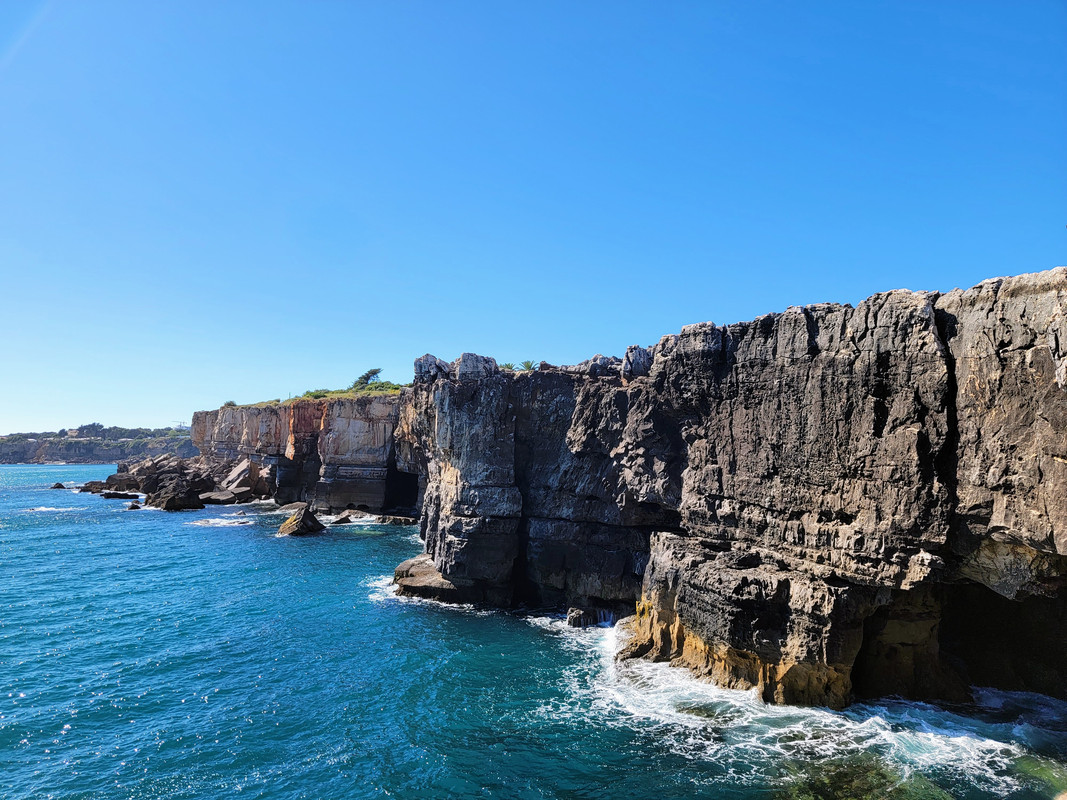
Mirador Casa de Santa María- one of the most picturesque spots I encountered on this trip.

I then spent some time walking the main streets of Cascais. It’s a fun, happening, place.
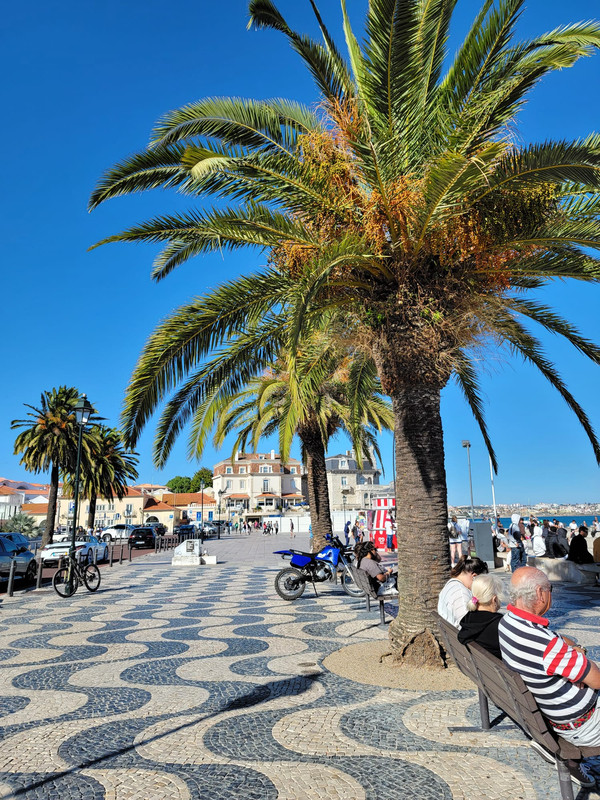
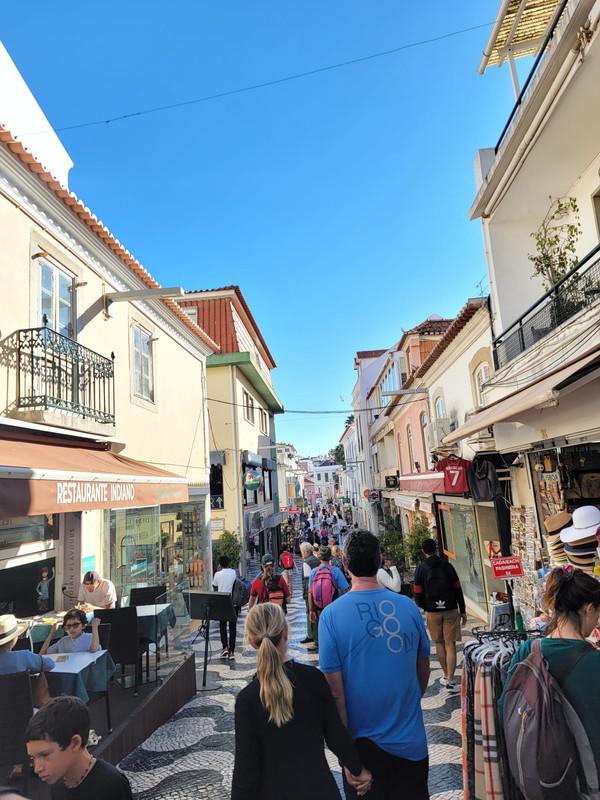
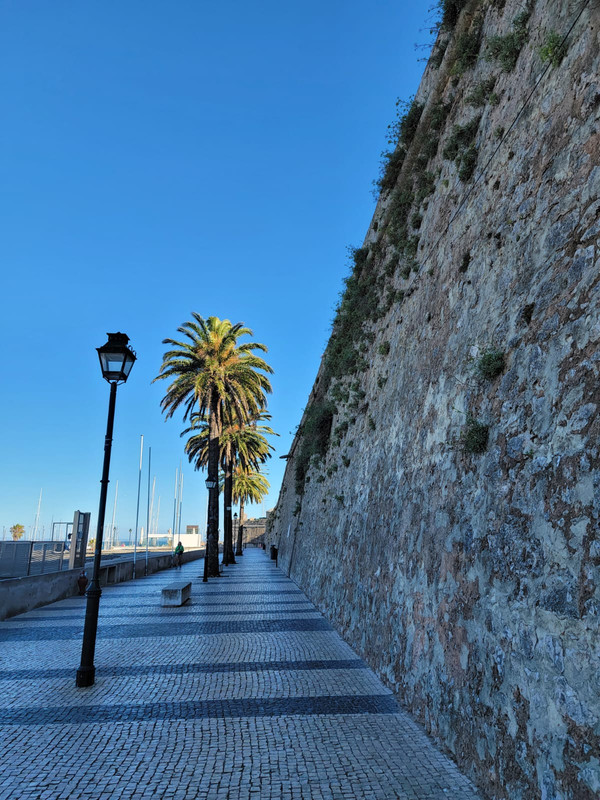
Citadel of Cascais
I did not get a chance to visit the Espaço Memória dos Exílios, a memorial which depicts the passage of European Jews through Portugal on their way to South America during WW2.
I then headed to Azhenas do Mar, the seaside town I had passed during my first hike in Portugal. The coast was clear and sunny for a change.
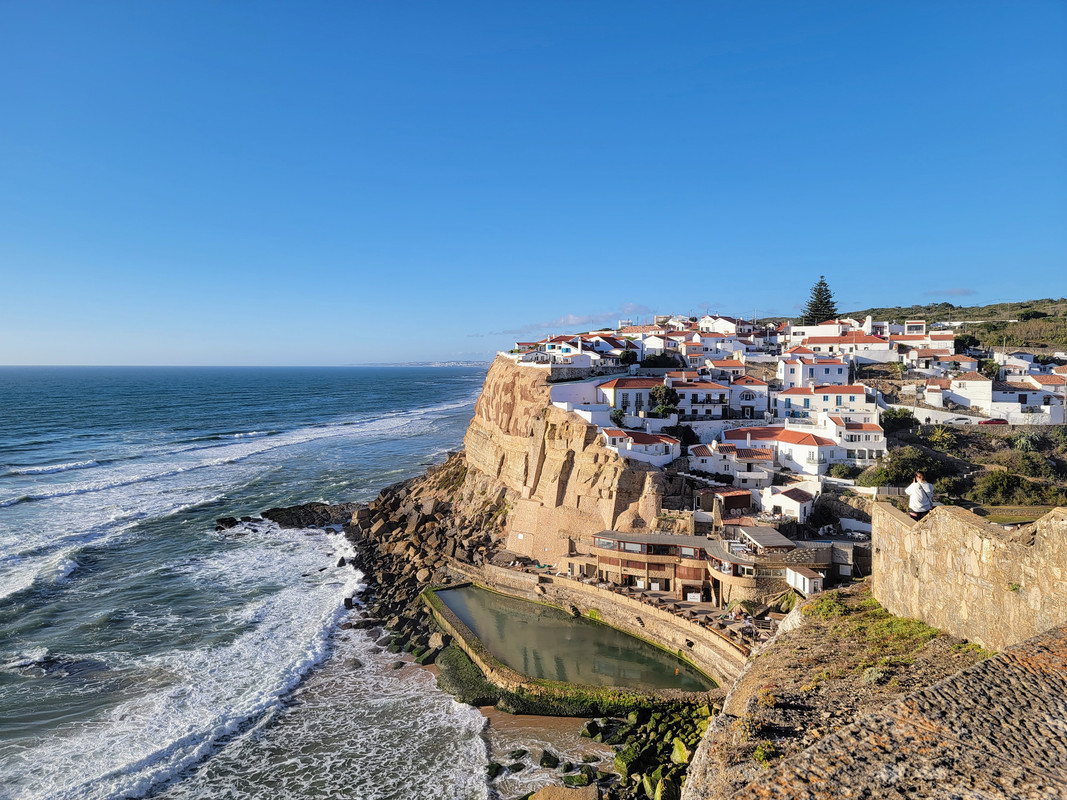
Next, I headed to Cabo do Roca for sunset (another point I passed during my first hike).
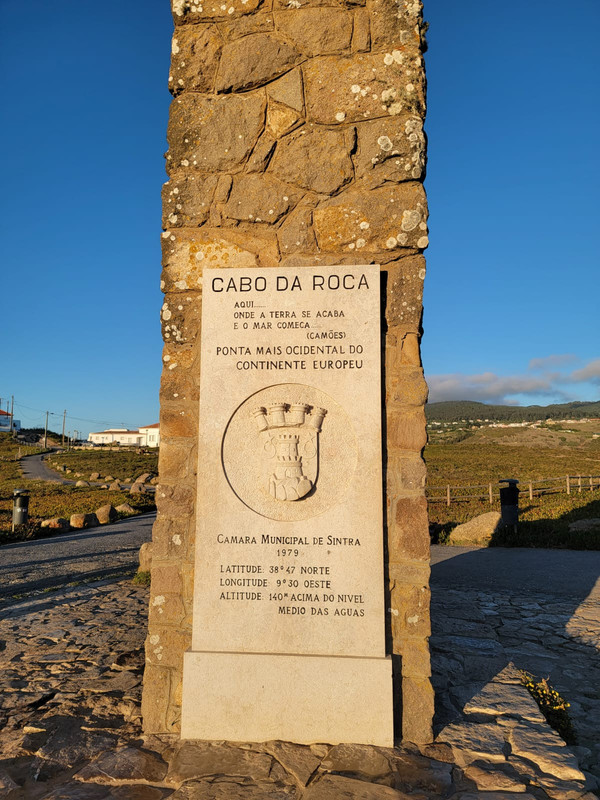
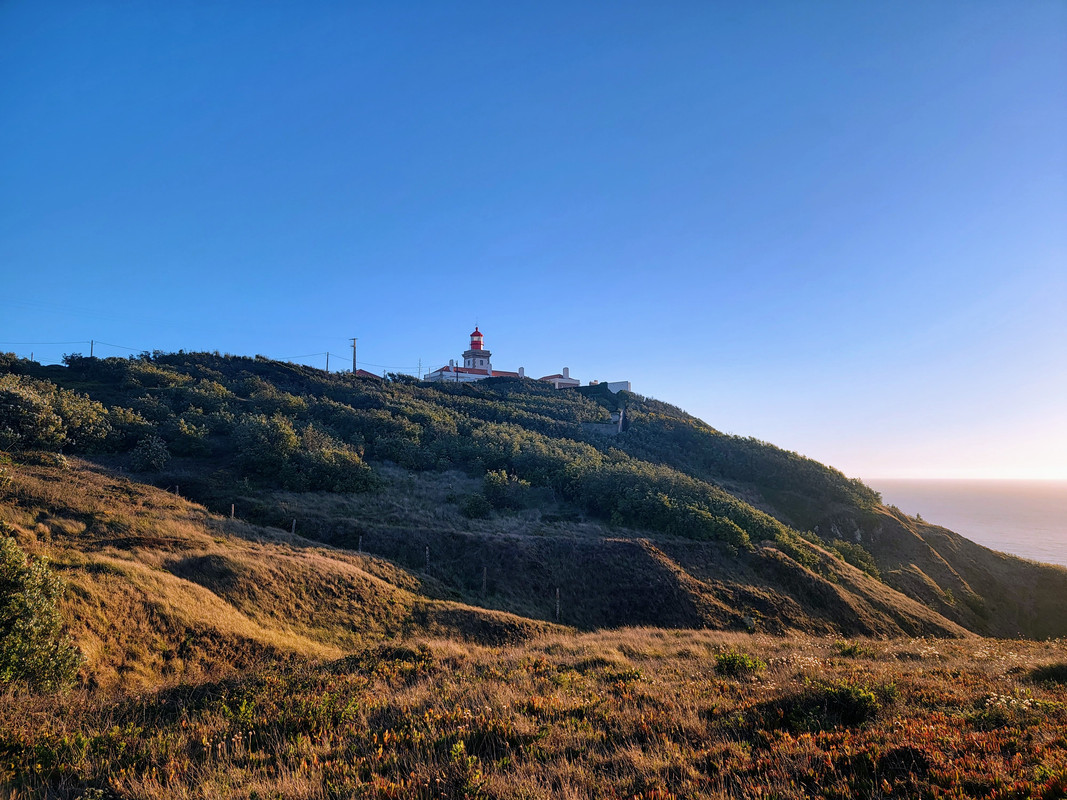
I hiked the first half mile of the trail again to see what it looked like when the ocean was visible, and not shrouded in fog. It was phenomenal.

My flight back to NY was scheduled to leave the following day at 10:25AM. I was a tad worried about the potentially long security and passport control lines, so I decided to sleep over near the airport at the B&B Aerporto hotel. I coordinated with the car rental agency to have my car rental picked up from me at the airport, and a rep was waiting for me at the departures lane promptly at 8AM. The handoff went smoothly and took less than five minutes. The security lines at the airport were long but thankfully they moved fast, and it didn’t take more than 15 minutes. In Lisbon airport passport control is after the shops and lounges, just before the gate, so give yourself a few minutes to spare before heading to your gate. In my case there were no lines at passport control.
I hope you enjoyed!

Did you enjoy this article?
5
0
Hi, which area and hotels would be recommended in porto for 2 adults and 2 teens and then in Lisbon, not for shabbos? Thanks for the stunning pictures
In Porto you might want to stay next to the shul if you’re being there for Shabbos.
In Lisbon if you want to stay in the touristy area, I’d recommend anywhere between the Moorish Quarter and the River.
If you’re comfortable using public transportation (very easy in Lisbon), you can stay anywhere in the city.
I don’t have specific hotel recommendations, as I stayed in the Airbnbs linked in my post.